Why a Chimney Inspection in Fredericksburg VA Is Vital Before Winter
A chimney inspection in Fredericksburg, VA is vital before winter because it prevents creosote fires, clears summer animal and debris blockages, and detects freeze-thaw masonry cracks and carbon monoxide risks before you light the first fire. Scheduling this check before the heating season keeps your family safe and your fireplace operating efficiently.
As the crisp autumn air settles across Northern Virginia each September, local homeowners look forward to lighting their fireplaces. However, running a heating system without a proper evaluation can expose your family to serious safety hazards. Flue blockages from fallen leaves, twigs, or animal debris frequently obstruct exhaust pathways over the summer. When airflow is choked, combustible byproducts linger inside your home rather than escaping outside.
Every wood fire naturally deposits creosote inside your venting structure. This black or dark brown residue ranges from a flaky soot to a tar-like, highly combustible glaze. When temperatures within the flue climb, heavy creosote accumulation can ignite, generating intense heat that can reach 2,000°F. Such fires can easily crack masonry, warp metal liners, and ignite nearby wooden framing inside your walls. Scheduling a thorough annual chimney inspection ensures that dangerous creosote levels are identified and removed before you strike that first match.
Beyond fire risks, physical structure issues create hidden hazards. The winter climate in Fredericksburg exposes chimneys to severe freeze-thaw cycles. Moisture penetrates tiny crevices in the brick and mortar; as temperatures drop below freezing, that water expands, worsening structural cracks through thermal shock. Broken flue tiles and degraded joints allow toxic exhaust gases, including odorless carbon monoxide, to leak into living spaces. Investing in certified chimney sweep and repair keeps your home warm, structurally sound, and completely safe through the coldest nights.
Understanding Level 1, Level 2, and Level 3 Chimney Inspections
The National Fire Protection Association (NFPA) 211 standards classify chimney assessments into three distinct tiers. Knowing what each level involves helps you choose the right service for your home.
| Inspection Level | When It Is Required | Key Areas Evaluated | Access Method |
|---|---|---|---|
| Level 1 | Routine annual check; no changes to fuel or appliance; normal operating conditions | Readily accessible portions of the chimney interior, exterior, firebox, damper, and connection | Visual assessment without specialty demolition or attic crawling |
| Level 2 | Property transfers/sales; following chimney fires, severe storms, or seismic events; fuel conversions | All accessible areas, attics, basements, crawlspaces, plus high-definition video scanning of the entire flue interior | Visual evaluation plus internal camera pass; no structural removal required |
| Level 3 | When serious hidden structural hazards or flue compromises are suspected from prior checks | Concealed internal masonry, framing clearances, structural joints, and hidden flue runs | Destructive opening or removal of drywall, masonry walls, crowns, or chimney casing |
Level 1 is the baseline standard for homes with consistent operating performance and no known changes. Level 2 provides total peace of mind for real estate transactions or after extreme weather, using video cameras to examine every square inch of the internal lining. Level 3 is reserved for rare, severe scenarios where concealed components require physical opening to evaluate underlying fire damage or collapse risks.
Local Climate Impacts and Fire Hazard Prevention
The regional weather in Central and Northern Virginia presents unique challenges for brick and stone chimneys. High summer humidity drives moisture deep into masonry pores. When autumn storms bring driving rain, faulty chimney crowns and worn roof flashings let water seep directly down into the smoke chamber.
This persistent moisture degrades mortar joints, causing spalling (where the brick face flakes off and crumbles). In addition, local birds, squirrels, and raccoons often treat open, uncapped flues as cozy nesting spots during late summer. A clogged flue pipe on a pellet stove chimney or traditional fireplace kills the draft, creating backdrafts that push soot and harmful gases into your home. Regular preventative evaluations verify that draft dynamics remain optimal and that your flue system is clear of obstructions.
What to Expect During a Professional Chimney Service
When OHA’s certified chimney service team arrives, the team treats each property with care. Team members place heavy drop cloths around the hearth, set up high-efficiency dust-containment systems, and inspect every component that governs fireplace operation.
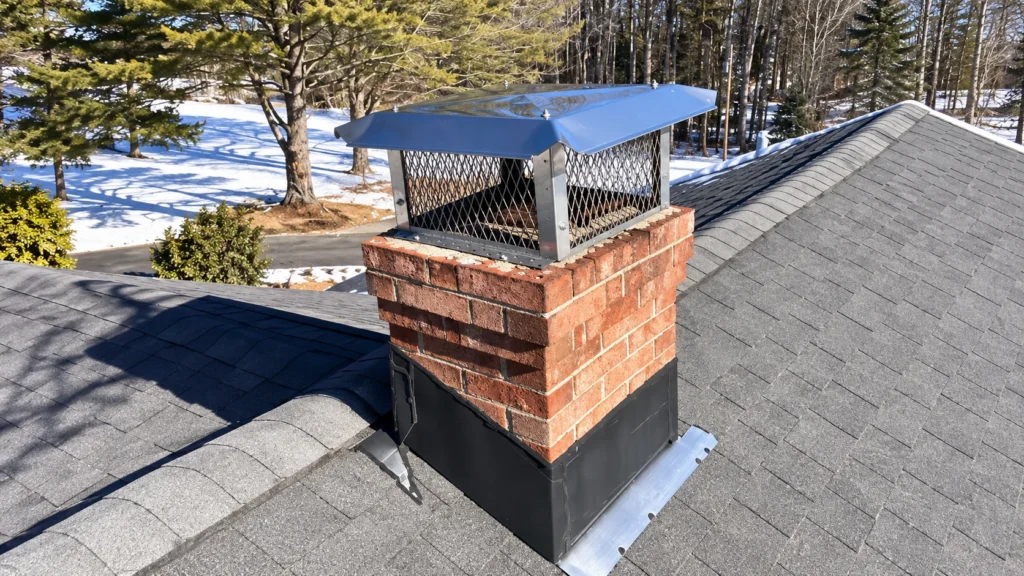
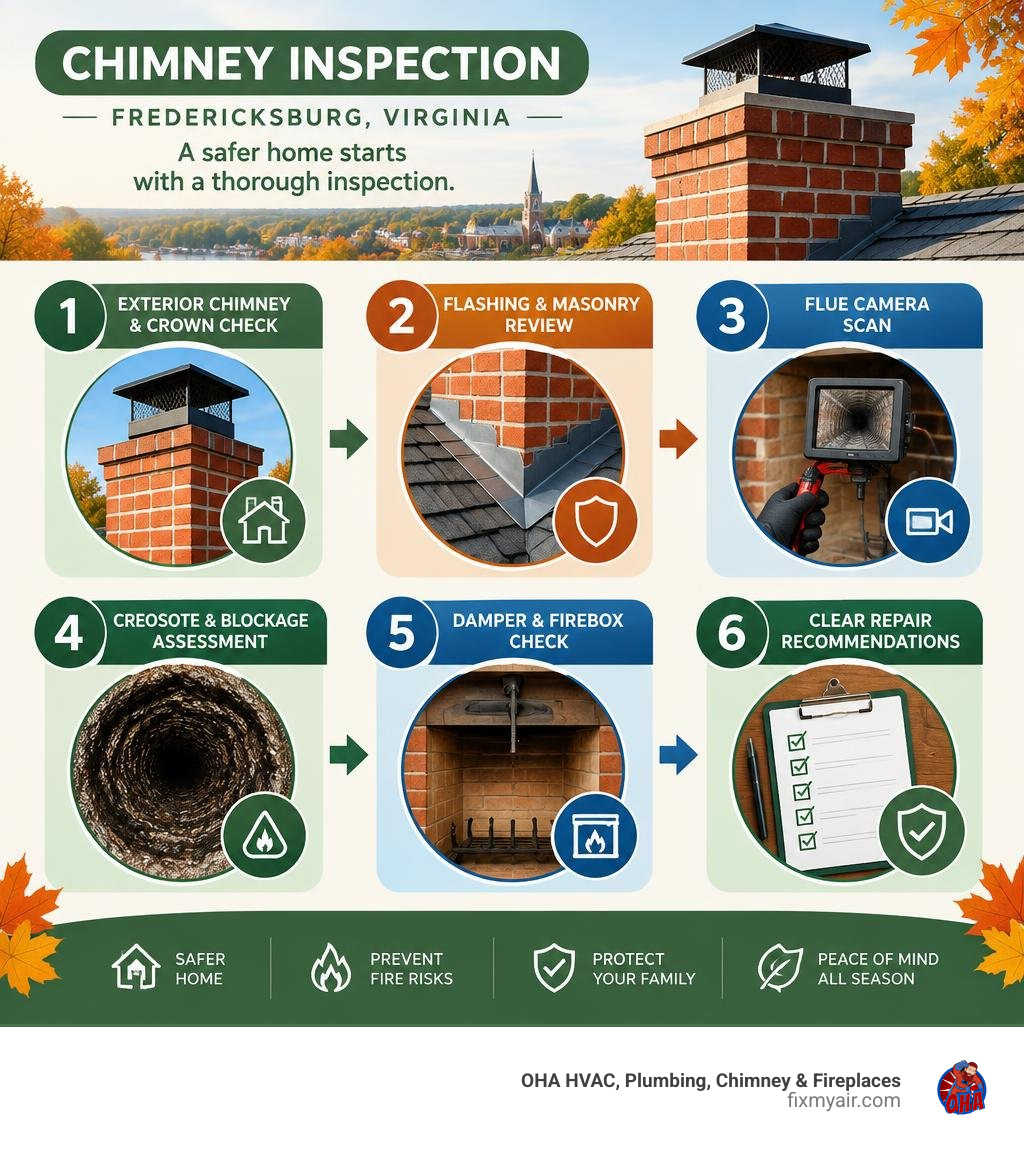
A thorough assessment inspects the chimney cap, crown seal, mortar joints, flashing, firebox brickwork, damper mechanism, and smoke chamber. We look for flue tiles with hairline fractures, deteriorated throat dampers, and gaps in the lintel. Combining manual tools with cutting-edge optical diagnostic tools, our professional chimney sweep team ensures that no structural flaw or safety threat goes unnoticed.
Comprehensive Checklist for a Chimney Inspection Fredericksburg VA
Our team follows strict industry guidelines to ensure complete coverage of your fireplace and venting system:
- Creosote assessment: Measuring soot depth and classifying deposits (Stage 1 powdery soot, Stage 2 crunchy flakes, or Stage 3 glazed tar).
- Chimney cap & spark arrestor: Verifying that mesh screens are clear, rust-free, and secured to keep out rain and wildlife.
- Chimney crown & wash: Checking the concrete top for shrinkage cracks, structural fractures, and proper slope.
- Flashing & roof seal: Inspecting step and counter flashing around the base to stop water leaks.
- Masonry & mortar joints: Identifying loose bricks, missing mortar, and efflorescence (white mineral salt stains indicating water penetration).
- Damper operation: Ensuring smooth opening, tight closure, and proper seal alignment to prevent indoor heat loss.
- Smoke chamber & shelf: Inspecting the transition area above the damper for smooth parging and checking for heavy soot fallout.
- Firebox & hearth: Checking refractory brick panels, firebox mortar, and hearth extensions for thermal damage before completing a thorough fireplace cleaning.
Inspection Duration and Video Scanning Technology
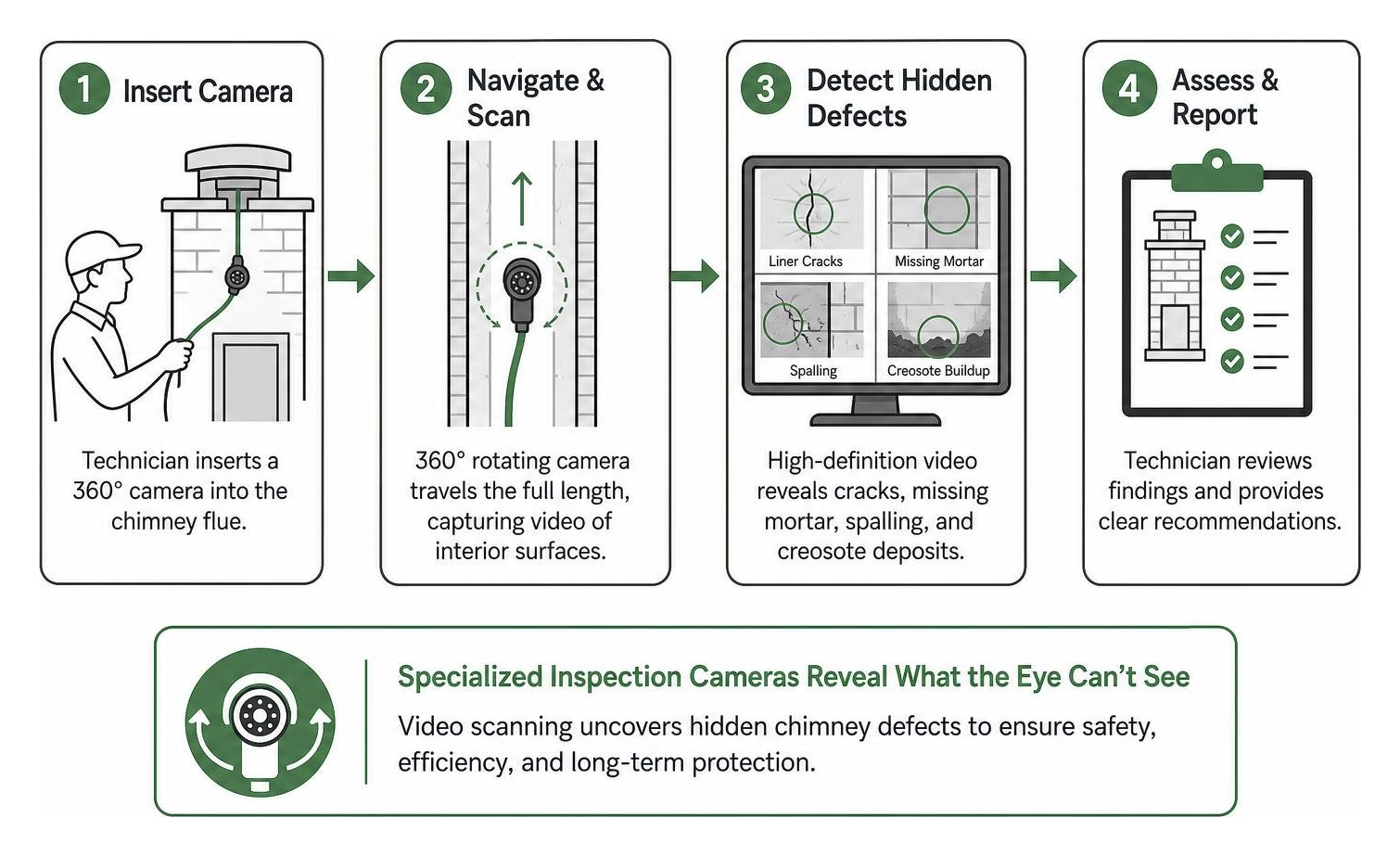
Most standard appointments take between 60 and 90 minutes. We utilize advanced video scanning systems featuring 360-degree rotating camera heads that travel the full vertical length of the flue. This allows us to spot microscopic liner cracks, missing mortar between flue tiles, and hidden creosote deposits that cannot be seen from the hearth or roofline alone.
During sweeping, we use dust-control equipment and drop cloths to keep soot and ash contained.
Warning Signs, Costs, and Scheduling in Fredericksburg
Your fireplace and chimney often show subtle warning signs when internal parts begin to fail. Ignoring these signs can turn a simple patch into an expensive structural rebuild. For gas fireplaces, this gas fireplace service and chimney safety inspection guide explains why professional evaluation is important when venting or ignition components show changes.
Homeowners across our local service area in Fredericksburg can protect their investment by scheduling preventative maintenance alongside routine furnace and heating repair in Fredericksburg VA to ensure their entire home heating setup is safe.
Critical Signs You Need an Urgent Chimney Inspection Fredericksburg VA
If you notice any of the following indicators, avoid lighting a fire and schedule a professional evaluation immediately:
- Stage 3 Glazed Creosote: Shiny, hard, tar-like coatings on the flue walls that represent an extreme chimney fire risk.
- Backdrafting Smoke: Smoke spilling into your living room instead of venting smoothly upward.
- Foul Odors: Strong charcoal or musty campfire smells emanating from the hearth, especially on humid days. If you smell rotten eggs or sulfur near a gas appliance, leave the home and call your gas utility or 911.
- Moisture Stains & Efflorescence: White, chalky staining on exterior bricks or damp spots on walls and ceilings adjacent to the chimney chase.
- Stuck or Rusted Damper: Inability to open or close the throat damper smoothly due to rust flakes dropping onto the hearth.
- Damaged Flue Shards: Pieces of broken terracotta tile appearing in the firebox, signaling that the internal liner is crumbling.
For these and other structural issues, relying on comprehensive chimney services ensures that damaged components are restored to safe operating condition.
Transparent Pricing, Sweeping Bundles, and Maintenance Savings
Service needs vary by chimney condition, accessibility, and the work recommended after the inspection. Our team provides clear, upfront estimates before work begins, so you can make an informed decision without surprise charges.
- Level 1 safety inspection: A practical option for routine annual chimney safety checks.
- Chimney sweep service: Designed to remove creosote and debris that can restrict safe fireplace operation.
- Sweep and inspection appointment: Combines cleaning with a thorough safety evaluation in one visit.
- Comprehensive chimney service: May include internal sweeping, an exterior safety evaluation, and video scanning when appropriate.
- Chimney cap installation: Available in options selected to fit your flue size, material preferences, and chimney configuration.
Your final cost depends on the chimney’s condition, accessibility, service needs, and any recommended repairs. The team can provide clear, upfront pricing after evaluating your system.
For larger chimney repairs or recommended upgrades, ask the team about available financing options and membership benefits. Your technician can explain current eligibility, terms, and maintenance options after evaluating your chimney and discussing the work your home may need.
Frequently Asked Questions About Chimney Safety
How often should I schedule a chimney inspection in Fredericksburg?
You should schedule an inspection once every 12 months, ideally in late summer or early fall before you begin using your fireplace. The NFPA recommends annual evaluations regardless of how often you burn wood, as animal nesting, masonry settling, moisture damage, and deterioration happen year-round. Scheduling routine chimney sweeping alongside your inspection keeps your system fully prepared for winter.
How much does a chimney inspection cost in Fredericksburg, VA?
Chimney inspection costs vary based on the condition of the system, accessibility, whether cleaning or video scanning is needed, and any repairs identified during the evaluation. After assessing your fireplace and flue, the team can explain the recommended work and provide a clear, upfront estimate.
Can an annual inspection prevent carbon monoxide poisoning and chimney fires?
Yes. Regular inspections directly prevent chimney fires by measuring creosote accumulation and identifying early-stage deposits before they reach dangerous glaze stages. They also detect cracked flue liners, disconnected pipe joints, and downdraft obstructions that could leak lethal carbon monoxide gas into your living spaces.
Conclusion
A safe, cozy home during a chilly Virginia winter begins with a dependable fireplace and flue. At OHA HVAC, Plumbing, Chimney & Fireplaces, serving Virginia since 1995, our background-checked, certified chimney professionals bring professional care to every home we serve. As a veteran-founded, family-run company with a 4.9-star average across more than 5,000 Google reviews, we are proud to offer upfront pricing, same-day scheduling availability, and a 100% satisfaction guarantee.
Don’t wait for freezing weather to discover a hidden flue crack, creosote hazard, or draft obstruction. contact our professional chimney inspection technicians today to schedule a pre-winter appointment.
Need Help With HVAC, Plumbing, Chimney, or Fireplace Service?
OHA is available 24/7 across Fredericksburg, Fairfax, and Northern Virginia.