Warning Signs You Need Main Drain Cleaning
When your primary sewer line encounters a severe blockage, your plumbing system cannot send wastewater out to the municipal main or septic system. As water searches for the path of least resistance, it reverses course and forces its way up through your lowest plumbing fixtures.
Catching these warning signs early helps you arrange for professional drain cleaning before contaminated water floods your living space. According to the U.S. Environmental Protection Agency, untreated sewage backups can expose your household to harmful bacteria and viruses.
Keep an eye out for these classic indicators of a struggling main sewer line:
- Multiple Fixture Backups: Running your washing machine causes water to appear in your ground-floor shower, or running your bathroom sink makes the adjoining tub fill with murky water.
- Gurgling Sounds: When you flush a toilet or drain a full sink, you hear distinct gurgling, bubbling, or sucking noises echoing from nearby floor drains or tubs. This happens because trapped air cannot vent properly past the obstruction.
- Bubbling Toilets: Air bubbles rise through the standing water in your toilet bowl whenever another major water-using appliance discharges water.
- Standing Water in Floor Drains: Moisture, foul-smelling liquid, or dark residue pools around basement floor drains or laundry utility sinks.
- Persistent Sewer Gas Odors: A pervasive smell of rotten eggs or sulfur drifts up from drains throughout your home, indicating that wastewater and gases are trapped inside the lateral pipe.
- Slow Drains Across the Whole House: If every sink, tub, and shower in your home suddenly starts draining at a crawl simultaneously, the problem is not isolated hair or soap scum.
Main Sewer Line Clog vs. Secondary Drain Blockage
Understanding whether you have a localized secondary clog or a full main line obstruction saves time, money, and stress.
Every fixture in your home, such as a kitchen sink, bathroom vanity, or washing machine, connects to a dedicated branch line (typically 1.5 to 2 inches in diameter). These branch lines slope downward to merge into your building’s primary lateral sewer line (usually 4 to 6 inches in diameter).
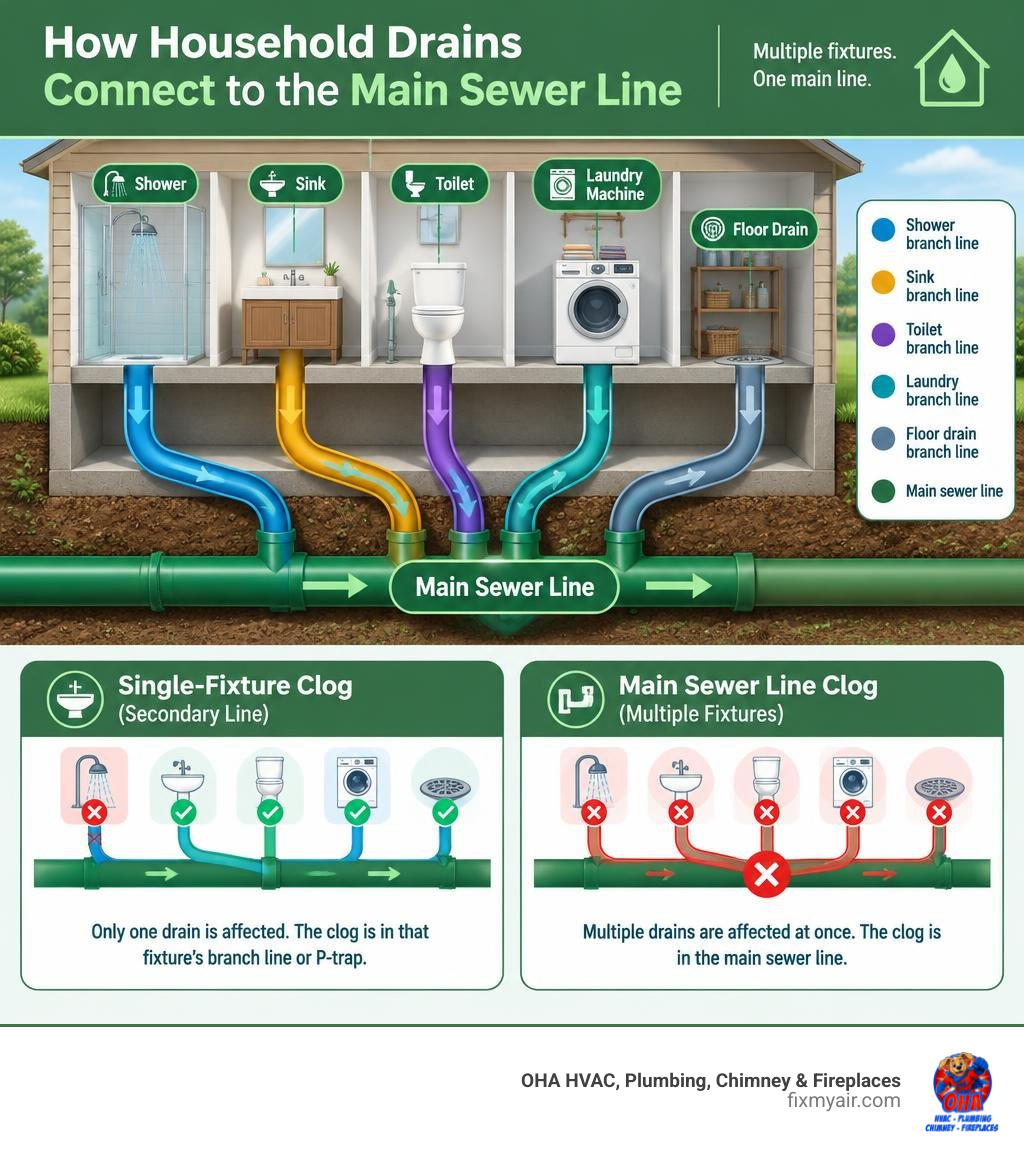
Here is how you can tell the difference between the two:
- Single-Fixture Clog (Secondary Line): Only one specific drain misbehaves. For example, if your upstairs shower drains slowly but the toilet flushes smoothly and downstairs sinks drain instantly, the clog is trapped in that shower’s individual P-trap or branch line.
- Main Sewer Line Clog: Multiple fixtures across different rooms or levels malfunction simultaneously. Using water on an upper floor immediately triggers overflows or gurgling in basement or ground-floor fixtures. If wastewater spills out of your outdoor sewer cleanout cap, your main line is blocked.
Hidden Dangers of Ignoring Sewer Main Line Clogs
A clogged main sewer line is more than an inconvenience; it presents genuine health risks and structural threats. Wastewater contains dangerous bacteria, parasites, and airborne pathogens that can contaminate floors, walls, and indoor air.
Beyond biological hazards, ignoring a stubborn blockage allows hydraulic pressure to build up inside underground pipes. Over time, standing sewage can seep beneath your foundation slab, eroding soil and causing foundation shifts or cracked flooring.
In older plumbing systems, prolonged hydrostatic pressure combined with heavy blockages can lead to cracked pipe joints, collapsed lateral sections, and extensive structural rotting. When you notice persistent multi-drain issues, prompt residential plumbing repair is essential to preserve your home’s integrity.
Step-by-Step Guide: How Professionals Clear Main Drain Blockages
Clearing a primary sewer line requires commercial-grade machinery, systematic diagnostics, and specialized protective gear. Plumbers follow structured protocols to locate, evaluate, and clear obstructions safely, ensuring your plumbing services deliver lasting relief rather than temporary band-aids.
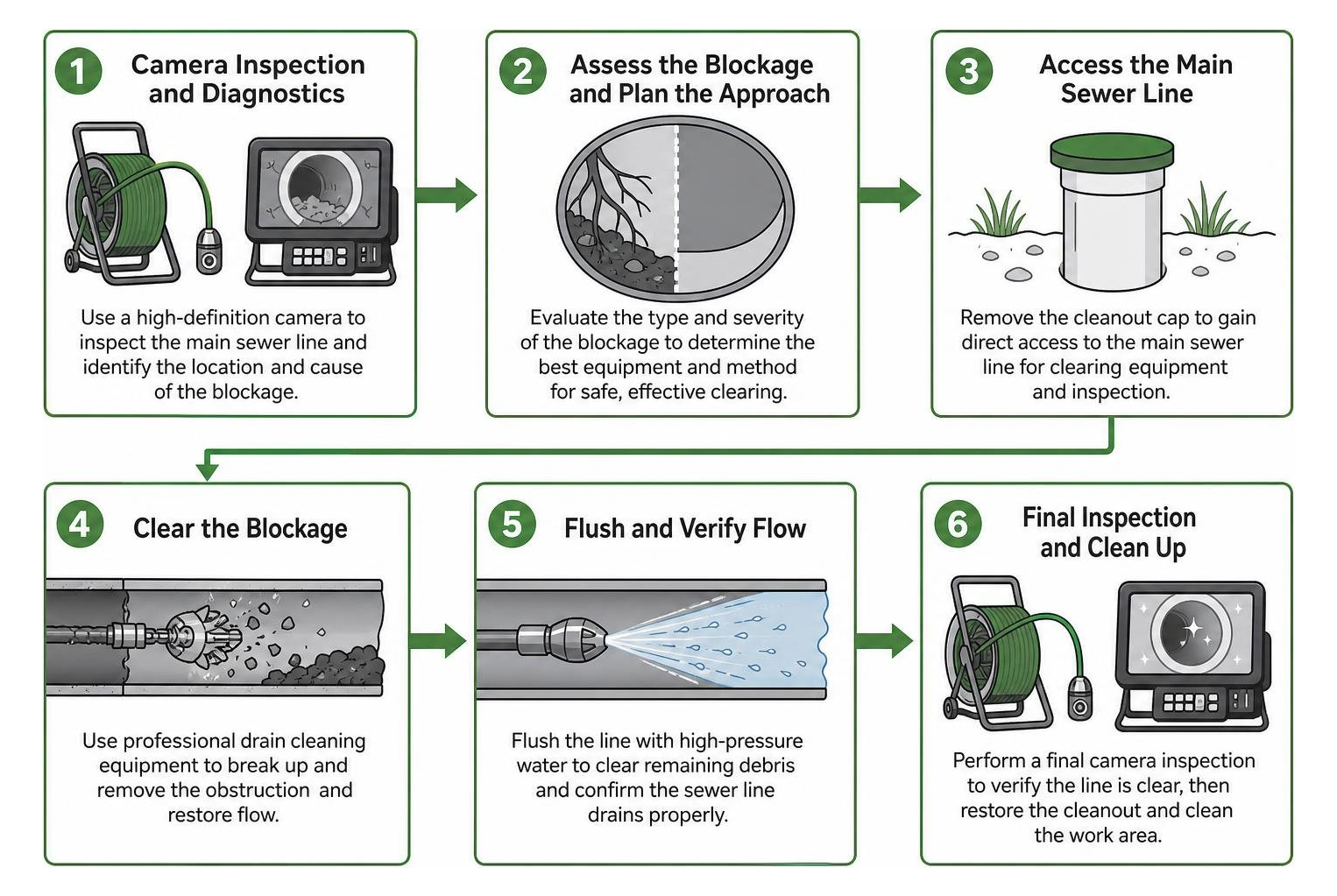
Step 1: Camera Inspection and Diagnostics
Before inserting heavy cutting heads or high-pressure tools, technicians perform an in-depth video pipe inspection. An illuminated, high-definition camera mounted on a flexible, fiber-optic reel travels down the sewer line through your main cleanout.
This diagnostic step reveals several crucial details:
- Root Intrusion: Pinpoints where aggressive tree roots entered pipe joints to seek water and nutrients.
- Pipe Bellies: Highlights sagging sections where standing wastewater and heavy sludge settle due to shifting soil.
- Structural Damage: Identifies cracked clay tiles, broken PVC, corroded cast-iron scaling, or crushed Orangeburg pipes.
- Depth and Location: Transmitters in the camera head broadcast radio frequencies, enabling technicians to map the exact depth and physical location of underground damage from above ground.
Step 2: Mechanical Snaking for Immediate Main Drain Cleaning
Mechanical snaking (also known as motorized augering) utilizes a heavy-duty, motorized drum machine loaded with a thick, steel-wound cable (typically 1/2-inch to 5/8-inch thick).
As the motor spins the cable down the cleanout, specialized cutting heads, such as C-cutter or spearhead blades, bore through tough clogs.
The spinning head chops through accumulated toilet paper, feminine hygiene products, wet wipes, and dense root masses. While mechanical snaking is great for quickly punching a relief hole through a solid obstruction to restore emergency drainage, it usually leaves greasy film and mineral scale clinging to the pipe walls. For persistent blockages, specialized methods offer deeper, comprehensive solutions.
Step 3: High-Pressure Hydro Jetting for Long-Term Main Drain Cleaning
When lines suffer from recurring root ingress, heavy cooking grease, or thick mineral scale, main line jetting is the most thorough cleaning solution available.
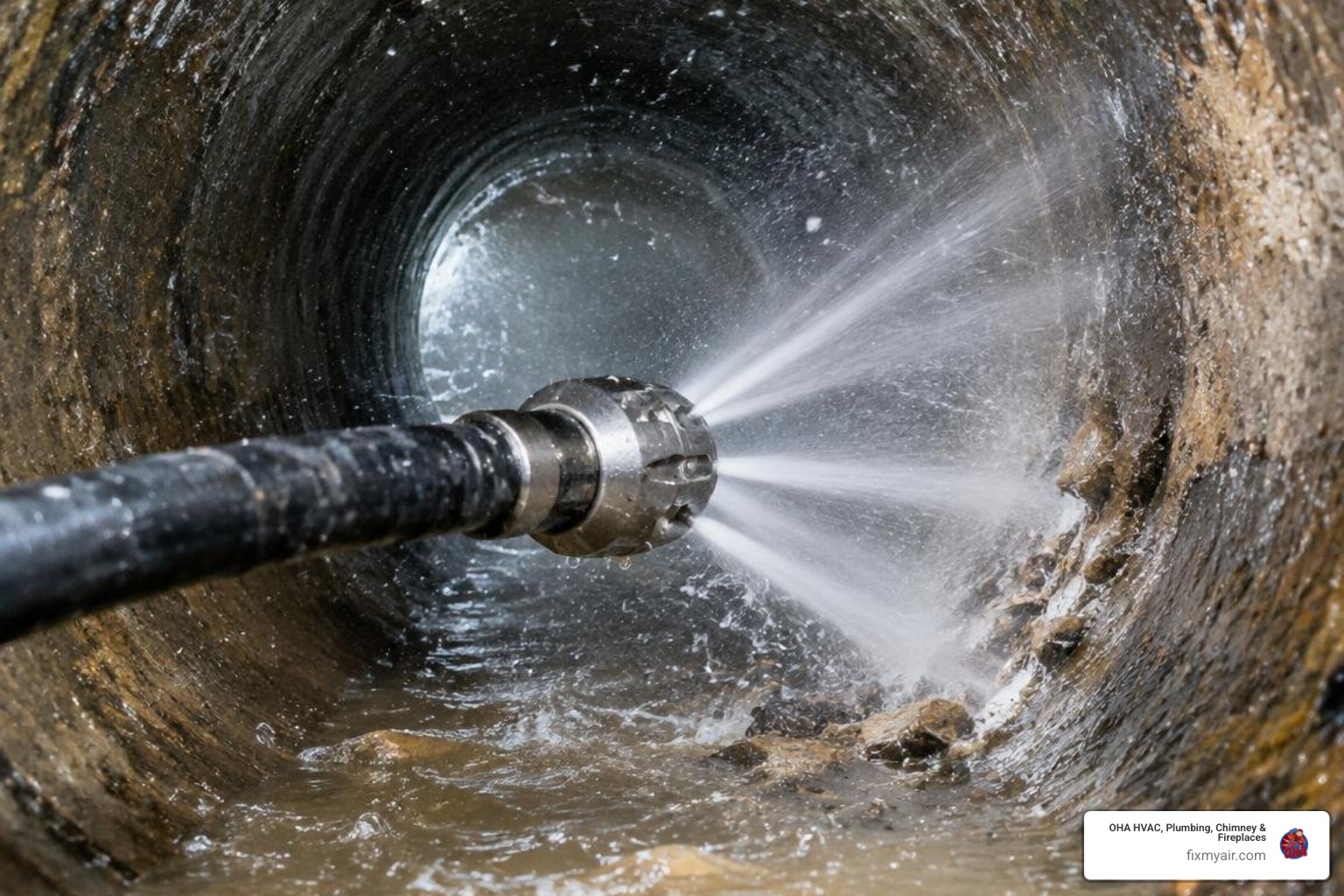
Hydro jetting uses a heavy-duty, truck-mounted machine that pumps water through a specialized rear- and forward-facing nozzle at pressures between 3,000 and 4,000 PSI (with flow rates up to 18 gallons per minute).
- 360-Degree Scouring: The forward jet penetrates solid blockages, while high-velocity reverse jets propel the hose forward, scrubbing grease, soap buildup, and scale off the entire pipe circumference.
- Complete Root Removal: Specially designed rotating root-cutting nozzles slice fibrous root intrusion flush against pipe walls.
- Restored Pipe Diameter: Unlike mechanical snakes that merely bore a small hole, hydro jetting flushes loosened debris downstream, restoring more of the pipe’s usable diameter.
- Safe and Environmentally Friendly: Hydro jetting uses pressurized tap water without harsh chemicals. A technician checks the pipe’s condition first, because older or fragile lines may not be suitable.
Comparing Methods, Lifespans, and Costs of Clearing Main Drains
Choosing between mechanical snaking and advanced hydro jetting comes down to your pipe condition, the severity of the blockage, and your budget.
Main sewer line clearing costs vary based on the type and severity of the blockage, the condition and length of the line, accessibility, and whether diagnostic services are needed. Mechanical snaking may be appropriate for an immediate obstruction, while camera inspection and hydro jetting can involve a more extensive service visit. Your plumber can assess the line and provide upfront pricing based on the work required.
If tree roots or soil shifts have caused severe structural pipe damage or collapse, the line may need targeted repair or full replacement. The final cost depends on the location and extent of the damage, pipe material, access conditions, permitting needs, and the repair method. For comprehensive restoration, reliable plumbing repair helps ensure each component is evaluated and repaired to applicable building-code requirements.
| Feature / Factor | Mechanical Snaking (Auger) | High-Pressure Hydro Jetting |
|---|---|---|
| Pricing | Varies based on blockage severity, line access, and required equipment | Varies based on pipe condition, buildup, access, and diagnostic needs |
| Operating Method | Mechanical torque with a cutting head | High-pressure water delivered through a specialized nozzle |
| Cleaning Thoroughness | Opens a path through the main blockage | Cleans buildup from the interior pipe walls |
| Grease & Scale Removal | Limited for heavy grease and scale | More effective for grease, scale, and accumulated debris |
| Root Management | Can cut through root growth to restore flow | Can address root-related buildup when the pipe condition supports it |
| Typical Results | Often best for immediate relief from a blockage | Often preferred for more thorough cleaning and recurring buildup |
| Best Used For | Urgent clogs and some older or more fragile lines | Recurring clogs, heavy grease, and preventive maintenance |
Your technician can recommend the appropriate method and provide upfront pricing after evaluating the line and access conditions.
When Can You DIY vs. When to Call for Emergency Plumbing Help
Minor clogs inside an individual sink or tub P-trap can often be resolved with a standard hand plunger, a manual sink snake, or an enzyme-based drain maintenance cleaner. However, clearing an underground main sewer line is rarely a DIY project.
Here is why handling main line backups on your own carries serious risks:
- Pressurized Sewage Geysers: If you unscrew a main cleanout cap while the house lines above are full of trapped water, wastewater can erupt out of the fitting, flooding your basement or yard with raw sewage.
- Hazardous Fumes: Sewer lines contain methane, hydrogen sulfide, and other toxic gases that require proper ventilation and protective gear.
- Corrosive Chemicals: Over-the-counter chemical drain cleaners rarely work on deep, waterlogged main lines. These caustic chemicals can corrode older cast-iron piping, generate extreme heat that softens PVC joints, and create burn hazards for technicians working on the line later.
- Equipment Incompatibility: Consumer hand augers lack the length, motor strength, and blade diameter needed to clear 4-to-6-inch underground pipes.
If wastewater is actively rising in multiple fixtures, shut off your main water supply valve and contact professional technicians equipped to handle serious plumbing emergencies.
How to Prevent Main Line Sewer Backups
Preventing main line sewer backups requires good disposal habits and regular maintenance. A few simple adjustments protect your sewer line and prevent unexpected clogs:
- Avoid Pouring FOG Down Sinks: Never dump fats, oils, or grease down kitchen sinks. While liquid when hot, grease solidifies inside cold underground pipes, trapping food scraps and building thick blockages.
- Flush Only Toilet Paper: Do not flush facial tissues, paper towels, dental floss, feminine products, or “flushable” wipes. Despite what their packaging claims, wet wipes do not dissolve quickly in water and are a leading cause of sewer clogs.
- Manage Landscaping Roots: Avoid planting fast-growing, water-seeking trees (like willows, maples, or poplars) near underground sewer lines.
- Schedule Routine Inspections: If your property has mature trees or older cast-iron lines, ask your plumber how often a sewer camera inspection makes sense, so root intrusion is found before it causes an emergency.
Frequently Asked Questions About Main Drain Cleaning
How often should a main sewer line be cleaned?
There is no single schedule that fits every home. Properties with mature trees near underground lines, homes with aging cast-iron pipes subject to internal scaling, and large households with heavy water usage benefit from more frequent inspections. Your plumber can recommend an interval after seeing the condition of your line
What is the difference between hydro jetting and drain snaking?
A mechanical drain snake uses a spinning steel cable to drill through an obstruction, punching an opening to restore basic water flow. While effective for fast relief, it leaves grease, mineral scale, and root fragments clinging to the pipe walls, so clogs can return sooner than with a full cleaning.
In contrast, high-pressure hydro jetting scours the inner pipe wall, removing buildup that a snake leaves behind and keeping lines clear for longer.
Can chemical drain cleaners clear a main sewer line clog?
No. Chemical drain cleaners are designed for minor, localized clogs close to a fixture. When poured down a drain with a main line blockage, the chemical dilutes in standing water long before reaching the obstruction deep underground.
Furthermore, caustic chemicals generate intense heat that can warp PVC pipes, accelerate corrosion in older cast iron, and create hazardous conditions for plumbers who must service the line manually.
Conclusion
A blocked main sewer line can quickly escalate from bubbling toilets and slow drains into widespread property damage. Knowing the warning signs, such as multiple fixture backups, gurgling floor drains, and sewer gas odors, allows you to take action before raw sewage backs up into your home.
Modern camera diagnostics take the guesswork out of main drain clearing, while high-velocity hydro jetting cleans your pipes thoroughly for long-lasting protection.
At OHA HVAC, Plumbing, Chimney & Fireplaces, our veteran-founded team is here to restore your home’s drainage quickly and cleanly. Backed by a 4.9-star average across more than 5,000+ Five-Star Reviews, we provide honest upfront pricing, clear communication, and dependable 24/7 service. When sewer backups threaten your comfort, contact our professional main drain cleaning technicians to keep your home running smoothly.