Start With Safety: What a Homeowner Can Check
If your gas fireplace pilot won’t stay lit, check for a gas smell before touching the unit. If you smell gas, leave the home and call your gas utility or 911 from outside. Otherwise, check the fireplace manual. If it permits homeowner cleaning, turn off the fireplace and gas, let the unit cool, then gently brush dust from the accessible exterior of the pilot assembly with a dry, soft brush. Don’t poke the pilot opening, use liquid cleaners, or take apart gas fittings.
A weak flame may point to debris, but a faulty sensor or gas supply issue can cause the same symptom. If cleaning isn’t allowed by the manual or the pilot still goes out, call a qualified gas fireplace technician.
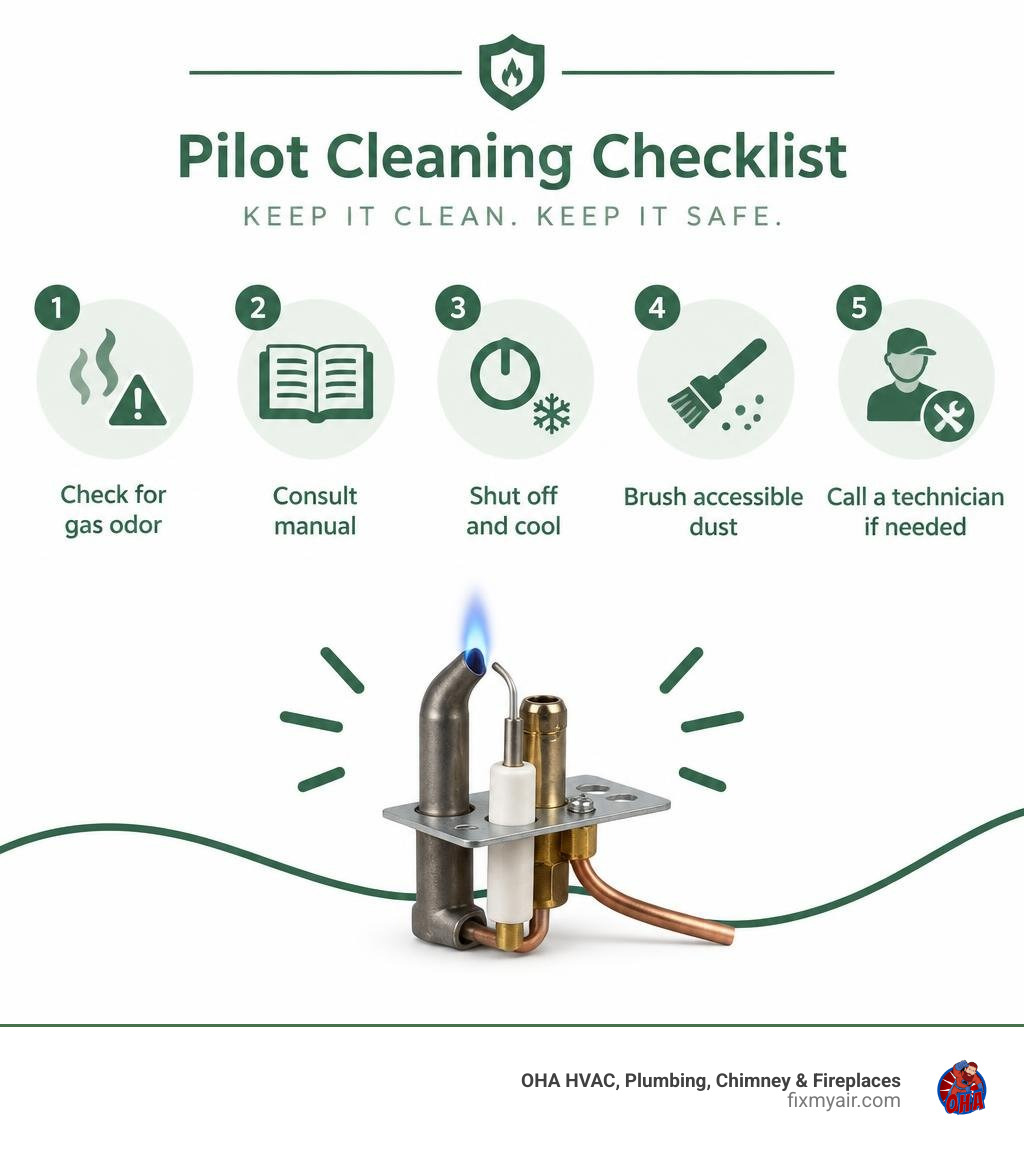
Knowing a few gas fireplace pilot cleaning basics can help you recognize when a simple maintenance concern may need professional attention. If soot or residue is also affecting the viewing area, review our guide to fireplace glass cleaning. For a broader check of the pilot assembly, venting, burner operation, and safety components, learn what is included in a gas fireplace inspection.
For additional background on pilot assemblies, consult this manufacturer troubleshooting guide to gas valves, ODS pilots, thermocouples, and thermopiles.
Why Your Gas Fireplace Pilot Light Keeps Going Out
On a cold evening, you settle onto the couch, flip the fireplace switch, and nothing happens. When you peer through the glass, that reliable little blue flame is completely absent.
Understanding why this happens starts with knowing the two main ignition styles used in residential homes:
- Standing Pilot Systems (Millivolt): These feature a continuous, small flame that burns 24/7. This flame warms a safety sensor called a thermocouple or thermopile, which generates tiny electrical currents (millivolts) to hold the internal gas safety valve open.
- Intermittent Pilot Ignition (IPI): These modern, electronic systems spark the pilot light on demand only when you call for heat. Once the electronic flame sensor confirms ignition, the main burner lights, saving energy over time.
When troubleshooting, start by checking whether your main gas supply valve is fully open. If the gas is turned on but the flame extinguishes as soon as you release the control knob, safety shutoff mechanisms are stepping in to protect your home. Diagnosing gas fireplace repair issues often reveals that built-up debris is a common cause of pilot light problems.
External factors like strong chimney drafts, pressure changes, or exhaust disruptions can also cause intermittent outages. A systematic inspection of the pilot assembly, venting, and electrical connections can help you quickly confirm whether you are facing a simple airflow disruption or an electrical sensor failure.
Common Culprits Behind Pilot Outages
Why does a pilot assembly stop working properly? Over months of sitting idle, especially during humid summers, tiny contaminants can settle across sensitive components:
- Spider Webs: Spiders are naturally attracted to the odorant (mercaptan) added to natural gas and propane. A single microscopic web inside the pilot tube can strangle fuel flow.
- Soot and Dust Accumulation: Household dust, lint, and pet hair settle around the burner base, restricting primary air intake.
- Clogged Pilot Orifice: The orifice contains a pinhole opening that meters gas. Microscopic debris can cause a weak, flickering flame that cannot stay lit.
- Oxidized Flame Sensors: Faulty or oxidized thermocouple and flame sensors are a frequent cause of pilot outages.
Critical Safety Checks Before Troubleshooting
Before touching any fireplace components, evaluate your immediate environment. Gas fireplaces can present fire, carbon-monoxide, gas-leak, and improper-operation hazards when equipment is damaged, poorly maintained, improperly vented, or used incorrectly.
- Check for Gas Odor: Natural gas and propane are treated with mercaptan to smell like rotten eggs or sulfur. If you smell gas, do not flip light switches or use phones near the unit. Evacuate immediately and contact your gas utility from a safe distance.
- Verify Carbon Monoxide Alarms: Ensure you have a functioning carbon monoxide alarm outside each sleeping area and on every level of your home, including the basement.
- Shut Down Power and Fuel: Turn the gas control knob to “OFF” and shut off electrical switches or circuit breakers supplying blowers and electronic modules. Let the entire unit cool down for at least 30 minutes before proceeding.
If you are ever unsure about venting conditions or suspect internal gas valve leaks, schedule an annual gas fireplace inspection to keep your home protected.
Step-by-Step Gas Fireplace Pilot Cleaning and Restoration
A yellow, weak, or flickering pilot flame can indicate dust around accessible parts of the assembly, but it can also signal an airflow, ignition, or gas-supply issue. Because pilot components and gas connections are delicate, homeowners should limit maintenance to the safe, manual-approved checks described below.
Safe Homeowner Checks Before Scheduling Service
After confirming there is no gas odor and allowing the fireplace to cool, consult the owner’s manual for model-specific maintenance guidance. If the manual permits it, use a dry, soft brush to remove loose dust from the accessible exterior of the pilot area and surrounding firebox. Do not insert objects into the pilot opening, disconnect gas fittings, apply liquid cleaners, or alter the position of sensors or ignition components. For viewing-area upkeep, see our guide to fireplace glass cleaning.
A clear view of the pilot flame can still be useful. Note whether it is consistently blue, weak, yellow, split, or going out after the control is released. These observations can help a qualified technician diagnose whether the concern involves the pilot assembly, ignition system, venting, or gas supply.
When a Professional Diagnosis Is the Safer Next Step
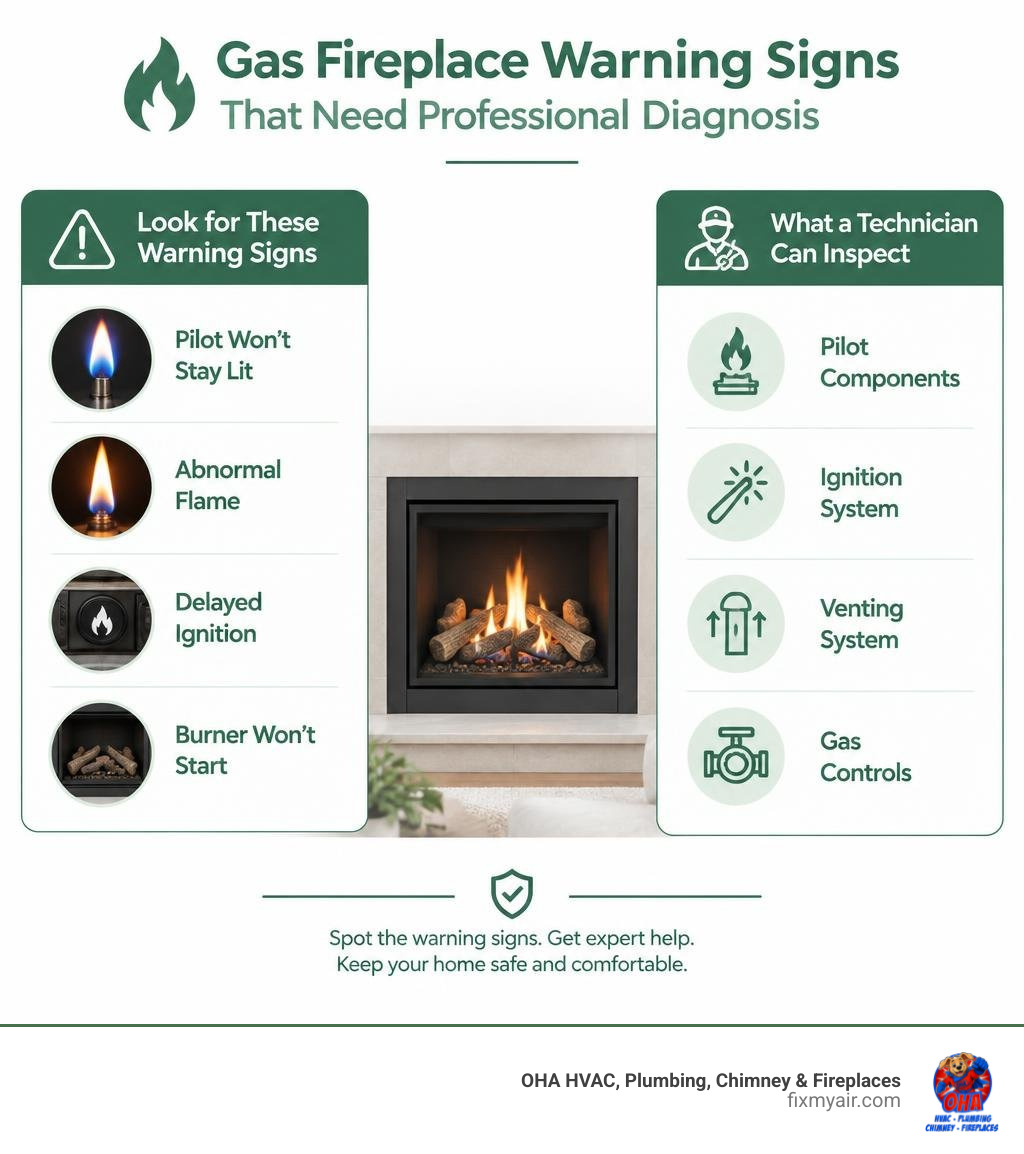
Schedule service when the pilot will not remain lit after manual-approved exterior cleaning, the flame pattern looks abnormal, the fireplace has delayed ignition, or the main burner does not start reliably. A technician can safely inspect the pilot assembly, thermocouple or thermopile, electronic ignition parts, venting, and gas controls without risking damage to calibrated components.
Standing Pilots and Electronic Ignition Systems
Standing-pilot and intermittent-pilot fireplaces use different safety and ignition components, so the correct service approach depends on the model. If the fireplace uses batteries for electronic ignition, the owner’s manual may identify a user-replaceable battery compartment. If your model requires glass removal for service access, review safely maintaining and cleaning fireplace glass before proceeding. For any other cleaning, testing, adjustment, or repair, rely on a qualified gas fireplace technician.
Testing Components: Cleaning vs. Replacing Your Thermocouple and Thermopile
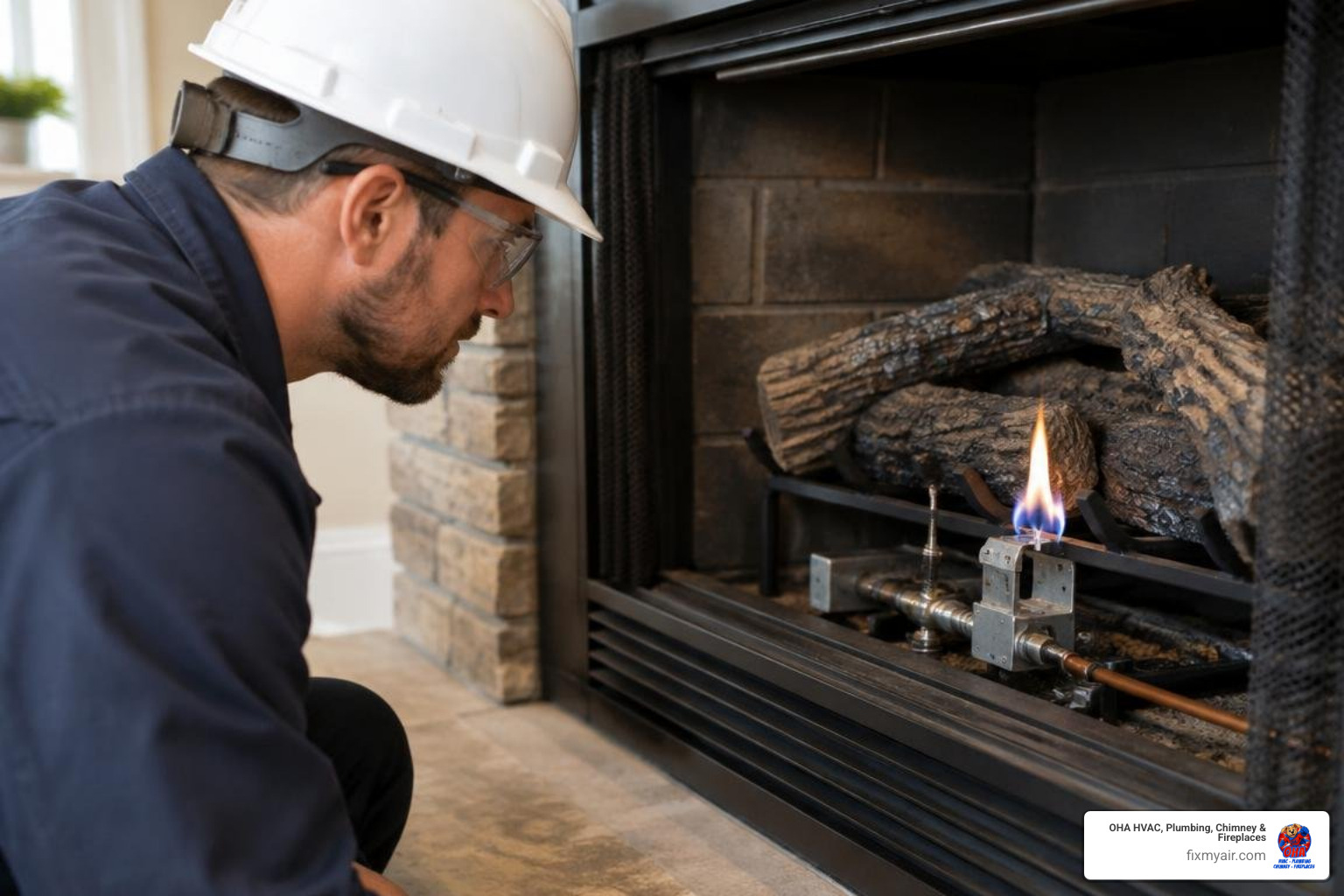
A pilot that repeatedly goes out may have a dirty exterior, a worn safety sensor, an ignition problem, or a gas-control concern. Thermocouples, thermopiles, and electronic flame sensors are safety-related parts, so accurate testing and replacement should be handled by a qualified gas fireplace technician.
What a Technician Evaluates
During a professional diagnosis, the technician checks whether the pilot flame is correctly positioned, whether the relevant sensor responds properly to heat, and whether the fireplace’s ignition and gas-control components are operating as intended. They can also identify damaged wiring, loose connections, venting concerns, and internal valve problems that are not safe to diagnose through trial and error.
| Homeowner Observation | What It May Indicate | Recommended Next Step |
|---|---|---|
| Pilot flame is weak, yellow, or uneven | Airflow or pilot-assembly concern | Stop using the fireplace if conditions seem unsafe and arrange an inspection. |
| Pilot goes out after lighting | Sensor, ignition, or gas-control issue | Have a qualified technician diagnose the safety components. |
| Pilot stays lit but the burner will not start | Control circuit, switch, or valve concern | Schedule professional troubleshooting rather than disassembling components. |
| Visible corrosion, cracking, or damaged wiring | Worn or damaged component | Do not operate the fireplace until it has been assessed. |
When Cleaning May Help
Manual-approved exterior dust removal can sometimes improve airflow around accessible areas, particularly after a long period without use. It is not a substitute for testing or repairing sensors, electrical connections, gas valves, or pilot openings. If the symptom returns after basic approved maintenance, professional diagnosis is the more reliable option.
Signs It Is Time for Professional Service
Arrange service if the pilot will not stay lit, the flame changes color or shape, the fireplace has delayed ignition, the burner does not respond consistently, or the unit has visible damage. Professional service helps confirm the underlying cause and prevents repeated outages or damage from an incorrect repair attempt. Gas fireplace service can provide a safe inspection and diagnosis when the issue involves components that homeowners should not adjust.
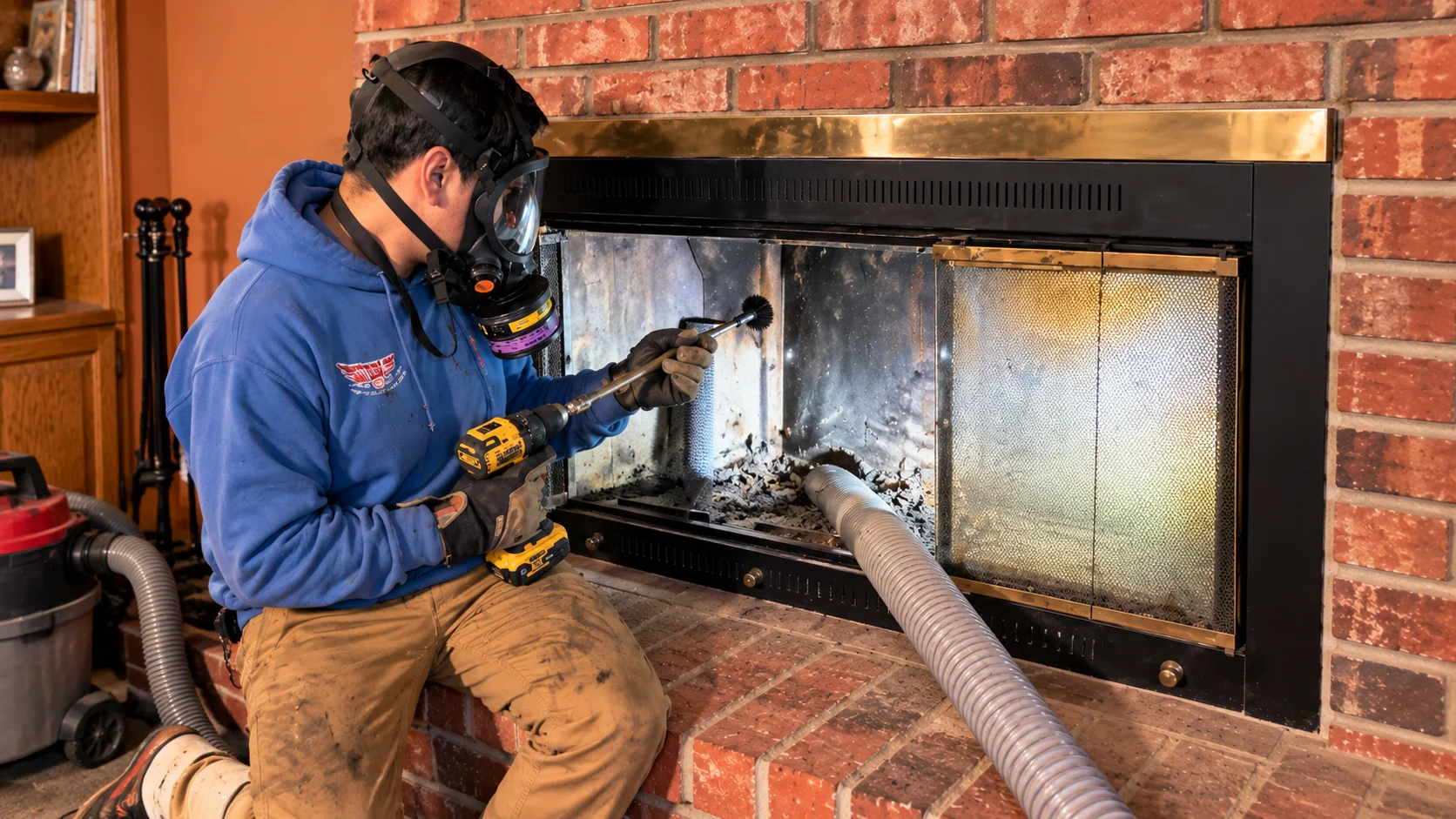
For persistent pilot or burner problems, professional gas fireplace cleaning can include a safe inspection of the components that homeowners should not disassemble or adjust.
Frequently Asked Questions About Pilot Light Maintenance
Can I use liquid cleaners or WD-40 on my fireplace pilot assembly?
No. Liquid cleaners, spray lubricants, and solvent degreasers should never be sprayed onto gas fireplace components. These liquids leave residues that attract airborne dust and pet hair, forming a gummy sludge inside fuel channels.
Additionally, petroleum-based sprays create immediate combustion hazards, corrosive vapors, and foul odors that can harm your indoor air quality when heated. Use only the dry, manual-approved maintenance methods recommended for your specific fireplace.
Why does my pilot light stay lit, but the main burner fails to turn on?
If your pilot stays lit consistently but flipping the wall switch does not ignite the main burner, the issue usually points to the thermopile circuit rather than the thermocouple:
- Control or Sensor Concern: A component may keep the pilot lit but fail to support reliable burner operation.
- Switch, Thermostat, or Wiring Issue: A control-path problem can prevent the fireplace from receiving the signal to start.
- Gas Valve Concern: Internal valve components can also keep fuel from reaching the burner.
A qualified technician can identify the cause safely without disassembling or adjusting gas controls.
How often should I clean my gas fireplace pilot light?
You should have your pilot light assembly inspected at least once per year, ideally in early autumn before firing up the heating system for winter. If your home has multiple shedding pets, sits in a dusty environment, or you regularly burn decorative embers that generate soot, perform a visual check every few months.
Look for a sharp, steady blue flame wrapping the upper portion of the sensors; if the flame appears yellow, split, or weak, schedule a professional inspection.
Conclusion
A well-maintained gas fireplace provides dependable, cozy heat all winter long, but safety must always come first when dealing with natural gas or propane. While basic exterior dusting may be permitted by your manual, sensors, internal gas adjustments, fuel pressure testing, and valve replacements require specialized tools and diagnostic expertise.
If your pilot light continues to go out after cleaning, or if you ever suspect a gas supply issue, turn to our team at OHA HVAC, Plumbing, Chimney & Fireplaces. Backed by upfront pricing and a 4.9-star average across more than 5,000+ Five-Star Reviews, our veteran-founded and family-run team is ready to help. Contact our professional gas fireplace technicians today to keep your home warm and protected all season long.