Is Professional Gas Fireplace Cleaning Worth It Before Winter?
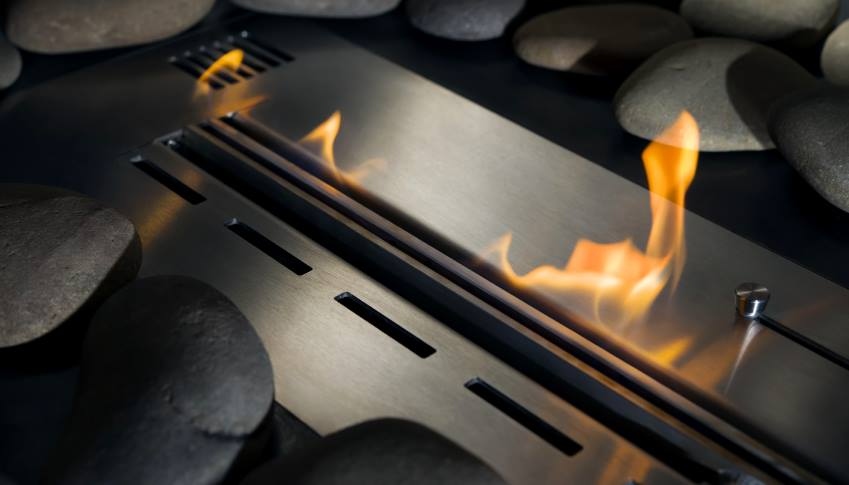
Yes. A pre-winter gas fireplace cleaning and professional safety check are worth it for most homeowners. Dust, pet hair, pollen, insects, and soot can collect while the unit sits unused, leading to hard starts, yellow flames, dirty glass, and less efficient heating when you need it most.
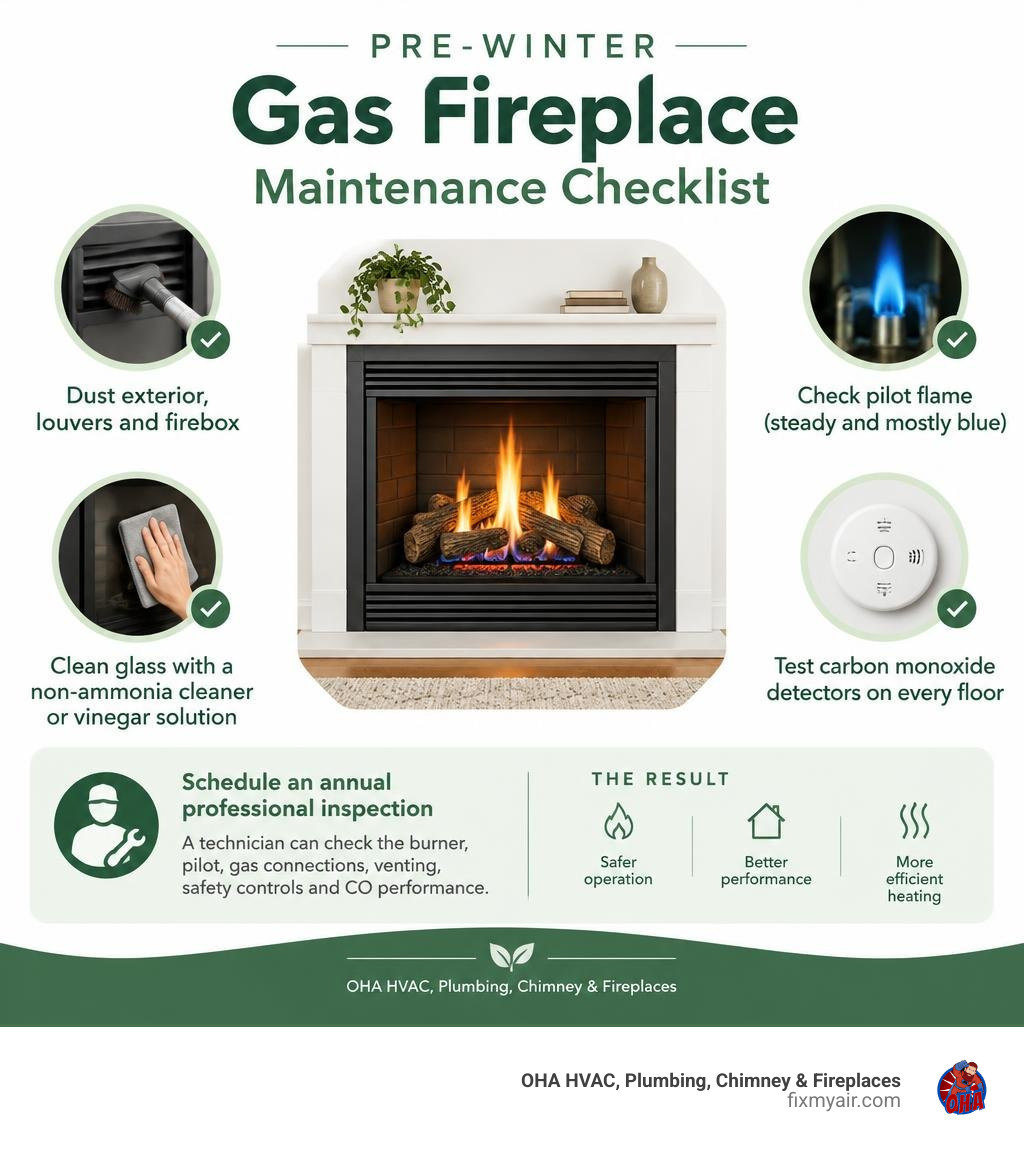
Before the first fire of the season, you can safely handle basic tasks:
- Dust the exterior, louvers, and firebox with a soft brush or vacuum attachment.
- Clean fully cooled glass with a non-ammonia fireplace-glass cleaner or a 1:1 vinegar-and-water solution.
- Check that the pilot flame is steady and mostly blue.
- Test carbon monoxide detectors on every floor.
But an annual professional inspection goes further. A qualified technician can inspect the burner, pilot, gas connections, venting, safety controls, and carbon monoxide performance. This matters because a typical gas fireplace can use up to 31,000 BTUs per hour, and clean combustion depends on correct airflow, log placement, and burner operation.
If you smell gas, see heavy soot on the glass, notice a yellow or flickering flame, or have repeated ignition trouble, stop using the fireplace and call a professional promptly. Those are not routine cleaning issues.
Why Pre-Winter Gas Fireplace Cleaning Matters
When the crisp autumn air settles in, firing up the hearth brings immediate warmth and comfort. However, leaving a unit untouched after months of inactivity poses hidden risks. Even though natural gas and liquid propane burn significantly cleaner than cordwood, a gas fireplace is a mechanical combustion appliance. Over spring and summer, household dust, pet dander, pollen, and cobwebs can settle into the louvers, burner channels, and pilot assembly.
Spiders and small insects may spin webs inside burner ports or near the pilot orifice. When you switch the unit on for the first time in autumn, this debris can create odors, restrict combustion air, and contribute to ignition delays. A restricted burner assembly can reduce heating performance and put extra strain on the system.
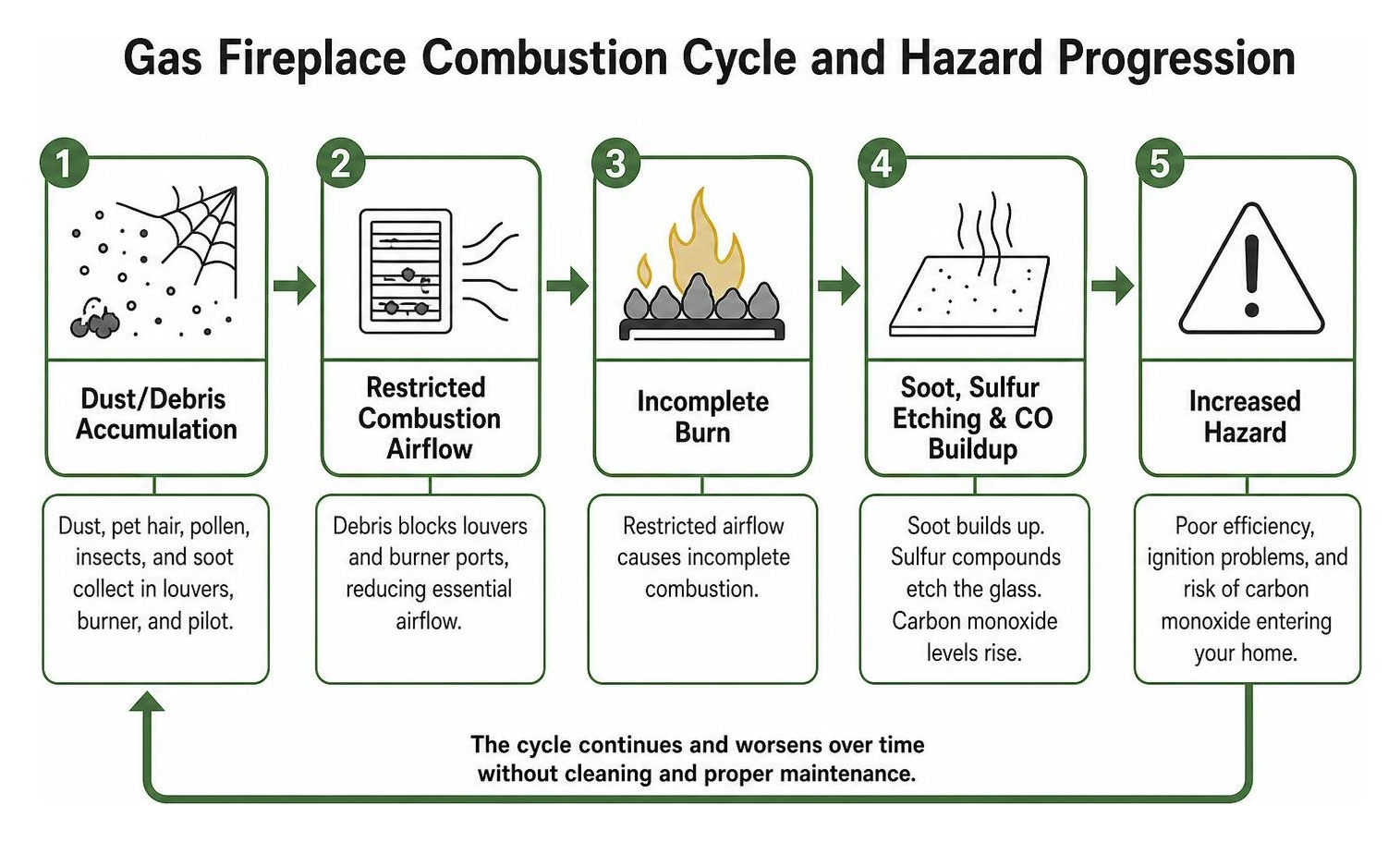
Dust and combustion byproducts can also leave a stubborn white film on the cooler ceramic glass. If that residue remains through repeated heating cycles, it can become harder to remove. Regular care helps homeowners spot changes in flame appearance, glass condition, and ignition performance before the heating season is underway.
For a deeper explanation of seasonal upkeep, OHA’s fireplace cleaning guide explains how routine cleaning supports dependable operation without treating a gas fireplace as maintenance-free.
Monthly Dusting vs. Annual Deep Inspection
A common misconception among homeowners is that gas fireplaces are entirely maintenance-free. While you do not have to shovel out wood ash, establishing a tiered cleaning routine supports reliable performance and longevity.

- Monthly Routine Upkeep: Even when your fireplace sits idle during warmer months, ambient room currents pull fine lint and hair through the lower control cavity. A quick wipe-down of the outer frame, cleaning the glass enclosure, and vacuuming accessible lower louvers can help keep debris from reaching internal components. If you operate a vent-free system, follow the manufacturer’s instructions for cleaning around the Oxygen Depletion Sensor (ODS).
- Annual Deep Inspection: Once a year, before heavy winter usage begins, arrange a comprehensive evaluation. Annual service covers mechanical components that homeowners should not adjust themselves, such as burner components, safety shutoff systems, ignition performance, and venting.
Venting and Chimney Clearance Requirements
Whether your appliance relies on a traditional masonry chimney, a dedicated B-vent pipe, or a modern direct-vent balanced flue, the venting path must remain unobstructed. Direct-vent fireplaces draw combustion air from outdoors while routing exhaust gases outside through a sealed vent system.
During the off-season, exterior vent terminations can attract nesting birds, rodents, and wasps. Leaves and twigs can also accumulate near an exterior hood. When a vent is restricted, exhaust can back up into the firebox or enter the home through compromised seals.
For fireplaces connected to a chimney or venting system, OHA’s chimney sweep and repair services provide a professional option for inspecting clearance, buildup, and visible venting concerns.
Burning natural gas also creates water vapor, so it is important to have a qualified technician assess corrosion, connections, and vent condition during seasonal service. If you notice smoke lingering near the appliance, odors that do not clear, or signs of poor draft, stop using the fireplace and schedule an inspection.
DIY Maintenance vs. Professional Service
Understanding the boundary between safe DIY surface cleaning and critical professional servicing helps protect your home and prevents costly component damage.
While wiping dust from accessible louvers and cleaning cooled glass are reasonable homeowner tasks, touching the gas train, manipulating fuel valves, or dismantling the burner assembly should be left to a qualified professional.
| Maintenance Task | Safe for DIY Homeowner | Requires Certified Professional | Why It Matters |
|---|---|---|---|
| Glass Enclosure Cleaning | Yes | Optional | Removes loose soot and surface film with a non-ammonia cleaner. |
| Exterior Louver Dusting | Yes | Included in Tune-Up | Helps limit lint and pet hair around the firebox. |
| CO Detector Testing | Yes | Verified | Helps ensure safety devices work on every living level. |
| Gas Log Dusting | Yes (Use Caution) | Included in Tune-Up | Removes fine dust without disturbing delicate materials. |
| Burner Port and Orifice Cleaning | No | Yes | Requires precision tools; incorrect cleaning can affect the fuel-air mixture. |
| Thermocouple and Thermopile Testing | No | Yes | Requires proper testing equipment and manufacturer specifications. |
| Gas Pressure and Leak Checks | No | Yes | Requires specialized equipment to identify hazardous leaks. |
| Direct-Vent Integrity and Draft Test | No | Yes | Verifies that combustion seals and venting operate correctly. |
| Blower Fan Deep Clean and Balance | No | Yes | May require safe removal of internal components to clear packed dust. |
Professional cleaning and safety inspections vary by fireplace model, condition, and accessibility. The value is in identifying issues that routine surface cleaning cannot address, including component wear, ignition problems, unsafe combustion, and venting concerns.
Safe Supplies and DIY Gas Fireplace Cleaning Steps
When you tackle basic cleaning at home, using the correct supplies is important. Harsh household cleaners can damage ceramic glass, affect decorative finishes, or leave residues that create odors when the appliance is heated.
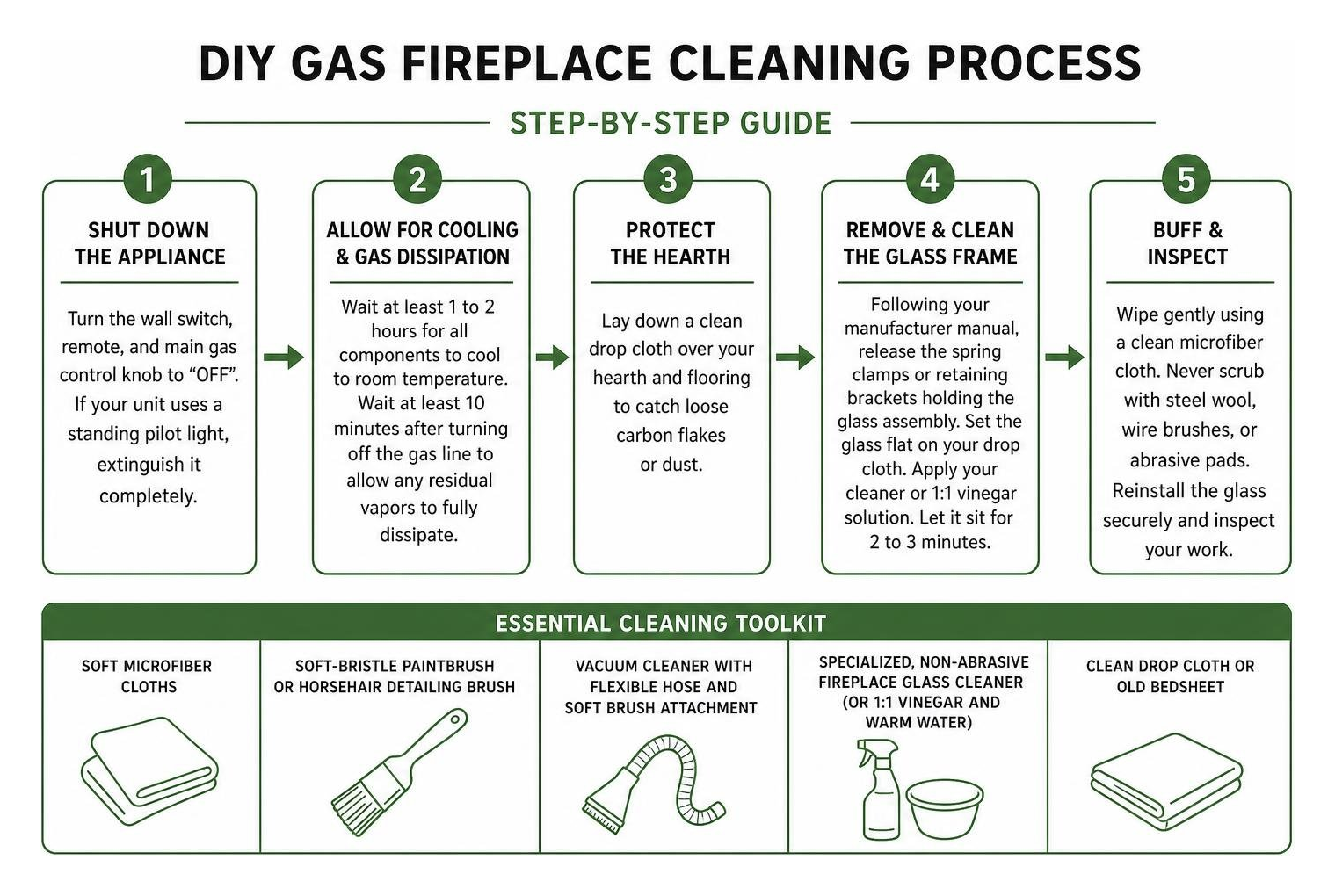
Essential Cleaning Toolkit
- Soft microfiber cloths (lint-free)
- Soft-bristle paintbrush or horsehair detailing brush
- Vacuum cleaner equipped with a flexible hose and soft brush attachment
- Specialized, non-abrasive fireplace glass cleaner or a 1:1 mixture of distilled white vinegar and warm water
- Clean drop cloth or old bedsheet to protect surrounding hearthstones
Step-by-Step DIY Cleaning Guide
- Shut Down the Appliance: Turn the wall switch, remote, and main gas control knob to the “OFF” position. If your unit uses a standing pilot light, extinguish it according to the manufacturer’s instructions.
- Allow for Cooling: Wait until all components are cool to the touch before cleaning. Follow the manufacturer’s instructions before opening the unit or handling the glass.
- Protect the Hearth: Lay down a clean drop cloth over your hearth and flooring to catch loose dust.
- Remove and Clean the Glass Frame: Following your manufacturer manual, release the spring clamps or retaining brackets holding the glass assembly. Set the glass flat on your drop cloth. Apply a specialty cleaner or a 1:1 vinegar solution, then wipe gently with a clean microfiber cloth. Never use steel wool, wire brushes, or abrasive pads.
- Clear Accessible Dust and Cobwebs: Using a soft brush attachment on your vacuum, gently lift dust and cobwebs from accessible lower areas, blower vents, and the perimeter of the firebox. Avoid striking gas logs or the burner tray.
- Reinstall and Inspect: Secure the glass frame according to the manufacturer’s instructions, verifying that the gasket and retaining hardware are properly seated.
What to Expect During a Professional Gas Fireplace Cleaning
A qualified technician performs a multi-point tune-up that goes deeper than cosmetic cleaning. OHA’s gas fireplace services can help homeowners schedule professional inspection, cleaning, repair, and seasonal maintenance when the appliance needs more than basic surface care.
A professional visit may include blower cleaning, safety-sensor testing, gas connection inspection, burner evaluation, and a combustion and venting assessment. These checks help identify developing issues before they interrupt comfort during cold weather.
For additional homeowner guidance on what seasonal service may involve, OHA’s gas fireplace service article covers common maintenance needs and signs that it is time to call the team.
Cleaning Logs, Burners, and Internal Components
The internal components of your gas fireplace, including the artificial log set and burner channels, are engineered to maintain a precise fuel-air ratio. Disturbing these parts without following the manufacturer’s procedure can contribute to poor combustion, soot buildup, and safety concerns.
Before touching anything inside the firebox:
- Ensure the gas supply is shut off according to the manufacturer’s instructions.
- Confirm that all interior elements are completely cool to the touch.
- Take a clear smartphone photo of the log arrangement before moving anything. Gas logs must be returned to their factory-specified positions to help prevent flame impingement, soot, and improper combustion.
Caring for Ceramic Fiber vs. Refractory Logs
Artificial gas logs can be made from different materials, and the correct cleaning method depends on the manufacturer’s instructions for your exact model.
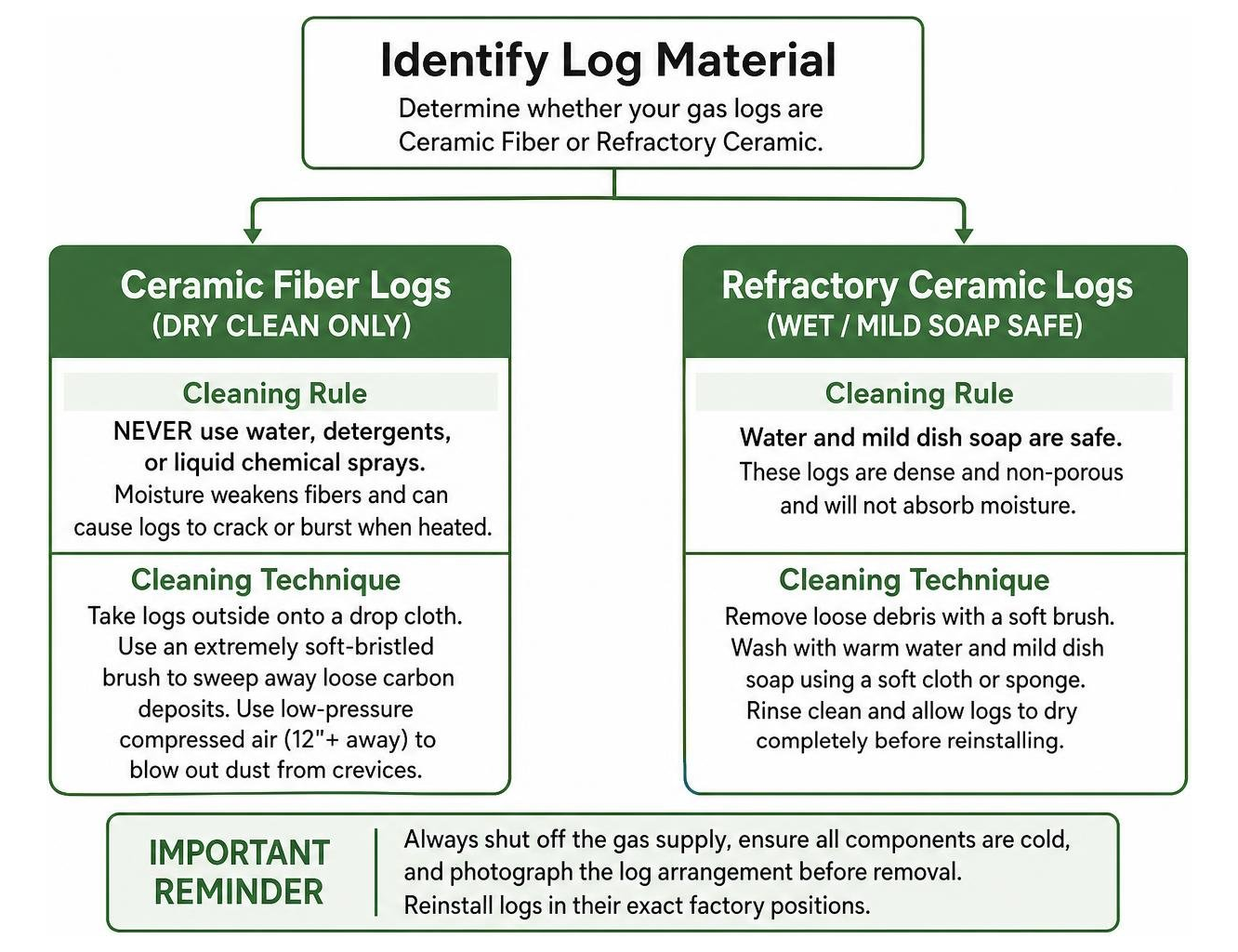
1. Ceramic Fiber Logs
Ceramic fiber logs are lightweight, porous, and fragile.
- Cleaning Rule: Do not use water, detergents, or liquid sprays unless the manufacturer specifically permits them.
- Cleaning Technique: Use a very soft brush to remove loose dust and carbon deposits. If the manufacturer allows compressed air, keep the pressure low and follow its instructions carefully.
2. Refractory Ceramic Logs
Refractory logs are denser and may tolerate different care procedures.
- Cleaning Rule: Refer to the owner’s manual before using any moisture or cleaner on the logs.
- Cleaning Technique: If the manual permits it, use a lightly dampened soft cloth and allow the logs to dry completely before reinstalling them.
Cleaning Burner Ports and Thermocouples
The burner pan has small, precision-drilled openings where gas mixes with air to create a balanced flame. Dust, insects, or debris in these ports can make gas flow uneven.
- Clearing Ports: A technician uses appropriate tools and methods to clear obstructions from burner ports. Homeowners should not insert metal objects, toothpicks, or coat hangers into these openings because damage can alter the fuel-air mixture.
- Cleaning the Pilot and Thermocouple: The thermocouple and thermopile are safety components located near the pilot flame. When soot or oxidation affects these components, the fireplace may have trouble staying lit. If you notice repeat ignition problems, avoid adjusting the components yourself and contact a qualified gas fireplace technician.
Critical Warning Signs That Require Immediate Attention
A gas fireplace is designed to operate with minimal intervention. When internal components malfunction, the unit can provide visual and sensory warning signs that require prompt action.
Persistent Soot and Flame Discoloration
While decorative gas fireplaces may produce warm golden flame tips, the base of the flame should generally be steady and blue. Always consult your owner’s manual because normal flame appearance varies by model.
- Yellow or Lazy Flames: A flame that turns entirely dull orange or yellow, floats off the burner pan, or produces visible smoke can indicate incomplete combustion. Possible causes include clogged burner ports, an incorrect air setting, or logs that have shifted out of their factory positions.
- Rapid Soot Accumulation: If the glass turns dark gray or black soon after cleaning, stop using the appliance and arrange professional service. Soot can signal a combustion or venting problem that needs evaluation.
Gas Odors and Carbon Monoxide Risks
Natural gas and propane suppliers add an odorant that many people describe as smelling like rotten eggs to help identify possible leaks.
- Faint Smell at Startup: A brief odor during ignition may occur as the flame establishes. Check your owner’s manual for model-specific guidance.
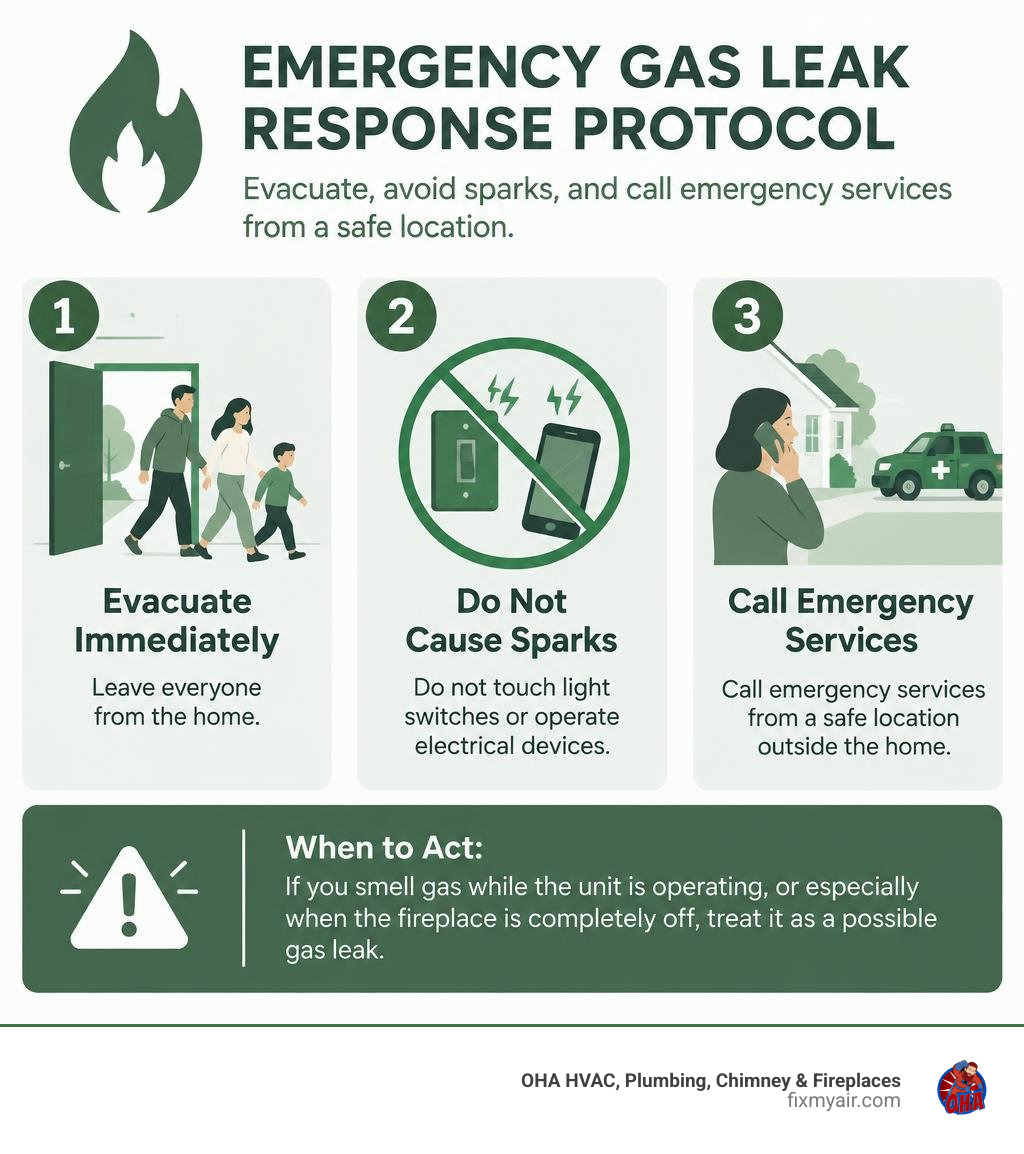
- Persistent or Strong Gas Smell: If you smell gas while the unit is operating, or when it is off, treat it as a possible leak.
- Immediately evacuate everyone from the home.
- Do not operate light switches, landline phones, or other electrical devices that could create a spark.
- Call your local gas utility provider or emergency services (911) from a safe location.
- Carbon Monoxide Risks: Carbon monoxide (CO) is invisible and odorless. Install working, battery-backed CO alarms on every floor, especially outside sleeping areas, and test them during your seasonal fireplace check.
Frequently Asked Questions About Gas Fireplace Maintenance
How often should a gas fireplace be cleaned and inspected?
We recommend a two-part maintenance schedule:
- Monthly Quick Clean: Homeowners should perform a light exterior dusting, wipe down the glass, and vacuum accessible lower louvers once a month during the heating season, and every couple of months during the off-season.
- Annual Professional Inspection: A comprehensive mechanical inspection and combustion safety tune-up by a certified heating technician should be completed once a year, ideally in early autumn before freezing temperatures arrive.
Can regular glass cleaner like Windex be used on fireplace glass?
No. Never use standard household glass cleaners containing ammonia on your gas fireplace. When ammonia interacts with high-temperature ceramic glass and sulfur combustion byproducts, it causes a chemical reaction that can permanently bake a rainbow haze or cloudy white film into the glass. Additionally, ammonia-based residues release noxious fumes into your living area when heated. Always use a dedicated non-ammonia fireplace glass cleaner or a simple 1:1 solution of distilled white vinegar and warm water applied to a cool surface.
Why does my gas fireplace produce a yellow flame or dark soot?
A heavy yellow flame paired with dark soot indicates incomplete combustion caused by an incorrect fuel-to-air ratio. Common culprits include:
- Dust, pet hair, or insect nests blocking the burner air shutter or burner ports.
- Shifted or incorrectly positioned gas logs causing flame impingement.
- Inadequate venting draft or a blocked exterior flue termination.
- Incorrect gas supply pressure delivered to the appliance burner orifice.
If adjusting the logs to their factory-specified locations does not eliminate the soot, turn the unit off and schedule a professional service technician to recalibrate your burner system.
Conclusion
A gas fireplace delivers cozy, push-button warmth and ambiance throughout the winter, but it requires thoughtful care to operate safely and efficiently. By committing to routine dusting, properly cleaning the ceramic glass, and trusting qualified professionals with an annual pre-winter tune-up, you can help protect your family from carbon monoxide risks, prevent costly equipment issues, and support dependable heating performance.
At OHA HVAC, Plumbing, Chimney & Fireplaces, our team serves Northern Virginia homeowners with professional fireplace, chimney, HVAC, and plumbing support. Our background-checked technicians provide upfront recommendations and 24/7 emergency help, so you can make an informed decision when your home needs attention.
Ready to prepare your hearth for the cold months ahead? Contact our professional gas fireplace technicians to schedule service and get help with your fireplace concerns.
Need Help With HVAC, Plumbing, Chimney, or Fireplace Service?
OHA is available 24/7 across Fredericksburg, Fairfax, and Northern Virginia.