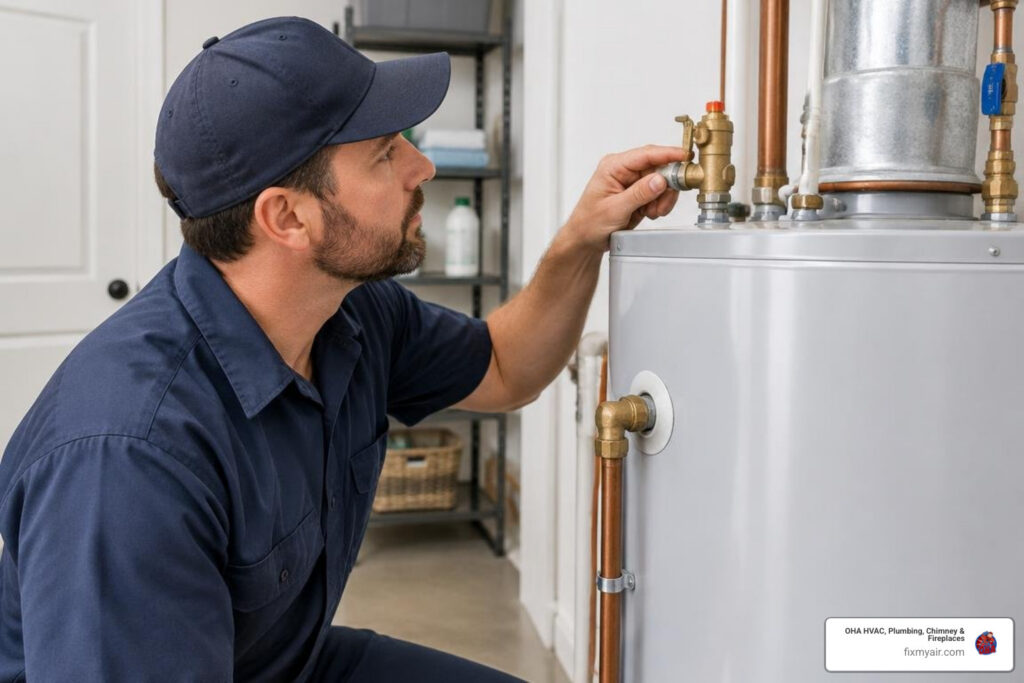
Why Invest in Water Heater Maintenance Stafford VA Before Winter
Pre-winter water heater maintenance in Stafford, VA should include flushing tank sediment, inspecting the sacrificial anode rod, testing the temperature and pressure relief valve, and setting the thermostat to 120°F. These steps help your unit handle colder incoming water and higher seasonal demand without sudden failure.
As Northern Virginia transitions into the late months of 2026, the groundwater entering our homes drops drastically in temperature. In the summer, municipal water or well water might enter your home at a mild 60 to 65 degrees Fahrenheit. By mid-winter, that incoming supply can plummet to 40 degrees or lower. This temperature drop forces your unit to work noticeably harder to reach comfortable bathing temperatures, significantly increasing heating run cycles and putting extra stress on critical plumbing parts.
Without routine seasonal care, the combination of incoming freezing water, higher household demand, and increased standby heat loss can push an aging system over the edge. Cold basement drafts and unconditioned utility spaces only worsen this heat transfer loss, causing your heater to cycle continuously. Scheduling water heater services or broader plumbing services across the Stafford, VA service area before cold weather can help homeowners prevent sudden breakdowns during freezing mornings and extend the operational lifespan of their equipment.
Increased Thermal Stress in Cold Weather
Cold weather magnifies existing mechanical weak points throughout your plumbing system. When incoming water arrives near freezing, the heating elements in electric water heaters or the burners in gas units stay ignited far longer to achieve the set temperature.
This extended cycle causes:
- Rapid expansion and contraction of the steel tank liner, accelerating microscopic fractures along inner welds.
- Accelerated wear on upper and lower electric heating elements, leading to sudden burnout under continuous high amperage.
- Thermal stress on gas control valves, thermocouples, and burner assemblies from prolonged combustion times.
- Increased condensation inside venting systems, which can drip back down and corrode burner components or pilot assemblies.
Sediment and Hard Water Complications
Tap water contains dissolved minerals like calcium and magnesium. Over months of heating cycles, these minerals separate from the water and settle at the bottom of the tank, forming a calcified barrier between the burner and the water supply.

This layer of sediment creates hot spots on the tank bottom, leading to metal fatigue, loud popping or rumbling noises, delayed heating cycles, and premature bottom-tank rust. According to the U.S. Department of Energy, water heating accounts for roughly 18% of home energy use, so keeping the tank free of sediment and insulating exposed connections directly helps control winter utility bills while protecting system reliability.
What a Pre-Winter Water Heater Inspection Covers
Water heater maintenance involves scalding water, gas, and electricity, so these tasks are best left to a licensed plumber. If you smell gas, leave the home and call your gas utility or 911.
Essential Tank Water Heater Maintenance Stafford VA Checklist
A licensed plumber will typically complete these steps to get your storage tank ready for the cold months:
- Flush the Tank Sediment: The plumber drains sediment from the tank through the drain valve until the water runs clear, then refills the tank before restoring power or gas.
- Test the Temperature & Pressure (T&P) Relief Valve: The plumber operates the valve to confirm it releases water freely and reseats. A valve that fails to release water or drips afterward is replaced to prevent over-pressurization.
- Inspect the Sacrificial Anode Rod: The plumber removes and checks the anode rod. If it has eroded down to its steel core wire or is covered in thick calcium, it is replaced to protect the tank walls from corrosion.
- Calibrate the Thermostat: The thermostat is set to 120 degrees Fahrenheit. This prevents scalding, saves energy, and stops premature mineral calcification without compromising daily hot water availability.
- Insulate Exposed Pipes: The first six feet of both cold inlet and hot outlet pipes are wrapped in foam insulation sleeves to reduce standby heat loss and defend exposed lines against basement drafts.
Specialized Tankless Water Heater Maintenance Stafford VA Guide
Tankless systems require an entirely different approach because they lack a storage tank and rely on high-output heat exchangers:
- Descaling the Heat Exchanger: Minerals bake directly onto the narrow copper or stainless steel tubing, choking water flow and decreasing thermal transfer. A plumber circulates a descaling solution through the isolation valves to dissolve mineral scale.
- Clearing Intake and Exhaust Vents: Check external vent terminations outside your home. Ensure fallen leaves, frost buildup, bird nests, and insect screens are cleared to maintain balanced combustion airflow.
- Cleaning the Inline Water Filter: The mesh inlet filter is removed, rinsed and reinstalled to prevent restricted flow rates.
If your older tankless unit struggles with capacity during peak winter, evaluating tankless water heater installation cost can help you decide whether an upgrade to a high-efficiency condensing unit is right for your home.
Signs You Need Water Heater Repair or Replacement Before Winter
Minor plumbing quirks often escalate into full-blown emergencies under winter workloads. Knowing whether your unit needs a simple part replacement or a full upgrade protects your home from water damage, unexpected cold showers, and excessive energy waste.
| Symptom / Warning Sign | Likely Cause | Recommended Action |
|---|---|---|
| Popping or Rumbling Noises | Heavy mineral/sediment accumulation at base | Professional chemical flush or element cleanout |
| Rusty or Discolored Water | Failing anode rod or internal tank corrosion | Inspect rod; if tank is rusted inside, replace unit |
| Moisture Around Tank Base | Micro-fracture in inner shell or leaking valve | Immediate professional inspection |
| Lukewarm / Rapidly Exhausted Hot Water | Broken dip tube or burnt-out lower element | Component replacement via water heater repair |
| Unit Age Over 10-12 Years with Leaks | End-of-life steel fatigue | Explore modern water heater replacement |
When weighing repair against replacement, homeowners can use this guide to choosing the best plumbers in Stafford, VA to understand the qualifications that support code-compliant, safe water heater work.
Component Wear and Corrosion Warnings
Watch out for these specific mechanical failures:
- Corroded Burner Assembly: Rust flakes blocking gas burner ports create poor combustion, delayed ignition, and potential carbon monoxide risks.
- Cracked Dip Tube: When the internal plastic dip tube disintegrates, cold incoming water mixes immediately with hot outgoing water at the top of the tank, causing short showers and tepid tap temperatures.
- Failing Thermocouple or Flame Sensor: Causes the pilot light or electronic igniter to extinguish repeatedly during cold drafts, leaving the system unable to heat.
- Leaking Expansion Tank: Waterlogged thermal expansion tanks lose their internal air bladder charge, forcing excess pressure back onto the main water heater tank seams.
Evaluating Age and Efficiency
Traditional atmospheric tank water heaters carry an average lifespan of 8 to 12 years. If your heater is approaching this window and requiring multiple repair visits, investing in annual repairs may yield diminishing returns compared to the efficiency gains of modern equipment. The U.S. Department of Energy notes that selecting a new water heater involves comparing fuel types, capacity, and efficiency ratings, which can help you avoid paying to repair a unit that is already near the end of its service life.
Frequently Asked Questions About Water Heater Care
How often should I flush my water heater in Stafford, VA?
Storage tank water heaters should be professionally flushed at least once every 12 months. Homes utilizing private wells or experiencing high daily water usage benefit from flushing every 6 months.
What temperature setting is best for water heaters during winter?
We recommend keeping your thermostat set to 120 degrees Fahrenheit. Setting the thermostat higher increases the risk of scalding, accelerates mineral scaling, and increases standby energy costs without providing meaningful comfort improvements. The U.S. Department of Energy notes that households with someone who has a weakened immune system or chronic lung disease may consider 140 degrees Fahrenheit, with anti-scald mixing valves at the taps.
How do I know if my sacrificial anode rod needs replacement?
Have a plumber check your anode rod every two years. If more than six inches of the inner steel wire core is visible, or if the rod has thinned down to less than 1/2 inch in diameter, it has spent its active life and must be replaced to keep your tank from rusting through.
Professional Winterization and Plumbing Support
Preparing your home for sub-freezing temperatures should never be left to guesswork. The experienced team at OHA HVAC, Plumbing, Chimney & Fireplaces provides prompt, dependable seasonal maintenance across Northern Virginia.
With upfront pricing, background-checked technicians, 24/7 emergency support, and a 4.9-star rating across more than 5,000 Google reviews, we make sure your household enjoys continuous hot water all winter long.
For help keeping your water heating system performing reliably year-round, contact our professional water heater technicians.
Need Help With HVAC, Plumbing, Chimney, or Fireplace Service?
OHA is available 24/7 across Fredericksburg, Fairfax, and Northern Virginia.