

A Fast AC Drain Line Clogged Fix Can Stop Leaks
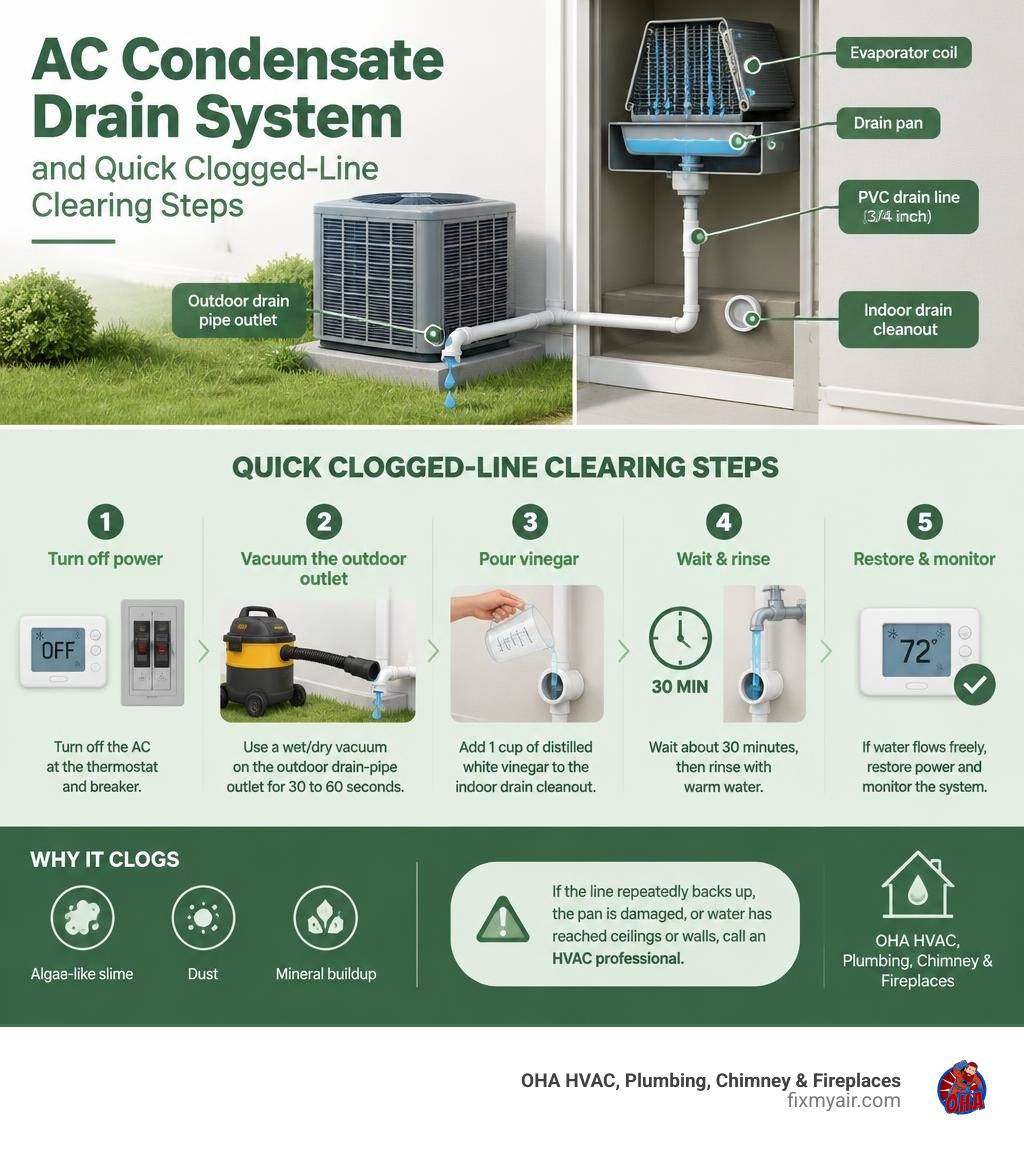
For a quick AC drain line clogged fix, turn off the AC at the thermostat and breaker, then use a wet/dry vacuum on the outdoor drain-pipe outlet for 30 to 60 seconds. Next, pour 1 cup of distilled white vinegar into the indoor drain cleanout, wait about 30 minutes, and rinse with warm water. If water flows freely afterward, restore power and monitor the system.
Your AC can remove gallons of moisture from indoor air on a humid day. That water normally travels from the evaporator coil to a drain pan and through a small PVC condensate line. When algae-like slime, dust, or mineral buildup blocks the pipe, water can back up, leak into your home, or trigger a float switch that shuts the system off to prevent an overflow.
A wet/dry vacuum and vinegar clear many simple clogs without harsh chemicals. But if the line repeatedly backs up, the pan is damaged, or water has reached ceilings or walls, it is time to call an HVAC professional.
How to Spot a Blocked Condensate Line Before Water Damage Occurs
A central cooling system does far more than drop indoor temperatures; it acts as an industrial-grade dehumidifier. On a humid day it pulls gallons of water out of the air,
All of that moisture drips straight off the evaporator coils into a shallow condensate pan before sliding down a narrow, 3/4-inch PVC drain pipe to the outside of your home. When that small passage clogs, water has nowhere to go.
Over time, untreated moisture backups rot framing studs, ruin drywall, soak attic insulation, and spark unhealthy mold blooms. When water starts overflowing into secondary collection pans, arranging timely AC repair before the moisture reaches ceilings and baseboards saves thousands of dollars in structural repairs.
Warning Signs You Need an AC Drain Line Clogged Fix
Catching a clogged condensate pipe early prevents major home emergencies. You can easily spot trouble before catastrophic damage occurs if you watch for these telltale symptoms:
- Standing Water in the Drain Pan: Look inside your indoor air handler closet or attic. If the secondary emergency drain pan under the unit contains sitting water or dark slime, the main drainage path is already compromised.
- The System Suddenly Shuts Down: Modern systems feature an inline float switch (an overflow sensor). When the drain line backs up, the float rises and trips the safety switch, cutting power to the air conditioner to stop further condensation.
- Ceiling Stains and Wall Discoloration: If your air handler sits in the attic, a brown, expanding ring on your drywall or bubbling paint near baseboards indicates overflowing condensation.
- Elevated Indoor Humidity and Musty Smells: When condensate sits stagnant in the pan or lines, it gives off a distinct damp, mildew odor that circulates directly through your ductwork.
- Water Dripping from an Exterior Soffit: Most modern homes feature two exterior drain pipes. The primary line drips near the ground beside your outdoor condenser. The secondary emergency line often exits visibly above a second-story window or front door soffit. If that secondary line begins dripping, your primary line is completely blocked.
What Causes Slime and Algae in Condensate Pipes
Why does a simple drainage tube back up so easily? Condensate pipes provide a dark, perpetually moist, and warm environment, the ideal breeding ground for microbial life.
Bacteria, airborne mold spores, and algae-like zoogleal slime thrive inside the dark PVC pipe. As your blower motor pulls air through your home, tiny particles of dust, pet dander, pollen, and cooking residues bypass low-efficiency filters and stick to wet indoor evaporator coils.
Condensation washes this particulate slurry straight down into the pipe trap. In humid climates, coastal fog, or dust-heavy wind conditions, this biological soup congeals rapidly into a gelatinous plug. If the PVC line has improper slope, sagging horizontal runs, or undersized pipe diameters, a line that is draining slowly can become fully blocked within weeks.
Essential Tools and Safety Steps for an AC Drain Line Clogged Fix
Clearing an obstructed condensate line does not require expensive specialized equipment. You can assemble everything needed from around the house or pick up basic supplies for a few dollars at any hardware store.

Safety Protocol Before Servicing the System
Before removing caps or working around the air handler, you must secure the work area:
- Cut the Power: Set your thermostat to “Off.” Next, switch off the dedicated circuit breaker in your main electrical panel labeled for the indoor furnace or air handler.
- Locate the Indoor Unit: Access your air handler, typically located in a hallway closet, utility room, basement, or attic space.
- Inspect the Evaporator Area: Check the secondary drain pan and surrounding floor for sitting water. Lay down towels to prevent slipping hazards and stop existing spills from seeping into flooring.
Recommended Supplies and Cleaning Agents
Gather these basic items before starting:
- Wet/Dry Shop Vacuum: A standard 5-to-12-gallon shop vac with strong suction power.
- Distilled White Vinegar: 1 to 2 cups of regular 5% acidity distilled white vinegar.
- Funnel and Measuring Cup: For pouring cleaning liquids smoothly into small pipe openings.
- Flexible Pipe Wire Brush or Drain Snake: A narrow, flexible nylon or wire brush to break apart surface clogs in P-traps.
- Clean Rag or Duct Tape: To create an airtight seal around the vacuum nozzle on the outdoor drain stub.
- Warm Water: A pitcher filled with 2 to 3 cups of clean, warm tap water (never boiling water).
When choosing cleaning agents, use cleaning methods intended for condensate lines to protect your equipment. We strongly advise against using harsh chemical drain openers or pure household bleach. Bleach fumes easily enter your living areas via the air handler, and bleach chemical reactions degrade PVC cement, corrode metal evaporator coils, and eat through rubber float switch gaskets. Distilled white vinegar is safe, non-corrosive, effective on organic slime, and environmentally friendly.
Step-by-Step Methods to Clear Your AC Condensate Line
Many summer service calls trace back to a minor clog inside a 3/4-inch PVC pipe. By combining mechanical suction with a vinegar flush, you can often resolve a simple drain clog yourself in under an hour.
Fast AC Drain Line Clogged Fix Using a Wet/Dry Vacuum
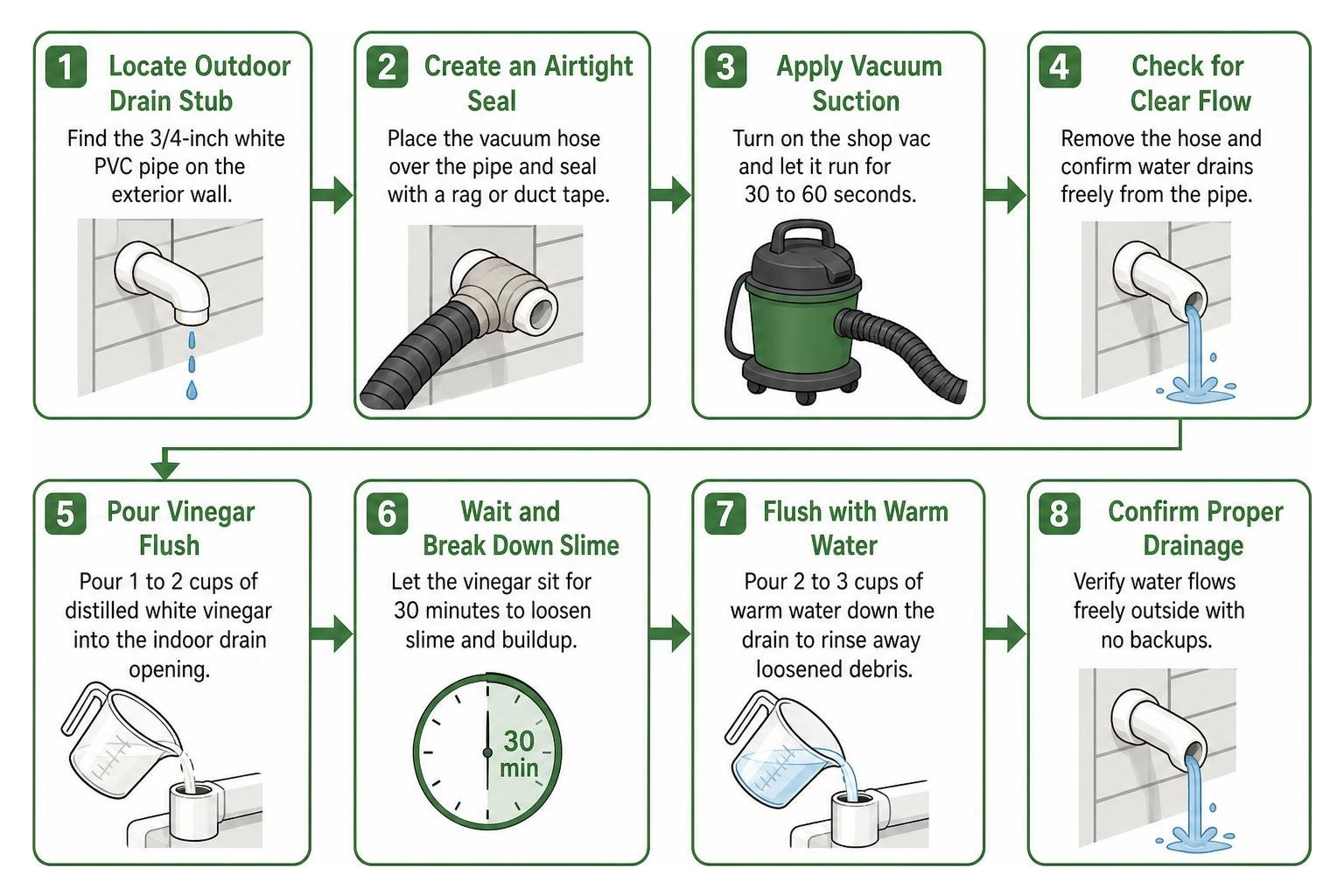
A wet/dry vacuum uses strong suction at the outdoor discharge line to pull out an algae plug without pushing it deeper or leaving residual slime behind:
- Locate the Outdoor Drain Stub: Go outside near your outdoor condenser unit. Look for a 3/4-inch white PVC pipe exiting your exterior wall and pointing toward the ground.
- Seal the Vacuum Hose: Place your wet/dry vacuum hose directly over the end of the PVC pipe. Wrap a clean shop rag tightly around the joint, or seal it with a strip of duct tape to ensure strong suction.
- Run the Vacuum: Turn on the wet/dry vacuum and let it run for 30 to 60 seconds. You will likely hear a distinct change in the vacuum pitch as the solid algae plug breaks free.
- Inspect the Debris: Shut off the vacuum and check the canister. You will generally find dirty water, clotted brown slime, and algae plugs that were pulled out in seconds.
Flushing With Distilled White Vinegar and Warm Water
Once the main obstruction is extracted, treat the interior walls of the pipe to kill remaining mold spores and dissolve stubborn mineral buildup:
- Locate the Cleanout Port: Return to your indoor air handler. Look for a vertical, open PVC T-fitting or capped cleanout port located near where the drain line exits the unit.
- Remove the Access Cap: Gently pull off the slip-fit PVC cap. (If the cap is glued tight, do not force it; locate the access port nearest the drain pan).
- Pour the Vinegar: Insert a small funnel into the cleanout opening and slowly pour in 1 cup of distilled white vinegar.
- Let It Soak: Allow the vinegar to sit undisturbed in the pipe and P-trap for 30 minutes. Its mild acidity will dissolve remaining algae mats and break down mineral crusts.
- Rinse with Warm Water: Slowly pour 2 to 3 cups of warm tap water down the funnel to flush the dissolved debris out to the exterior. Inspect the outdoor stub to ensure water flows out in a steady, unbroken stream.
Clearing Deep Obstructions With a Flexible Drain Brush
If your line still drains slowly after vacuuming, a dense clog may be stuck right inside the indoor P-trap.
Take a narrow, flexible drain brush or a small hand-crank plumber’s snake and gently insert it down into the vertical cleanout port. Push it through the U-shaped curve of the PVC trap while twisting the handle.
Pull the brush back up periodically to wipe away dislodged slime. Once the brush moves through the curve without resistance, follow up with another cup of warm water to confirm that the pathway is completely open.
Comparing Drain Clearing Methods: Vacuum vs. Air vs. Chemicals
Homeowners often wonder whether they should use a shop vacuum, an air compressor, or chemical cleaners to clear their condensate lines. Understanding the distinct pros and cons of each method keeps your plumbing intact.
| Method | Effectiveness | Risk Level | Equipment Needed | Best Used For |
|---|---|---|---|---|
| Wet/Dry Vacuum | Extremely High (Pulls clogs out cleanly) | Very Low | Shop vac, rag/tape | Primary extraction of heavy slime and biological plugs |
| Vinegar Flush | High (Kills algae, dissolves minerals) | None (Safe on all materials) | Distilled vinegar, funnel | Routine maintenance and dissolving residual biofilm |
| Compressed Air (Inflator) | Moderate to High | Medium (Can blow joints apart) | Low-pressure air gun/cartridge | Quick clearing when exterior drain line is inaccessible |
| Caustic Chemicals / Bleach | High on Organic Matter | Very High (Pits PVC, ruins coils) | Chemical cleaners, PPE | Never recommended for residential HVAC drain systems |
While compressed air can blow clogs free, high-pressure shop compressors pose severe risks. Applying excessive PSI can blow unglued PVC fittings apart behind drywall or inside ceilings, turning a simple clog into a hidden indoor flood. Furthermore, blowing air into a backed-up cleanout often scatters dirty algae water all over your utility room. If you encounter deep, cemented clogs that resist a vacuum, scheduling professional HVAC repair ensures the line is safely cleared with regulated diagnostic tools without risking pipe ruptures.
Routine Maintenance to Prevent Future Drain Line Backups
Emergency cleanings take time and cause stress on hot summer afternoons. The easiest way to deal with condensate clogs is to prevent them with routine maintenance and prompt AC service when needed.
A comprehensive HVAC maintenance service includes cleaning the condensate line, drain pan and evaporator coil to stop clogs before they start.
Monthly Vinegar Maintenance Schedule
Prevention takes just one minute a month during the active cooling season. Establish a simple routine based on your local climate:
- Cooling Season (May through October): Pour 1 cup of distilled white vinegar into your indoor cleanout T-port once every 30 days. Let it sit for 20 minutes before replacing the cap. This takes 2 minutes and costs pennies per month.
- Winter Shutdown: Pour a final cup of vinegar and a warm water rinse during your fall shutdown routine to ensure no stagnant water sits inside the trap during cold months.
The Role of Air Filters and Condensate Tablets
Beyond regular flushing, you can reduce debris at the source with two simple habits:
- Change Filters Every 30 to 90 Days: A clean air filter prevents household dust, hair, and pet dander from accumulating on your wet evaporator coil, drastically cutting down on the organic slurry that washes into the drain line.
- Use Pan-Clearing Tablets: Drop 1 or 2 slow-dissolving condensate pan tablets into the indoor drain pan every spring. These tablets release a gentle, non-corrosive biocide that inhibits algae and bacterial growth at the water collection point.
When to Call an HVAC Professional
While most condensate blockages clear quickly with a vacuum and a vinegar rinse, some issues point to deeper mechanical or structural failures that require expert service.
Contact an experienced HVAC technician if you notice any of the following problems:
- Persistent Clogs: The line clogs repeatedly every 1 to 2 weeks despite routine vacuuming, pointing to a sagging, improperly sloped line behind your walls.
- Damaged Drain Pan: The drain pan under your coils is rusted through, cracked, or leaking water despite an open drain line.
- Condensate Pump Failure: In basement installations where water must be pumped upward against gravity, a failed pump motor or stuck internal float will cause rapid water overflows.
- Electrical Sensor Faults: The safety float switch fails to reset or your system refuses to power on after clearing the blockage.
- Frozen Evaporator Coils: A thick layer of ice forms across the indoor coils. When this ice melts rapidly, it easily overwhelms drain pans and points to low refrigerant or airflow restrictions.
- Inaccessible Cleanouts: Older systems lacking an accessible T-fitting or trap need a professional to install dedicated cleanout ports.
If you are dealing with recurring line blockages, strange system shutoffs, or need reliable air conditioning repair, our team is available around the clock to restore complete comfort to your home.
Frequently Asked Questions About Clearing AC Drain Lines
Can I use bleach instead of vinegar to clean the drain line?
We do not recommend using bleach. While bleach kills algae, it can weaken the PVC cement holding your drain pipe joints together, corrode metal components inside the air handler, damage rubber float switch seals, and kill nearby landscaping at the outdoor drain exit. Distilled white vinegar is safe on PVC, non-corrosive to system components, and equally effective at breaking down organic slime.
Why did my AC shut off completely when the drain backed up?
Modern air conditioning systems are equipped with a secondary float switch installed in the drain pan or inline with the PVC pipe. When a clog prevents water from exiting, rising water lifts the float mechanism. This breaks the 24-volt electrical circuit to your thermostat or condenser, shutting the entire system off immediately to prevent catastrophic water damage to your ceilings and floors.
How often should I flush my AC condensate line?
You should flush your condensate line with 1 cup of distilled white vinegar every 30 to 90 days during the cooling season. If you live in a coastal area, a humid climate, or run your air conditioning constantly, performing a quick monthly flush from May through October ensures trouble-free drainage.
Conclusion
A blocked condensate line is one of the most common summer cooling issues, but you can resolve it in minutes using simple household items. By pairing a wet/dry vacuum extraction with a gentle monthly vinegar rinse and regular filter replacements, you keep your system operating at peak efficiency while protecting your home from costly water damage.
When stubborn blockages persist, electrical components malfunction, or you want comprehensive seasonal care, trust the experienced team at OHA HVAC, Plumbing, Chimney & Fireplaces. We are a veteran-founded, family-run business with upfront pricing, background-checked technicians, 24/7 emergency support, and a 4.9-star rating across more than 5,000 Google reviews.
Do not let a small drain clog threaten your home’s comfort. For fast, dependable cooling care, contact our professional AC drain line technicians today!
Need Help With HVAC, Plumbing, Chimney, or Fireplace Service?
OHA is available 24/7 across Fredericksburg, Fairfax, and Northern Virginia.