
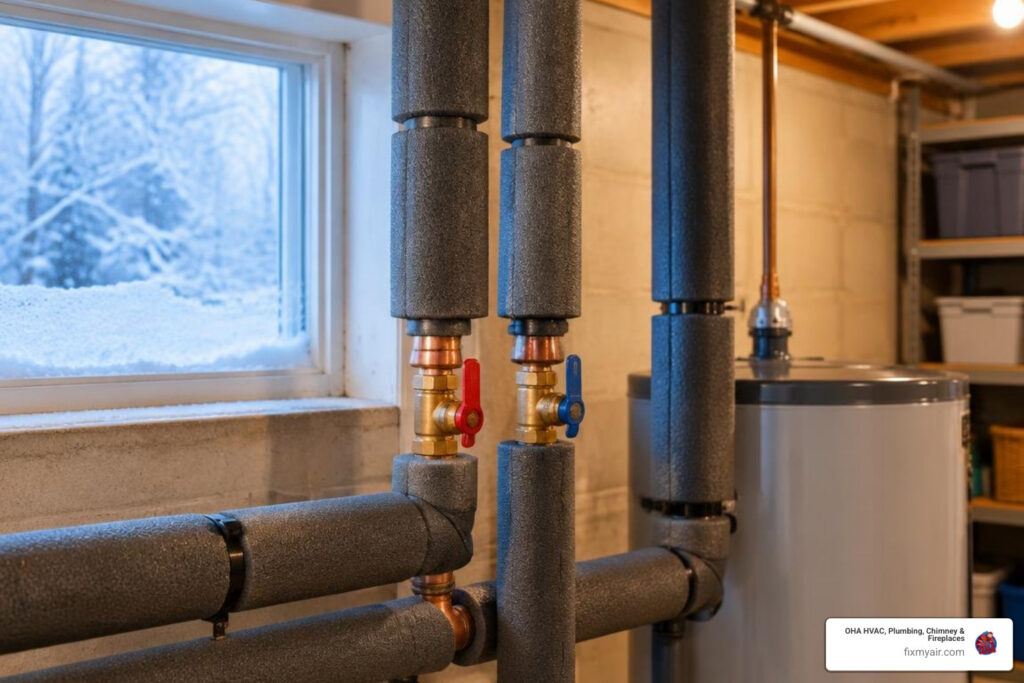
Essential Frozen Pipe Prevention Fairfax, VA Homeowners Need Before Winter
To prevent frozen pipes in Fairfax VA, insulate exposed water lines with foam sleeves, seal cold-air drafts around foundations and crawl spaces, disconnect outdoor hoses, keep your thermostat set to at least 55°F, and let vulnerable faucets drip during sub-20°F freezes. These steps protect the plumbing most at risk when winter settles across Northern Virginia and outdoor temperatures plummet quickly overnight.
Water has a unique property: unlike most substances that shrink when cooled, water expands by about 9% as it transitions into ice. When trapped inside rigid copper, galvanized steel, or PVC lines, that expansion creates intense hydrostatic pressure between the ice blockage and closed faucets, eventually rupturing the pipe.
The most vulnerable plumbing runs through unheated sections of your home: exterior-facing walls, drafty crawl spaces, uninsulated basements, attics, and attached garages. Preventing freeze damage requires eliminating cold drafts, adding thermal barriers, and maintaining reliable heat throughout your living spaces.
Keeping your heating system functioning seamlessly is your primary defense against indoor freeze events. Schedule reliable HVAC and AC repair in Fairfax, VA and seasonal maintenance before the first sub-freezing night arrives so your home maintains steady indoor warmth. Additionally, disconnect all outdoor garden hoses before winter. Trapped water inside a connected hose can freeze back into the outdoor spigot, splitting the internal valve assembly inside your wall.
Step-by-Step DIY Frozen Pipe Prevention Fairfax VA Checklist
Protecting your plumbing before winter hits does not require complicated overhauls. Follow this practical checklist to safeguard vulnerable water lines:
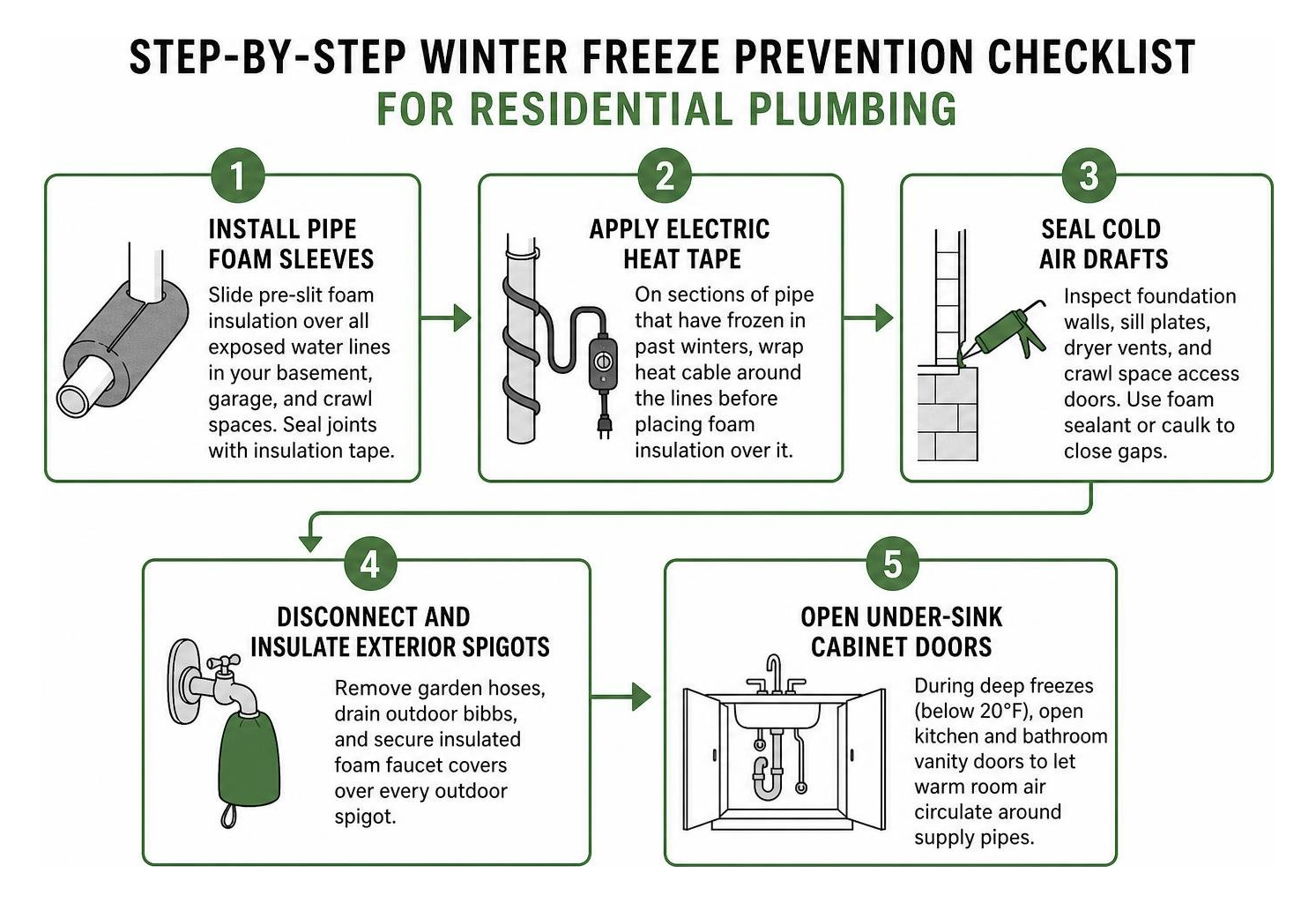
- Install Pipe Foam Sleeves: Slide pre-slit polyethylene or rubber foam insulation over all exposed water lines in your basement, garage, and crawl spaces. Seal joints with heavy-duty insulation tape.
- Apply Electric Heat Tape: On sections of pipe that have frozen in past winters, wrap manufacturer-certified, thermostatically controlled heat cable around the lines before placing foam insulation over them.
- Seal Cold Air Drafts: Inspect foundation walls, sill plates, dryer vents, and crawl space access doors. Use expanding foam sealant or caulk to close gaps that allow freezing drafts directly onto plumbing lines.
- Disconnect and Insulate Exterior Spigots: Remove garden hoses, drain outdoor bibbs, and secure insulated foam faucet covers over every outdoor spigot.
- Open Under-Sink Cabinet Doors: During deep freezes (temperatures dropping below 20°F), open kitchen and bathroom vanity doors to let warm room air circulate around supply pipes running along exterior walls.
- Let Vulnerable Faucets Drip: Keep a slight, steady trickle of cold water running from faucets connected to exterior-wall plumbing. Moving water relieves pressure and makes freezing significantly harder.
- Keep Garage Doors Closed: Keep overhead garage doors shut tight to shield water heaters, laundry lines, or overhead supply pipes situated near the garage ceiling.
- Locate the Main Water Shutoff Valve: Ensure every member of your household knows where the main shutoff valve is located and test it to verify that it turns smoothly.
High-Risk Properties and Vulnerable Plumbing Locations
Certain architectural styles and occupancy conditions face an elevated risk of freeze-related plumbing failures across Fairfax County:
- Older Historic Homes and Mid-Century Ramblers: Properties built before modern thermal insulation codes often feature plumbing run directly through uninsulated exterior masonry walls or unconditioned crawl spaces.
- Homes on Open Crawl Spaces: Without proper foundation encapsulation or skirting insulation, cold winter winds sweep under subfloors, rapidly freezing supply pipes.
- Vacant or Rental Properties: Unoccupied homes or rental units where thermostats are turned too low during tenant transitions are prime candidates for massive burst pipes.
- Second Homes and Addition Bump-Outs: Cantilevered rooms, finished rooms over garages, and home additions often contain hidden water lines situated outside the primary thermal envelope.
If your property has outdated galvanized pipes or uninsulated supply runs, scheduling timely residential plumbing repair options to upgrade, relocate, or protect vulnerable piping will protect your home from sudden flooding.
Identifying Frozen Pipes and Emergency Action Steps
Catching a freeze early allows you to address the blockage before the pipe splits open. Watch for these common warning signs:
- Zero or Reduced Water Flow: Turning on a faucet results in a faint trickle or no water at all.
- Frost on Pipe Surfaces: Visible ice crystals or heavy condensation on exposed metal or plastic pipes.
- Strange Plumbing Sounds: Gurgling, banging, or whistling noises when you open taps or flush toilets.
- Bulging or Distorted Lines: Copper or PEX pipes showing subtle expansion, warping, or hairline surface fractures.
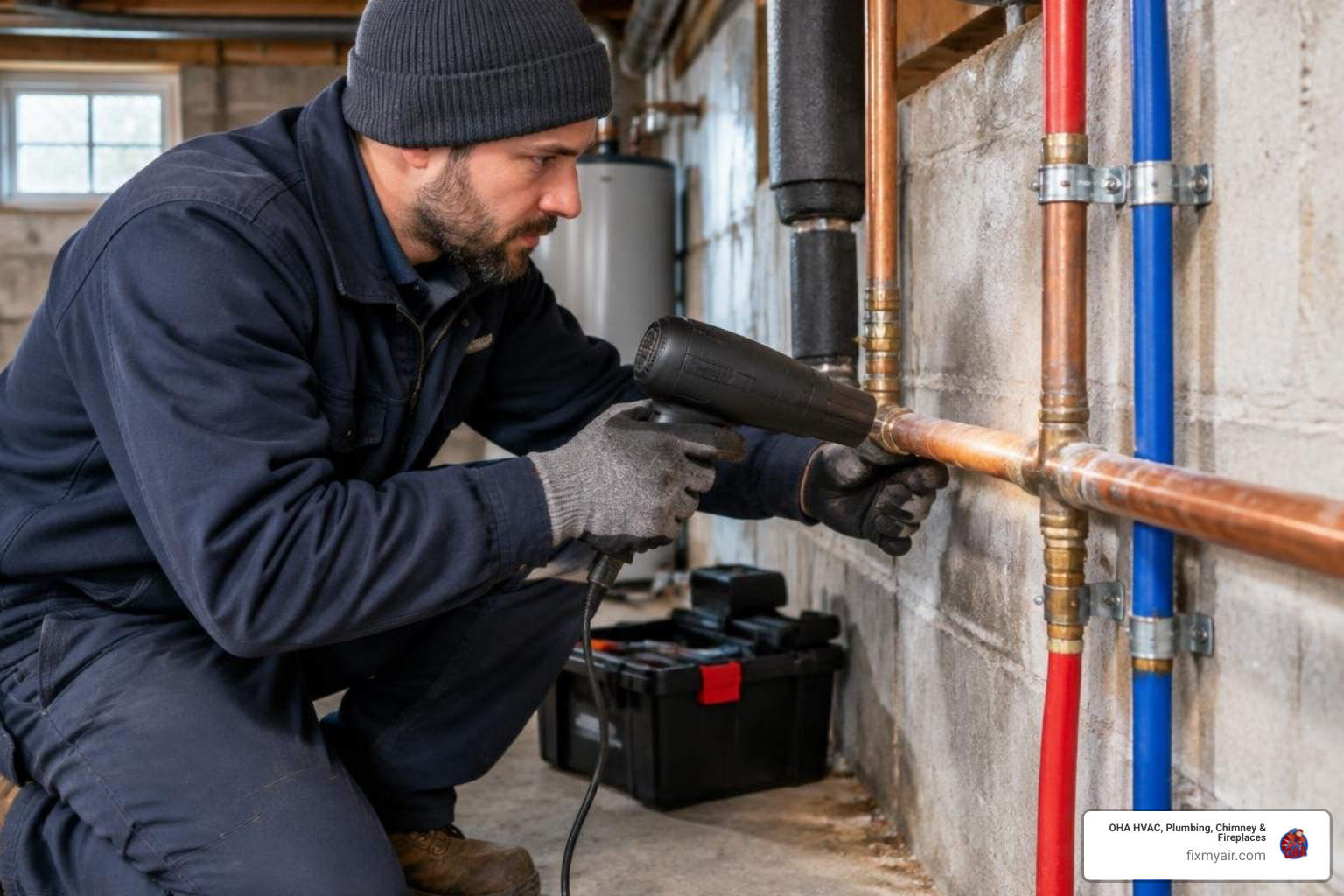
If you suspect a pipe is frozen, act immediately:
- Shut Off the Main Water Supply: Before attempting to thaw any pipe, shut off your main water valve. If a pipe has already split, thawing the ice plug without shutting off the water will trigger an immediate flood inside your home.
- Open the Affected Faucets: Keep the faucet handles open so melting water and expanding steam have an escape path as the ice clears.
- Apply Gentle, Safe Heat: Begin warming the pipe starting from the faucet end and working backward toward the frozen blockage. Use a handheld hair dryer, portable space heater placed at a safe distance, or warm towels wrapped around the pipe.
- Never Use Open Flames: Never use a blowtorch, propane heater, charcoal burner, or any open flame device to thaw a pipe. Open flames ignite structural framing, crack plumbing fittings, and produce hazardous fumes.
If the frozen section is inaccessible, inside a finished wall, or already leaking, shut off your water immediately and contact our team for emergency plumbing situations.
When to Call a Licensed Plumber vs. DIY Thawing
While a homeowner can safely warm an exposed under-sink drain or copper line in an accessible basement with a hair dryer, many freezing situations require professional intervention. Call a licensed plumber when:
- The frozen pipe is hidden behind drywall, under subflooring, or inside ceiling cavities.
- You discover physical cracks, split seams, or dripping water on the pipe.
- Safe heating methods fail to restore flow after 30 to 45 minutes of gentle warming.
- Multiple plumbing fixtures across different areas of the house stop running simultaneously.
- You need commercial-grade electric thawing equipment or professional self-regulating heat trace systems installed to prevent repeated freeze-ups.
Hard-to-Reach Plumbing Needs Careful Evaluation
Pipes behind drywall, under floors, in attics, or in finished rooms above garages can be difficult to protect or thaw safely. These spaces may be exposed to cold air without showing obvious warning signs inside the living area. Attempting to open walls or apply heat to plumbing that cannot be seen can create unnecessary damage or overlook a split pipe.
A licensed plumber can assess the location of concealed lines, identify likely sources of heat loss, and recommend practical improvements. Depending on the home, that may include adding insulation, sealing exterior penetrations, improving crawl-space conditions, rerouting a vulnerable line, or installing approved heat-trace protection where appropriate.
Common Situations That Call for Professional Prevention
Homeowners may benefit from a plumbing inspection before winter when pipes have frozen more than once, an outdoor faucet has leaked or failed after cold weather, or a previous burst pipe has damaged walls or flooring. Older Fairfax homes, additions, and rooms over garages often have plumbing near exterior walls or in areas that are harder to keep warm.
Vacant homes and properties left unattended during cold snaps also deserve extra planning. A professional can help confirm that shutoff valves operate properly, identify exposed plumbing, and outline a winterization plan that fits the property. For long-term protection, professional plumbing support can address recurring freeze risks with insulation improvements, freeze-resistant outdoor faucets, pipe repairs, and targeted plumbing upgrades.
Planning Professional Prevention
| Homeowner Concern | What a Professional May Evaluate | Possible Solution |
|---|---|---|
| Pipes freeze repeatedly | Drafts, insulation gaps, pipe placement, and nearby heat sources | Air sealing, added insulation, or pipe rerouting |
| Outdoor faucet is vulnerable | Hose connection, shutoff condition, and faucet design | Winterization or a freeze-resistant faucet upgrade |
| Pipes run through a crawl space, attic, or garage | Heat loss and exposed plumbing | Pipe insulation, heat-trace protection, or space improvements |
| A pipe has already frozen or leaked | Accessible damage and water-flow issues | Safe thawing, repair, prevention upgrades, or plumbing services |
| Home will be vacant during winter | Thermostat settings, shutoff planning, and vulnerable pipe locations | A winterization checklist and inspection plan |
Professional Frozen Pipe Prevention Fairfax VA Solutions
For long-term protection, plumbing services can address freeze hazards with professional upgrades. Comprehensive solutions include installing dedicated freeze-resistant frost-free sillcocks, rerouting vulnerable water lines away from exterior walls, and installing self-regulating heat trace cable.
A local assessment through our Fairfax, VA office can be especially valuable when the plumbing layout makes routine maintenance difficult. Addressing the cause of repeated freezing before the next severe cold spell can reduce the likelihood of water damage and emergency repairs.
Frequently Asked Questions About Winter Plumbing Care
What causes pipes to freeze most often in Fairfax County?
The primary causes include sudden overnight temperature drops below 20°F, uninsulated piping in ventilated crawl spaces or basements, unsealed foundation drafts exposing lines to direct wind chill, and garden hoses left connected to exterior sillcocks.
What temperature should I keep my thermostat to prevent frozen pipes?
Keep your thermostat set to a minimum of 55°F at all times, even when you are away from home. Maintaining a constant temperature day and night keeps warm air circulating through wall cavities and floor joists where hidden plumbing lines reside.
How do I know if my water pipes are frozen or just have low pressure?
If municipal water issues cause low pressure, every fixture throughout your home will typically experience reduced flow. A frozen pipe usually isolates flow loss to one specific fixture or one area of the house (such as a bathroom along an exterior wall), often accompanied by frost on visible pipes or strange clanging sounds when opening the valve.
Conclusion
Frozen pipes can quickly turn a cold winter evening into an expensive property restoration nightmare. By insulating exposed supply lines, sealing drafts, keeping indoor heat steady, and monitoring vulnerable plumbing during freezing temperatures, you can protect your property all season long.
At OHA HVAC, Plumbing, Chimney & Fireplaces, our veteran-founded, family-run team is committed to keeping Northern Virginia homes safe, warm, and dry. Backed by upfront pricing, background-checked technicians, and a 4.9-star rating across more than 5,000 Google reviews, we provide round-the-clock peace of mind. For preventative insulation or 24/7 emergency burst-pipe repairs this winter, contact our professional plumbing technicians.
Need Help With HVAC, Plumbing, Chimney, or Fireplace Service?
OHA is available 24/7 across Fredericksburg, Fairfax, and Northern Virginia.