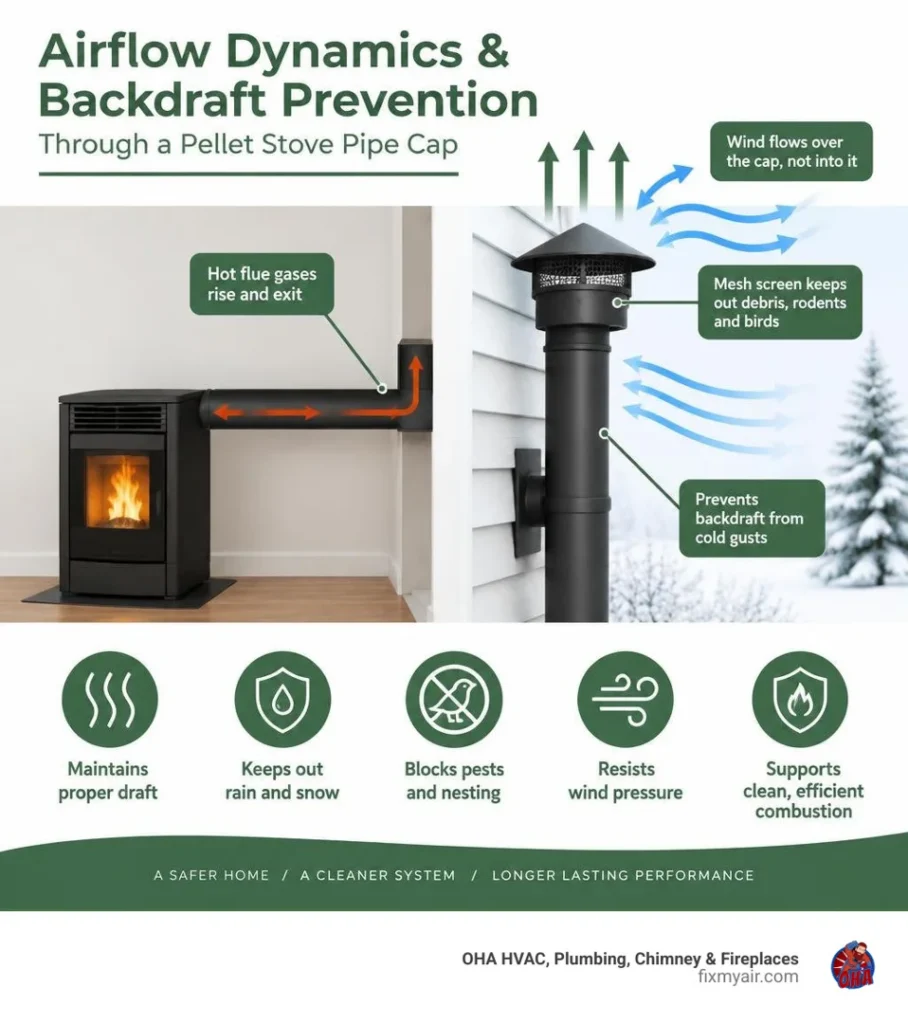
Stopping winter backdrafts requires installing a properly sized 3-inch or 4-inch, corrosion-resistant stainless steel pellet stove vent cap in a horizontal, vertical, or prairie style with built-in wind deflectors and spark screens. The right termination piece lets exhaust escape freely while preventing cold outdoor gusts from pushing ash, soot, and flue gases back into your living room. A reliable pellet venting system relies on balanced airflow, controlled flue gas temperatures, and stable draft conditions.
Pellet stoves produce forced-draft exhaust through a mechanical blower, but atmospheric conditions outside your home dictate how easily those gases escape. Listed pellet vent pipe is typically rated for continuous flue gas temperatures up to 570°F. Managing these hot gases requires an engineered barrier that lets air escape freely while preventing external wind shear from overwhelming the exhaust fan.
Types of Pellet Exhaust Terminations and Their Applications
Selecting an exhaust termination isn’t merely an aesthetic choice. Each specific vent termination style redirects exhaust fumes, seals against rain and melting snow, blocks curious rodents or nesting birds with integrated spark screens, and resists the corrosive chemical byproducts of combustion.
Standard Horizontal and Rain Caps
Horizontal terminations exit straight through an exterior wall via an insulated wall thimble. In direct-vent installations, a standard horizontal rain cap diverts combustion gases outward and downward, keeping hot flue streams away from vinyl siding, brick, and painted trim.
High-performance horizontal caps are fabricated from heavy-duty 304L stainless steel. This alloy offers exceptional resistance to the acidic condensate formed when moisture mixes with wood ash. Many of these units incorporate quick-connect mechanical bands, enabling you to clean out the pipe without having to slice through beads of silicone caulk every autumn.
Prairie and Dual-Function Termination Caps
If you run a direct-vent stove requiring outdoor combustion air, or if you live in an open area subjected to persistent crosswinds, a prairie-style termination provides a balanced, low-profile architectural solution.
Units like the prairie-style termination caps utilize concentric passages. They safely exhaust spent flue gases out through the center while simultaneously drawing clean combustion air into the stove through an isolated outer intake channel. Engineered for multi-fuel applications and built with double-wall venting, prairie caps feature pivoting top lids that pop open effortlessly when it is time to sweep the flue.
Clean-Out Tee Pellet Stove Vent Cap
Every pellet exhaust configuration with a 90-degree turn should include an accessible collection point for heavy particulate matter. As flue gases make a sharp directional transition, unburned fly ash falls out of suspension and settles at the base of the pipe.

A clean-out tee cap acts as a removable bottom plug on vertical tees located inside or outside the home. By pulling this single cap, you can vacuum out settled ash in minutes without dismantling your entire exhaust pipe run. Keeping this trap cleared is a cornerstone of safe pellet stove maintenance, as packed ash directly suffocates the exhaust draft.
How to Choose the Right Pellet Stove Vent Cap for Your System
Matching a vent cap to your heating configuration requires reviewing pipe diameter, construction materials, and safety certifications. Variations in stove output and vent length require careful component matching.
| Cap Style | Typical Pipe Diameter | Common Materials | Primary Use Case | Cost Considerations |
|---|---|---|---|---|
| Standard Vertical Cap | 3″ or 4″ | Stainless inner / Galvalume outer | Through-the-roof exhaust | Usually a straightforward component cost; installation needs can vary by roof access and vent length. |
| Horizontal Rain Cap | 3″ or 4″ | 304L stainless steel | Direct-vent wall exit | Cost varies with material grade, wind protection, and compatibility with the existing vent system. |
| Prairie Termination | 3″ to 4″ concentric | Stainless steel and Galvalume | Combined exhaust and fresh-air intake | Typically a more specialized option because it combines venting and combustion-air functions. |
| Clean-Out Tee Cap | 3″ or 4″ | Superferritic stainless steel / Galvalume | Bottom ash collection access | Generally a smaller replacement part, but choose a listed component that matches the tee and vent brand. |
| Flex Liner Top Plate & Cap | 4″ | Stainless steel | Masonry chimney relining | Total cost depends on liner length, chimney condition, and the components required for a complete listed system. |
When evaluating vent sizing, standard runs up to 15 equivalent feet typically use a 3-inch inner diameter. For taller vertical rises, installations above 2,500 feet elevation, or systems with multiple 90-degree elbows, appliance manufacturers often require stepping up to a 4-inch pipe using a 3-to-4-inch increaser adapter to prevent backpressure.
Look for caps manufactured with a .012-inch 444 or 304L stainless steel inner wall paired with a .018-inch galvalume steel outer jacket. Galvalume (an alloy of aluminum, zinc, and silicon) shields against exterior weather, while superferritic stainless steel handles internal flue temperatures up to 570°F. Ensure every venting component complies with UL 641, ULC S609, and ULC/ORD C441 safety standards by consulting the manufacturer’s certified pellet venting specifications.
Installation Clearances, Safety Codes, and Draft Protection
Safety codes dictate where and how an exhaust cap may terminate. Many listed double-wall pellet vents allow a 1-inch clearance to combustibles. Check your vent’s listing, as requirements vary by product.

When running pipe horizontally through an exterior wall:
- The cap must sit at least 12 inches above ground level to avoid snow blockages.
- Maintain a minimum 36-inch clearance from any forced-air intake located within 10 feet.
- Keep the cap at least 18 to 24 inches away from overhangs, vinyl soffits, and combustible deck structures.
- Terminate at least 4 feet below, 4 feet horizontally from, or 12 inches above any door or operable window.
These are general figures. Your stove and vent manufacturer’s installation manual and local code take precedence. For vertical installations using a listed termination cap, the pipe must extend at least 12 inches above the roofline. In snow-heavy climates, elevate the cap higher than the anticipated snow depth using roof support brackets spaced at 4-to-5-foot intervals.
Preventing Soot Stains, Moisture Intrusion, and Backdrafts
Exhaust gases carry fine fly ash and vaporized wood resins. If an improperly angled horizontal cap points flat against your siding, you will quickly find dark gray stains fanning out across your exterior walls.
To eliminate soot staining and moisture leaks:
- Extend the Wall Thimble: Make sure the pipe extends at least 6 inches past the exterior wall face before attaching the horizontal rain cap.
- Seal Joints Properly: Use high-temperature 500°F+ RTV silicone on the appliance adapter collar and exterior pipe joints, but avoid gluing the removable cap components shut.
- Install Storm Collars and Flashing: For roof runs, seal the storm collar directly above the roof flashing with silicone to prevent driving rain from running down the double-wall pipe.
If you notice lingering smoke odors or draft stalls during blustery days, scheduling professional chimney sweeping ensures your flue airway and interior spark arresters remain entirely unobstructed.
Care, Inspection, and Troubleshooting
Ash accumulation is the most common reason pellet stoves lose combustion efficiency. Fly ash settles across horizontal pipes, clings to spark screens inside your vent cap, and fills the lower clean-out chamber.

Maintaining and Inspecting Your Pellet Stove Vent Cap
Our team recommends inspecting your vent cap and clean-out access every 1 to 2 months during the active heating season, or after burning approximately one ton (fifty 40-lb bags) of fuel. For a seasonal maintenance checklist, see our pellet stove cleaning guide.
When clearing the vent system, turn the stove off and let it cool completely first:
- The Ash Vacuum Method: Unthread the clean-out tee cap and connect a dedicated sealed ash vacuum to draw soot straight down out of the pipe run.
- The Exterior Leaf Blower Technique: Many seasoned owners attach an electric leaf blower on vacuum mode to an exterior clean-out tee to pull loose fly ash out through the terminal cap without creating a mess inside the home.
- Spark Screen Cleaning: Inspect the wire mesh inside the exhaust cap. Scrub away carbon buildup using a wire brush to restore unrestricted exhaust flow.
For complex chimney runs or high roofline terminations, booking a comprehensive chimney sweep and repair service keeps your system safe and compliant with local fire safety guidelines.
When to Replace a Worn or Damaged Exhaust Cap
Outdoor venting components endure harsh freeze-thaw cycles and acidic moisture. Inspect your termination cap for these clear warning signs:
- Perforating Rust or Pitting: Surface discoloration on galvalume is normal, but deep pitting or rust holes in the stainless inner core compromise fire safety.
- Warped or Crushed Housings: High wind gusts or falling tree branches that bend the wind deflection cone cause turbulence and severe backdrafts.
- Deteriorated Spark Screens: If the 1/8-inch animal barrier mesh breaks or detaches, birds and squirrels can quickly nest inside the flue pipe during mild spring days.
- Loose Mechanical Fit: If the cap wobbles loose on the pipe collar even with the locking clamp tightened, replace it immediately to prevent flue gas leaks.
A high-grade stainless steel cap typically lasts between 10 and 15 years under standard wood pellet combustion.
Frequently Asked Questions
Can a pellet stove vent cap be used with multi-fuel appliances?
Yes, provided the venting system is explicitly rated for multi-fuel applications. Burning alternative agricultural fuels like shelled corn, cherry pits, soybeans, or switchgrass creates higher moisture levels and acidic exhaust gases. Standard wood-only caps can corrode quickly under these conditions. You must choose a double-wall cap built with an inner liner of 444 superferritic stainless steel or 304L stainless steel to resist acid corrosion and handle continuous operating temperatures up to 570°F.
How do I properly seal a clean-out tee cap to prevent soot leaks?
To achieve a gas-tight seal on a clean-out tee without permanently gluing the access port:
- Ensure the integrated silicone or high-temperature rubber O-ring gasket is cleanly seated inside the cap groove.
- If your cap uses a twist-lock mechanism, turn it firmly into the locking detents until it clicks flush.
- If soot escapes past the joint, wrap the outside perimeter of the mating seam with high-temperature foil tape rather than filling the inner locking threads with liquid silicone. This maintains an airtight barrier while leaving the cap easy to remove for future maintenance.
How often should a pellet vent cap be inspected and cleaned?
You should conduct a visual inspection of your exterior termination cap once every month during the winter heating cycle. Plan for a comprehensive mechanical cleaning every ton of pellets burned (every 2 to 3 months of continuous heating). Look for fly ash collecting on the bottom lip of horizontal hoods, insect or bird nests in the spark screen, and soot buildup around the deflector cone.
Conclusion
A high-performance pellet heating setup is only as reliable as its exhaust termination. Selecting the right horizontal, vertical, or prairie vent cap keeps winter backdrafts out of your home, eliminates exterior soot staining, and safeguards your family against dangerous flue gas leaks.
At OHA HVAC, Plumbing, Chimney & Fireplaces, our background-checked technicians bring decades of hands-on venting and heating experience to homeowners across Northern Virginia. As a veteran-founded, family-run company with upfront pricing, 24/7 emergency support, and a 4.9-star rating across more than 5,000 Google reviews, we are here to ensure your heating appliances operate smoothly and safely.
When your system is due for seasonal care, contact our professional pellet stove technicians for complete venting inspections that help keep your home warm and secure all winter long.
Need Help With HVAC, Plumbing, Chimney, or Fireplace Service?
OHA is available 24/7 across Fredericksburg, Fairfax, and Northern Virginia.