When to Schedule Chimney Sweeping in Fairfax, VA
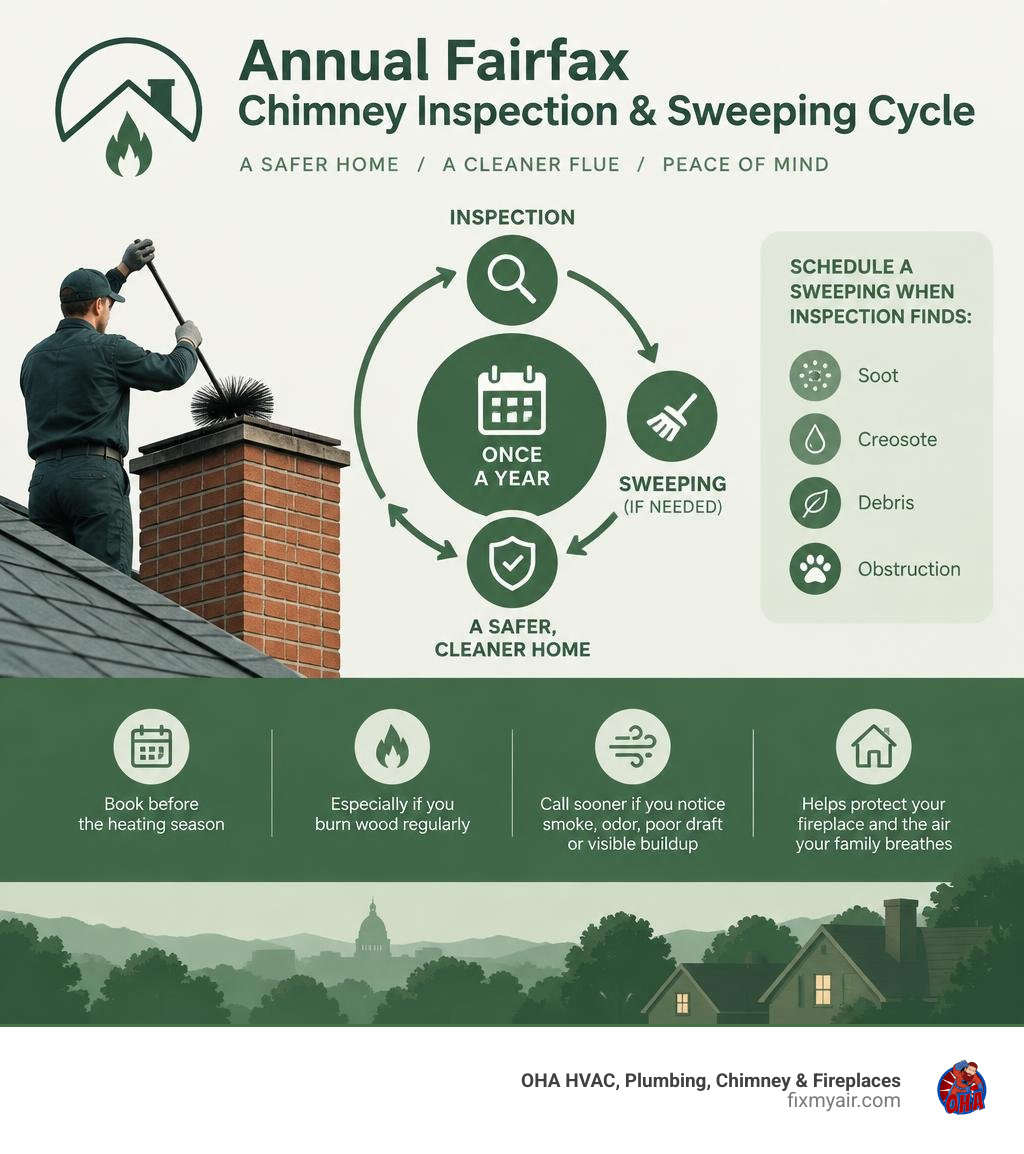
For most Fairfax homeowners, schedule a chimney inspection once a year and have the flue swept when the inspection finds soot, creosote, debris, or an obstruction. Book before the heating season when possible, especially if you burn wood regularly. Call sooner if you notice smoke entering the room, a strong smoky odor, poor fireplace draft, or visible buildup.
The Chimney Safety Institute of America recommends annual chimney inspections to help prevent creosote-related chimney fires. In Fairfax, summer humidity and winter freeze-thaw weather can also add moisture damage, rust, and masonry wear to the list of concerns.
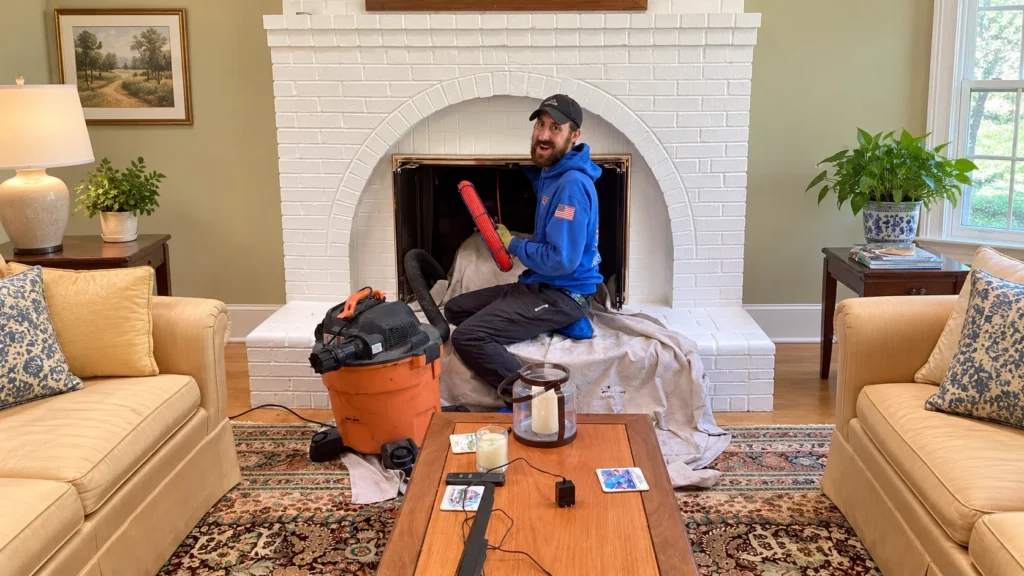
A professional chimney sweeping service can include a flue inspection, contained cleaning, creosote removal, and removal of leaves or animal nests when needed. Acting before cold weather arrives helps protect both your fireplace and the air your family breathes.
Critical Timing: When and How Often to Schedule Chimney Service
Home heating safety starts with a simple reality: any time you burn fuel inside your house, combustion byproducts must escape cleanly. The Chimney Safety Institute of America (CSIA) and the National Fire Protection Association (NFPA) standard 211 both state that chimneys, fireplaces, and vents should be inspected at least once a year. According to the NFPA, heating equipment remains the second leading cause of home fires in the United States, with a substantial portion originating right inside the chimney flue.
In Fairfax County, where over 400,000 households enjoy crisp autumn evenings and brisk winter mornings, fireplaces are a centerpiece of comfort. However, that cozy ambiance requires responsible upkeep. While an annual chimney inspection is universally recommended, sweeping frequency depends on the fuel type, system design, and how heavily you use your fireplace.
Wood-burning open masonry fireplaces and high-efficiency wood stoves generate the highest amounts of unburned hydrocarbons and soot. Every cord of seasoned hardwood burned deposits microscopic layers of creosote along the flue walls. In contrast, gas fireplaces burn much cleaner but present their own venting risks, including corrosive condensation, acid buildup, deteriorating ceramic logs, and nesting insects that block exhaust pathways. Whether your hearth burns oak logs or runs on natural gas, yearly evaluations ensure structural integrity and proper draft.
How Often to Book Chimney Sweeping Fairfax VA Services
How often should you book actual cleaning? The general rule of thumb from fire safety experts is simple: schedule a sweep whenever soot or creosote deposits reach 1/8 inch in thickness along the flue lining. If you burn one or more cords of wood throughout a typical Northern Virginia winter, you will likely hit that threshold every single year.
We recommend booking service during late summer or early fall. By securing an appointment before the initial autumn cold snap, you avoid the seasonal rush and guarantee your fireplace is safe before striking the first match. If you have moved into a new property or neglected maintenance for several seasons, scheduling chimney sweep and repair services helps address hidden masonry faults or heavy glaze accumulations. For a fuller overview of available options, chimney sweep and repair solutions can help homeowners plan needed repairs before lighting a fire.
Warning Signs Your Flue Needs Immediate Attention
You should never wait for an annual date if your fireplace displays active warning signs. If you encounter any of the following symptoms, stop using your fireplace immediately and schedule an inspection:
- Pungent, smoky odors: A strong barbecue or campfire smell emanating from the hearth, especially during warm, humid summer days, indicates heavy creosote accumulation mixed with moisture inside the flue.
- Drafting issues and back-puffing: Smoke rolling into your living room instead of rising freely up the chimney signals a severe obstruction, an improperly sized flue, or a stuck damper.
- Oily, shiny, or tar-like creosote: If you look above the firebox and see shiny black glaze dripping or crusting on the smoke shelf, you are dealing with advanced creosote, which is exceptionally combustible.
- Animal activity or chirping sounds: Birds (such as chimney swifts), squirrels, raccoons, and bats frequently build nests in uncapped chimneys, completely choking ventilation.
- Crumbling mortar joints and spalling bricks: Bits of masonry or clay flue tile landing inside your firebox (known as spalling) signal structural breakdown.
- Moisture stains on surrounding drywall: Water stains on ceilings or walls adjacent to the chimney breast reveal exterior flashing failures or cracked chimney crowns allowing rainwater inside.
The Impact of Northern Virginia Climate on Chimney Health
Fairfax experiences a full spectrum of mid-Atlantic weather: humid, stormy summers followed by freezing, wet winters. This dramatic climate swing is uniquely challenging for exterior masonry structures.
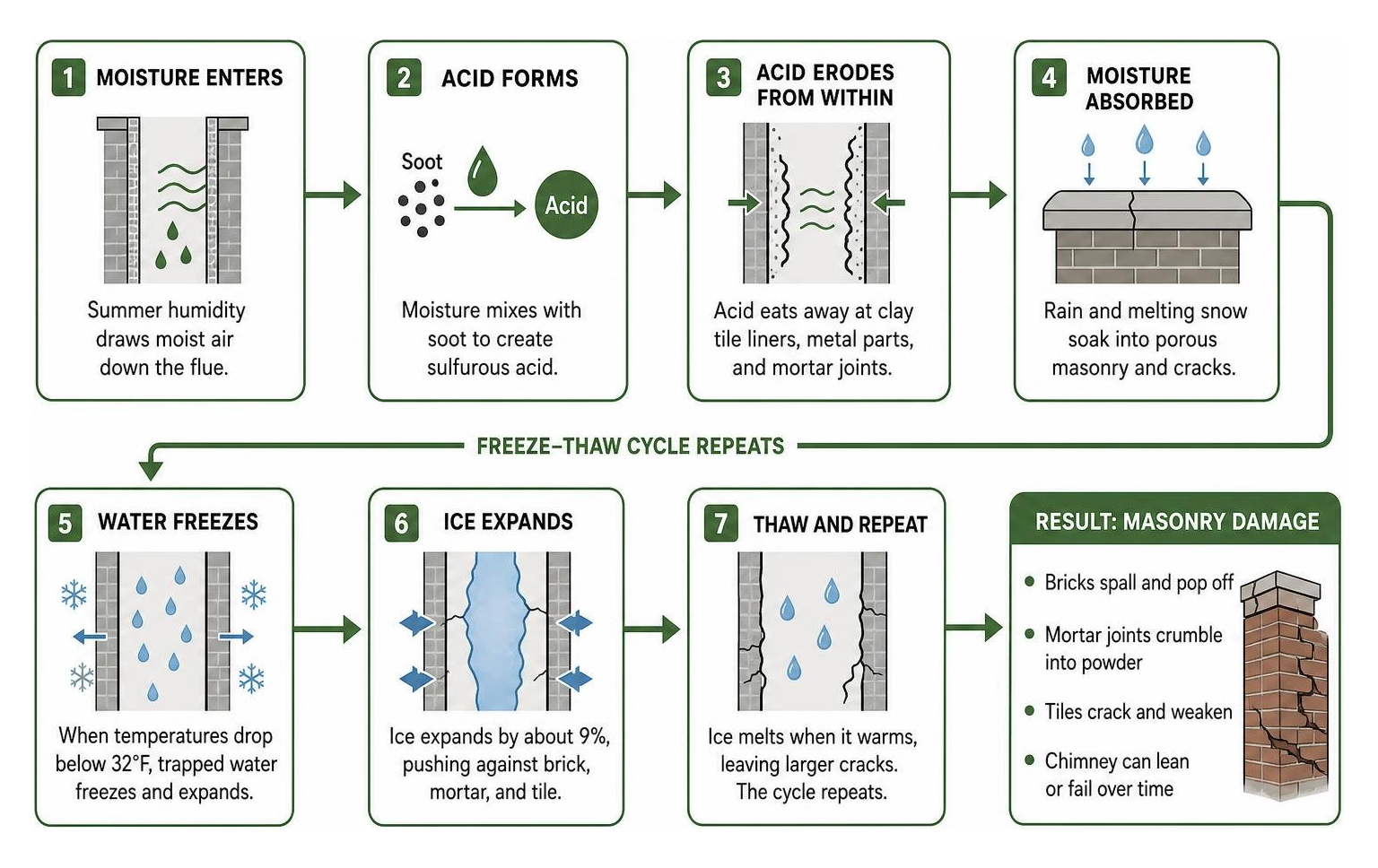
During July and August, outdoor humidity pushes muggy air down into the chimney flue. When moist air interacts with acidic soot deposits left behind from winter, it produces sulfurous acid. This acid eats away at clay tile liners, metal components, and mortar joints from the inside out.
As autumn turns to winter, the freeze-thaw cycle takes over. Masonry is naturally porous, functioning like a sponge. Rain and melting snow seep into microscopic cracks within the bricks, mortar, and concrete chimney crown. When temperatures drop below 32°F, that trapped moisture freezes and expands by roughly 9%. When it warms back up, the ice melts, leaving behind wider fractures. Over several seasons, this cycle causes brick faces to pop off (spalling), mortar to crumble into powder, and exterior chimneys to tilt away from the home.
Why Seasonal Chimney Sweeping Fairfax VA Protects Against Freeze-Thaw Damage
Regular cleaning and maintenance act as your chimney’s primary defense system against weather-driven decay. When soot is swept clean, technicians can clearly see hairline liner fractures and minor masonry defects before winter moisture expands them into catastrophic structural failures.
A well-maintained chimney system relies on properly installed protective components:
- Stainless Steel Chimney Cap: Prevents rain, snow, leaves, and wildlife from entering the flue opening while protecting the crown edges.
- Waterproof Crown Sealant: Bridges the vulnerable top slab of the chimney to direct water away from the masonry.
- Rust-Resistant Top-Sealing Dampers: Replaces rusted throat dampers to create an airtight seal at the top of the flue, stopping drafts and moisture intrusion when the hearth is cold.
Scheduling preventative chimney servicing prior to winter allows you to repair flashing, seal mortar, and ensure waterproof protection before the first freeze hits Northern Virginia.
Preventing Creosote Fires and Carbon Monoxide Hazards
The primary danger of skipping regular chimney sweeping is creosote combustion. Creosote buildup is the leading cause of chimney fires. Creosote forms when unburned wood gases condense on the relatively cool interior walls of the flue. It develops across three distinct stages:
- Stage 1: Flaky, loose black soot that is easily brushed away during standard cleanings.
- Stage 2: Harder, tar-like black flakes that require specialized rotary mechanical cleaning tools.
- Stage 3: A dense, highly concentrated, glossy black glaze that coats the flue tiles like hardened plastic. Stage 3 creosote is extremely flammable and acts like solid fuel lining your chimney walls.
When a hot fire is built below, Stage 3 creosote can ignite, burning at temperatures that can reach 2,000°F. This intense heat can crack clay flue liners, melt metal chimney pipes, and ignite surrounding wooden framing within minutes.
Beyond fire hazards, an obstructed or damaged flue poses severe carbon monoxide (CO) risks. Known as the silent killer, carbon monoxide is a colorless, odorless, and tasteless gas produced by incomplete combustion. If an animal nest, collapsed liner tile, or heavy creosote buildup restricts chimney draft, deadly CO gas spills backward into your living areas rather than venting outside. Annual sweeping and drafting verification are essential steps in protecting your household against carbon monoxide poisoning.
What to Expect During a Professional Chimney Sweep
Hiring a trained professional should always be a stress-free, tidy, and thorough experience. When our team arrives at your home, we treat your property with absolute respect, using drop cloths, specialized runners, and industrial HEPA-filtered dust containment vacuums to keep soot and dust contained.
A comprehensive service visit follows a clear, multi-step process:
- Work Area Preparation: We place protective floor coverings throughout the work zone and seal the firebox opening with a commercial triple-HEPA vacuum running to create negative air pressure.
- Visual and Video Inspection: In accordance with NFPA 211 standards, we perform Level 1 or Level 2 inspections. Level 1 covers all readily accessible portions of the chimney exterior, interior, and accessible appliance connections. Level 2 includes everything in Level 1 plus an in-depth video camera scan of the entire internal flue liner, attic clearances, crawl spaces, and exterior roof components.
- Mechanical Rotary Sweeping: Using flexible composite rods equipped with specialized rotary poly or wire brushes, the technician sweeps from the top of the flue down to the smoke chamber, breaking loose soot, creosote, and debris.
- Smoke Chamber and Firebox Detailing: The smoke shelf, damper plate, and firebox walls are hand-brushed, vacuumed, and cleared of fallen soot deposits and foreign debris.
- Component Inspection & Diagnostic Report: We check the operation of the damper, inspect the integrity of the firebricks, examine the exterior flashing and crown, and provide you with a written condition report along with any repair recommendations.
A detailed article on hiring a professional chimney sweep explains how training, containment equipment, and inspection methods support a thorough appointment.
Pricing and Selection: Choosing Chimney Sweeping Fairfax VA Specialists
Understanding service pricing helps homeowners plan their seasonal home maintenance budget accurately. In Fairfax, the cost of chimney sweeping depends on the condition of your chimney and the work required.
Several variables influence final costs:
- Flue Condition and Creosote Stage: Standard Stage 1 soot removal requires standard brushing. Stage 3 glazed creosote requires specialized chemical treatments (such as anti-creosote sprays or chemical logs) and aggressive mechanical chain flails, which increases labor time.
- Accessibility and Roof Pitch: Extremely steep roofs, high multi-story chimneys, or difficult access points require additional safety rigging and fall-protection gear.
- Number of Flues: Homes with multiple fireplaces, dedicated furnace/water heater flues, or basement wood stoves will have pricing adjusted per flue serviced.
- Repairs and Wildlife Removal: Clearing nesting debris, installing protective caps, or repairing damaged refractory panels will add to the standard sweep fee.
Chimney Service Cost Levels in Fairfax County
| Service Level | What Is Included | Ideal For |
|---|---|---|
| Standard Sweep & Level 1 Inspection | Rotary flue cleaning, firebox vacuuming, damper check, and visual inspection | Well-maintained fireplaces used occasionally |
| Comprehensive Sweep & Level 2 Video Scan | Full mechanical brush sweep, internal video scan, and attic and roof checks | Yearly checkups, buying or selling a home, or following severe weather |
| Heavy Glaze (Stage 3) Creosote Remediation | Chemical treatment application, rotary chain flailing, and multi-pass cleaning | Flues with heavy tar buildup or long-neglected chimneys |
| Chimney Cap Installation & Minor Masonry Repair | Custom stainless-steel cap fitting, crown sealant, and tuckpointing for small cracks | Flues without animal guards or showing early water damage |
How to Verify Credentials and Avoid Scams
The home service industry occasionally attracts transient “blow-and-go” operators who advertise suspiciously low rates (like $49 specials) only to claim that your chimney is on the verge of collapsing once they arrive. To protect your family and investment, use this checklist before hiring any contractor in Fairfax:
- Check CSIA Certification: The Chimney Safety Institute of America certification is the industry gold standard. Certified sweeps have passed rigorous exams on fire codes, building codes, and safety protocols.
- Verify Virginia DPOR Licensing: In the Commonwealth of Virginia, home improvement contractors must be licensed through the Department of Professional and Occupational Regulation (DPOR). Always confirm that the business holds an active, valid license.
- Ensure Comprehensive Insurance: Never allow a technician onto your roof without verifying general liability insurance and worker’s compensation coverage.
- Look for Established Local History: Work with a proven provider with verifiable local reviews. At OHA HVAC, Plumbing, Chimney & Fireplaces, we are proud to be a veteran-founded, family-run operation with background-checked technicians, transparent upfront pricing, 24/7 emergency availability, and a 4.9-star rating across more than 5,000 Google reviews.
Review all our coverage zones on our service areas across Northern Virginia page to verify available appointments near you.
Frequently Asked Questions About Fairfax Chimney Care
What is the best time of year to sweep a chimney in Northern Virginia?
The ideal window is late summer to early autumn (August through October). Scheduling during this period ensures your fireplace is clean, inspected, and fully functional before the cold weather sets in. It also allows you to avoid the intense November and December rush when appointment slots fill up fast. Furthermore, if the technician uncovers cracked flue tiles, deteriorated flashing, or crown damage, you will have plenty of warm, dry weather left to complete the necessary repairs before winter.
How much does professional chimney cleaning cost in Fairfax County?
The final price depends on the overall condition of your chimney, how many flues are being cleaned, the pitch and height of your roof, and whether Stage 3 glazed creosote is present. Routine maintenance appointments on well-kept flues cost less, while neglected chimneys requiring chemical glaze treatments or video diagnostics cost more.
What local licensing is required for chimney sweeps in Fairfax, VA?
Chimney contractors operating in Fairfax must comply with Virginia Department of Professional and Occupational Regulation (DPOR) licensing requirements for specialty trades and home improvements. A contractor’s license is required for jobs of $1000 or more. CSIA certification is voluntary but shows formal training. Also, confirm that the company carries general liability and workers’ compensation insurance.
Conclusion
Routine chimney care is not just about keeping your hearth looking tidy; it is an essential home safety practice that safeguards your household against destructive chimney fires, toxic carbon monoxide leaks, and costly structural water damage. With Northern Virginia’s unique blend of humid summers and freezing winters, taking a proactive approach to chimney care protects your home value and keeps your fires burning safely all winter long.
Do not wait for a cold evening to find out that your fireplace is blocked, drafting poorly, or coated in dangerous creosote. contact our professional chimney sweep technicians at OHA HVAC, Plumbing, Chimney & Fireplaces to schedule service with certified, background-checked team members who prioritize your safety and satisfaction.
Need Help With HVAC, Plumbing, Chimney, or Fireplace Service?
OHA is available 24/7 across Fredericksburg, Fairfax, and Northern Virginia.