
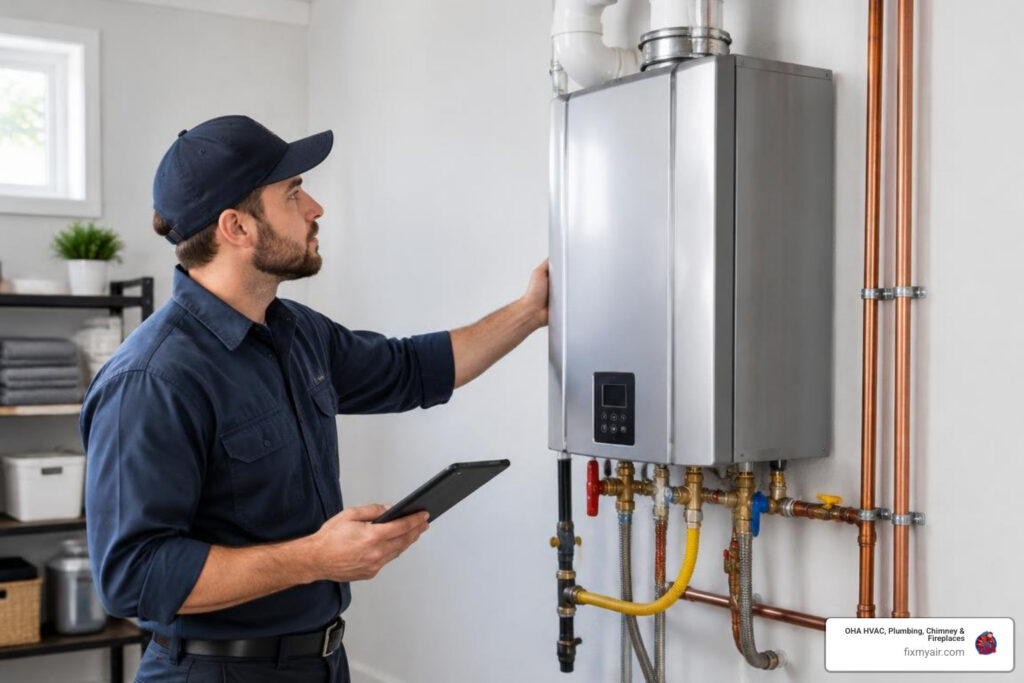
Understanding the Cost to Install a New Tankless Water Heater System in 2026
When evaluating the overall budget for your home, it helps to understand how equipment, labor, permitting, and infrastructure requirements affect the final scope. In Northern Virginia, regional labor rates, building density, and local permitting requirements can all influence what an installation involves.
Working with a provider of certified professional plumbing services helps ensure your quote accounts for permitting, code-required safety components, and proper system sizing.
Average Installation Considerations by Fuel Type: Gas vs. Electric
The primary decision when planning an installation is selecting a fuel source. Natural gas, liquid propane, and electric systems have different equipment requirements, venting needs, and operating capabilities.
| System Type | Typical Flow Rate (GPM) | Key Infrastructure Needs |
|---|---|---|
| Electric Point-of-Use | 1.0 to 2.5 GPM | Dedicated 120V or 240V circuit |
| Electric Whole-Home | 3.0 to 6.0 GPM | Adequate electrical panel capacity and dedicated breakers |
| Natural Gas, Non-Condensing | 6.0 to 9.0 GPM | Sealed metal venting and an appropriately sized gas line |
| Natural Gas, Condensing | 8.0 to 11.0 GPM | PVC or polypropylene venting and a condensate drain |
| Propane, Whole-Home | 7.0 to 10.0 GPM | Dedicated propane regulator and supply line |
For a tankless conversion, tankless water heater services can help homeowners evaluate gas capacity, venting options, electrical needs, and the best placement for the new unit.
Flow Rate, Temperature Rise, and Capacity Sizing
Sizing a tankless water heater requires calculating flow rate in gallons per minute (GPM) against the required temperature rise. Unlike tank models that maintain a static reservoir, tankless units heat incoming municipal groundwater as it passes through the heat exchanger.
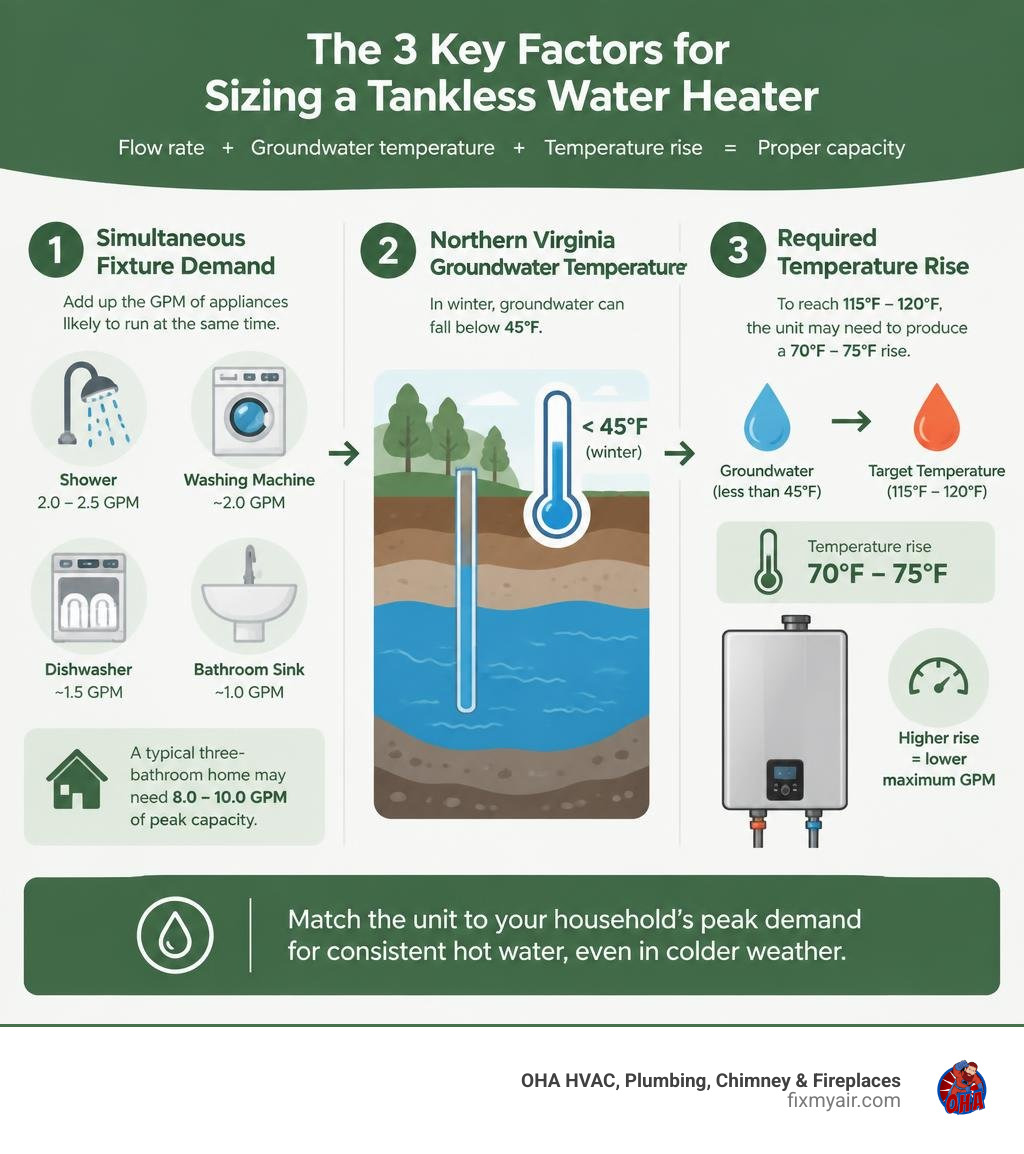
- Calculate Simultaneous Fixture Demand: Add up the GPM of appliances likely to run at the same time. A shower may use 2.0 to 2.5 GPM, a washing machine about 2.0 GPM, a dishwasher about 1.5 GPM, and a bathroom sink about 1.0 GPM. A typical three-bathroom home may need 8.0 to 10.0 GPM of peak capacity.
- Determine Groundwater Temperature: In Northern Virginia, winter groundwater temperatures can fall below 45°F. To reach a comfortable tap temperature of 115°F to 120°F, the unit may need to produce a 70°F to 75°F rise.
- Select System Capacity: As the required temperature rise increases, the maximum GPM output decreases. An undersized unit can lead to inconsistent hot water or restricted flow during colder weather.
Our guide to water heater installation explains the assessment process and why matching the unit to your household’s peak demand is important.
Major Cost Factors and Necessary Infrastructure Upgrades
When an estimate reaches the higher end of the range, the reason is often the infrastructure needed to support high-efficiency, on-demand heating. Older homes throughout Virginia may need structural or utility modifications to safely handle modern equipment demands.
How Infrastructure Upgrades Affect a Tankless Water Heater Installation
- Gas Line Upsizing: A traditional tank water heater uses far less gas input than a whole-home tankless system. If the existing gas supply pipe is undersized, technicians may need to run a larger line back to the gas manifold or meter.
- Venting Configurations: Non-condensing gas systems require specialized sealed venting because of their high exhaust temperatures. High-efficiency condensing units can often use PVC or polypropylene venting, but they also require a dedicated condensate drain line.
- Electrical Panel Capacity: Whole-home electric tankless models can draw significant instantaneous current across multiple dedicated circuits. Homes with older electrical panels may need a service upgrade before installation.
- Code-Required Safety Additions: Modern plumbing codes may require thermal expansion tanks, emergency shutoff valves, drip pans, and hardwired gas shutoffs.
Converting from Tank Storage to On-Demand Water Heating
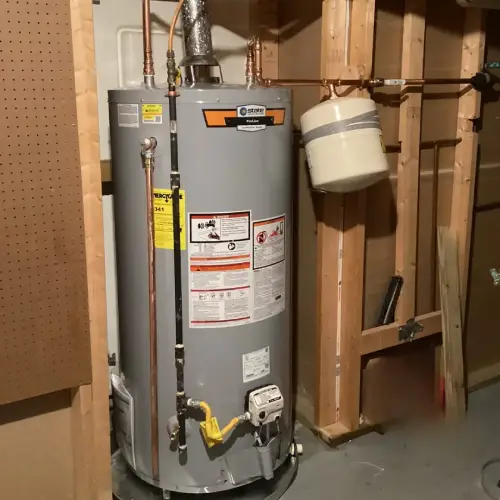
Switching from a bulky tank to a wall-mounted tankless unit can free up useful space in a basement, utility room, or garage. A successful conversion may also require rerouting water supply pipes, reconfiguring an old chimney flue connection, and safely removing the existing appliance.
Planning a water heater replacement before an existing tank fails gives your household more time to evaluate equipment options and address any needed infrastructure changes.
Long-Term Value: Energy Savings, Tax Credits, and ROI
While the upfront investment can be higher than a standard tank, on-demand systems eliminate continuous standby heat loss, which is the energy used to keep stored water hot when no one is using it.
Comparing Long-Term Value and Lifespan
A quality tankless water heater can last 15 to 20 years, while traditional storage tanks often have a shorter service life.
- Energy Efficiency: High-efficiency units can reduce water-heating energy use compared with a conventional storage tank, depending on household demand and the equipment selected.
- Equipment Longevity: Over a longer ownership period, a homeowner may avoid replacing a conventional storage tank as often.
- Maintenance Considerations: Annual descaling helps clear mineral deposits and protect the heat exchanger, especially in areas with moderate to hard water. Prompt maintenance and repair can also help protect warranty coverage and extend equipment life.
Maximizing Rebates and Federal Energy Credits
Homeowners may be able to offset part of the installation cost through federal, utility, manufacturer, or local incentive programs.
- Local Utility Rebates: Gas and electric utilities may offer rebates for qualifying high-efficiency equipment.
- Stacking Incentives: Manufacturer promotions and utility rebates may reduce the overall investment when the program requirements are met.
How to Evaluate Estimates and Spot Contractor Red Flags
Because tankless water heating projects can involve gas lines, combustion venting, high-voltage electricity, and municipal plumbing codes, choosing the right installer is important. Homeowners should look for an established, licensed team that can assess the full scope of the project before recommending equipment.
Essential Inclusions for a Transparent Estimate
A reliable estimate should be clear, itemized, and comprehensive. It should include:
- Specific unit make, model number, GPM capacity, and energy-efficiency rating
- Clear labor charges and scope of work
- Permitting and municipal inspection requirements
- Infrastructure details, such as gas line upgrades, electrical capacity, and venting materials
- Code-required accessories, including expansion tanks, isolation valves, and condensate lines
- Removal and recycling of the old water heater
- Manufacturer warranty and contractor labor-guarantee terms
Red Flags When Comparing Local Plumbing Quotes
When reviewing multiple bids, watch for these warning signs:
- Bids Without an On-Site Assessment: Quoting a tankless conversion without inspecting the gas meter, electrical panel, or venting route can lead to unexpected project changes.
- Skipping Municipal Permits: Contractors who offer to avoid permits may put home insurance, family safety, and manufacturer warranty coverage at risk.
- Ignoring Gas Supply Calculations: Installing a high-input unit without verifying the total demand of other gas appliances can affect performance during peak winter use.
- Absence of Isolation Valves: Failing to install isolation purge valves can make future descaling more difficult.
Frequently Asked Questions About Tankless Water Heater Installation
What should a comprehensive tankless water heater installation estimate include?
A complete estimate should explain the equipment selected, labor scope, permitting requirements, gas or electrical upgrades, venting, water-line adjustments, required safety components, and removal of the old appliance. An on-site assessment helps the installation team identify these details before work begins.
Why is tankless water heater installation more involved than a traditional tank replacement?
A tankless installation is often an engineering retrofit rather than a simple replacement. Traditional tanks may use existing gas lines, atmospheric draft chimneys, and limited electrical connections. Tankless units can require higher gas input, sealed venting, dedicated electrical circuits, and code-required safety fittings. The project involves both advanced equipment and specialized trade work.
Will an electric tankless water heater require a panel upgrade?
In many whole-home applications, it may. Small point-of-use units for a single sink can operate on standard 120V or 240V circuits, while a whole-home electric tankless unit can require substantial electrical capacity across multiple dedicated breakers. An older electrical panel may need an upgrade to support the added load safely.
Conclusion
Upgrading to a tankless water heater can provide on-demand hot water, improved energy efficiency, and a smaller mechanical footprint. The right choice depends on your home’s plumbing, gas, and electrical infrastructure, as well as your household’s hot-water demand.
At OHA HVAC, Plumbing, Chimney & Fireplaces, our licensed plumbing team provides clear recommendations, upfront communication, and around-the-clock support throughout Northern Virginia. When you are ready to discuss your home’s needs, contact our professional tankless water heater technicians to schedule an on-site evaluation.
Need Help With HVAC, Plumbing, Chimney, or Fireplace Service?
OHA is available 24/7 across Fredericksburg, Fairfax, and Northern Virginia.