
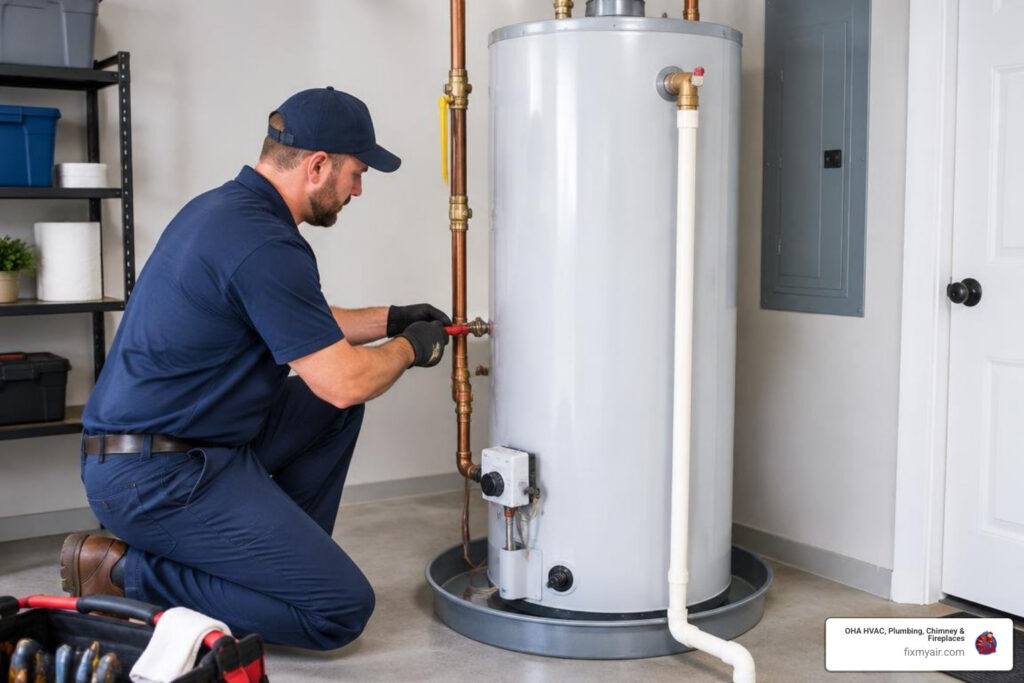
What a 40-Gallon Water Heater Replacement Costs in 2026
A 40 gal water heater replacement cost depends on the type of unit, the condition of the existing connections, local permit requirements, and how easily technicians can access the installation area. A straightforward, like-for-like replacement is generally less involved than a project that needs venting changes, plumbing updates, or added safety equipment.
For a more useful estimate, ask what is included in the scope of work:
- Water heater type and warranty level
- Labor, delivery, and removal of the old unit
- Permits, fittings, and code-required safety upgrades
- Venting, gas, electrical, or plumbing modifications
- Access challenges, such as attics, crawlspaces, or narrow stairways
The water heater itself is only one part of the project. A clear proposal should separate the equipment, labor, disposal, permits, and any necessary code work so you can compare estimates on the same terms. In Northern Virginia, local labor rates and permit requirements may affect the final scope.
A higher quote does not automatically mean a better installation. Request an itemized estimate and ask the contractor to explain every recommended upgrade before authorizing the work.
Breakdown of 40 Gal Water Heater Replacement Cost in 2026
When your water heater stops working, you need a clear explanation of what affects the replacement cost. Most price differences come from the unit type, installation conditions, code updates, and the amount of work required to connect the new system safely.
The following comparison shows how common 40-gallon options can differ in installation needs:
| Water Heater Type | Typical Installation Considerations |
|---|---|
| Standard Electric (40-Gal) | Usually has straightforward water and electrical connections when replacing a similar unit. |
| Standard Atmospheric Gas (40-Gal) | Requires safe gas connections and compatible venting. |
| Power-Vent Gas (40-Gal) | May require specialized venting and electrical connections for the blower. |
| Hybrid Heat Pump (40 to 50-Gal) | Needs adequate space, condensate management, and suitable electrical capacity. |
Unit and Labor Considerations
A replacement estimate generally combines the selected tank with the labor and materials needed to install it safely. Warranty length, fuel type, efficiency features, delivery, removal of the old tank, and the condition of existing plumbing can all affect the final proposal.
Like-for-like replacements are often simpler because the new unit can use compatible connections. Projects become more involved when technicians need to update shutoff valves, water lines, drain pans, electrical circuits, gas piping, or venting.
For homeowners who want a professional assessment and a clear scope of work, OHA’s water heater services include replacement recommendations based on the home’s existing setup.
Gas vs. Electric 40-Gallon System Considerations
Choosing between gas and electric affects installation requirements as well as ongoing energy use:
- Electric water heaters: These units use internal heating elements and do not need combustion venting, but they require appropriate electrical service.
- Gas water heaters: These systems require properly installed gas connections and safe exhaust venting.
- Power-vent systems: These units use an electric blower to direct exhaust through approved vent piping and may be necessary where a standard vertical vent is not available.
When an older unit is being replaced, reviewing the installation requirements before work begins can help avoid unexpected changes during the appointment.
Key Factors That Influence Total Replacement Expenses
Every home has a unique plumbing setup. Several technical and structural variables can change the scope of a replacement:
- Tank capacity and dimensions: A 40-gallon tank often works well for smaller households, but newer models may have different dimensions than older units. Tight closets can require plumbing adjustments.
- Warranty length: Models with longer warranties may include upgraded components or construction features.
- Accessibility challenges: An open basement is generally easier to work in than a narrow crawlspace, finished attic, or tight stairwell.
If the replacement affects other fixtures or piping in the home, OHA’s residential plumbing services can help evaluate the broader plumbing work that may be needed.
How Venting, Electrical, and Permits Impact 40 Gal Water Heater Replacement Cost
Modern plumbing codes are designed to keep homes safe. Replacing an older water heater may require safety upgrades such as:
- Thermal expansion tanks: These may be needed on closed-loop plumbing systems to manage pressure changes as water heats and expands.
- Dielectric unions: These insulated fittings can help prevent galvanic corrosion where copper household pipes connect to steel tank nipples.
- Temperature and pressure relief discharge lines: These must direct water safely away from people and finished areas if the relief valve opens.
- Gas shutoff valve updates: Replacing corroded, obsolete, or difficult-to-operate valves improves emergency isolation.
- Local permits and inspections: Many cities and counties require permits and an inspection to verify safe operation.
Regional Labor Variations and Location Access
Plumbing rates and permit processes vary by region. In Northern Virginia, skilled labor availability, local administrative requirements, and home layout can influence the complexity of a replacement.
Basement installations with direct exterior access are typically easier to complete. Water heaters located in finished attics may require drain pans, water-sensor shutoff devices, and additional handling precautions.
Repair vs. Replace: Making the Right Decision
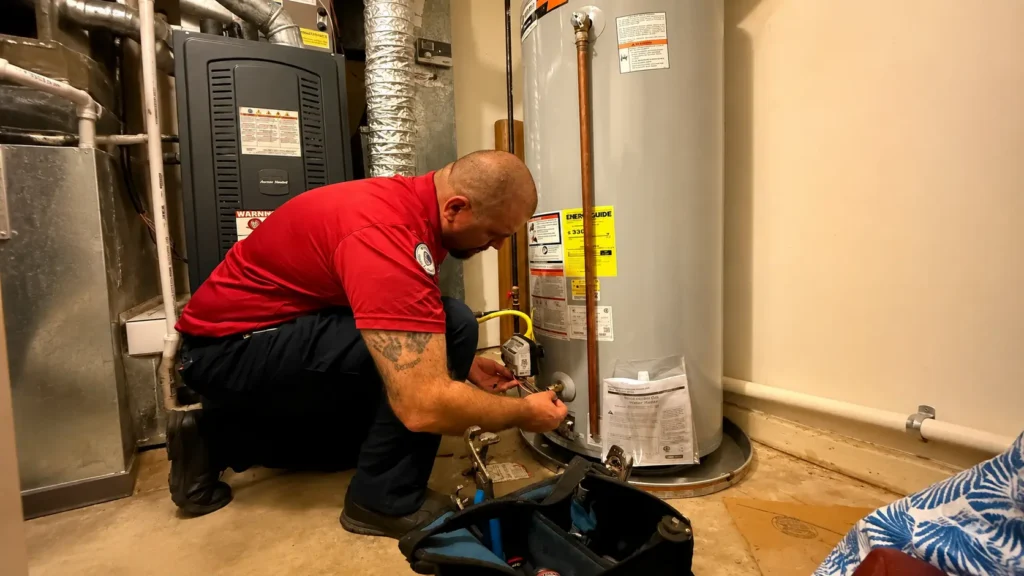
When a water heater malfunctions, homeowners often ask whether a repair makes more sense than a complete replacement.
A water heater that is nearing the end of its service life can develop sediment buildup, corrosion, and declining efficiency. If your system is showing multiple warning signs, this guide to water heater replacement explains what to consider before choosing the next step.
Signs Your Water Heater Has Reached the End of Its Lifespan
Watch for these warning signs that may indicate replacement is the better option:
- Water pooling around the base: A leak from the tank itself can indicate internal failure that cannot be repaired.
- Rusty or discolored hot water: Rust appearing only at hot-water faucets can point to internal tank corrosion.
- Popping and rumbling sounds: Sediment at the bottom of the tank can reduce efficiency and strain components.
- Frequent temperature and pressure relief valve weeping: Persistent dripping can signal overheating or excessive system pressure.
Calculating Repair Costs Against a New Installation
A repair can be a sensible choice when the unit is relatively new and the problem is isolated to a replaceable component. A leaking tank, severe corrosion, or recurring failures often point to replacement as the more dependable long-term option.
Common repairable issues include failed electric heating elements, thermostats, gas ignition components, and external drain valves. Tank-shell leaks and extensive internal corrosion require a different solution.
For a younger unit with a component issue, OHA’s water heater repair guide outlines common repair concerns and when to call a professional.
How to Save Money and Avoid Contractor Overcharging
Water heater replacements often happen under emergency conditions. When you have no hot water, it can be tempting to accept the first estimate you receive. Comparing itemized proposals helps you understand the scope of work and avoid unnecessary add-ons.
Look for a contractor who explains the recommended equipment, labor, permits, disposal, and code updates in plain language. A transparent proposal makes it easier to compare service providers without relying on a single bottom-line number.
Energy Efficiency Rebates and Incentives
High-efficiency water heaters may qualify for utility rebates or seasonal manufacturer promotions. Eligibility and available programs can change, so confirm the current requirements before selecting a model.
Avoiding Overpriced Quotes and Unnecessary Add-ons
Before signing an installation agreement, ask your plumbing contractor these direct questions:
- Is this a flat, upfront price, or will labor be billed hourly if the job takes longer?
- Does this quote include the local municipal permit, pressure expansion tank, and complete haul-away of my old unit?
- Are you replacing the copper supply lines and shutoff valve, or reusing older hardware?
- Is your installation crew fully licensed, insured, and background-checked?
Verified customer feedback can also help you evaluate reliability. OHA’s team focuses on clear communication, safe workmanship, and recommendations that fit the home’s actual needs.
Frequently Asked Questions About 40-Gallon Water Heater Replacement
Understanding the replacement process helps you plan your service visit with confidence. Here are answers to common questions about residential plumbing and water heaters.
How long does it take a professional to replace a 40-gallon water heater?
A straightforward, like-for-like replacement typically takes 2 to 4 hours. The process involves:
- Shutting off gas/power and water feeds
- Draining 40 gallons of water (20–45 minutes)
- Disconnecting supply lines, venting, and mounting brackets
- Positioning and leveling the new tank
- Connecting copper water lines, gas/electrical feeds, and safety relief lines
- Filling the tank completely before energizing to prevent dry-fire element damage
- Testing burner combustion, venting draft, or electrical voltage
Can I install a 40-gallon water heater myself to save on labor?
While big-box stores sell water heaters directly to consumers, DIY installation carries significant safety and financial risks.
Natural gas connections present fire and carbon monoxide hazards if draft flues are improperly pitched. Electric water heaters require dedicated 240-volt high-amp circuitry. Additionally, most municipal jurisdictions legally require a licensed trade professional to pull permits, and manufacturers may void tank warranties if the system is not installed by a certified plumber.
Is a 40-gallon water heater large enough for my household?
A 40-gallon water heater is the industry standard for households of 2 to 3 people. It reliably supports back-to-back showers, normal dishwashing, and laundry loads.
If you have 4 or more family members, frequent guests, a deep soaking tub, or multiple high-flow showerheads running simultaneously, upgrading to a 50-gallon tank or exploring tankless systems will better meet peak hot water demand.
Conclusion
Replacing a water heater does not have to be stressful. The right replacement plan accounts for the tank type, installation conditions, required safety equipment, and removal of the old unit.
At OHA HVAC, Plumbing, Chimney & Fireplaces, our veteran-founded, family-run team provides upfront guidance, background-checked technicians, and emergency support to help restore reliable hot water safely.
When you are ready to discuss your options, contact our professional water heater technicians for help with your home.
Need Help With HVAC, Plumbing, Chimney, or Fireplace Service?
OHA is available 24/7 across Fredericksburg, Fairfax, and Northern Virginia.