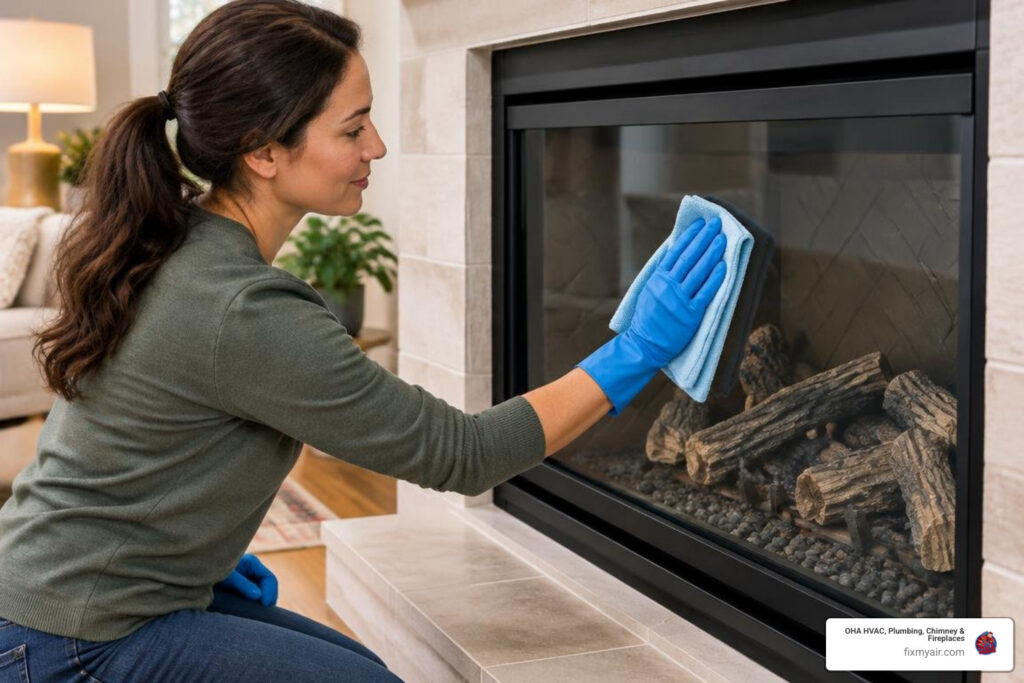
Clear Fireplace Glass Starts with a Cool, Gentle Clean
For effective fireplace glass cleaning, wait until the fireplace and glass are completely cool. Then wipe loose dust away with a clean microfiber cloth. For soot, use a fireplace-safe cleaner or a mild DIY option, such as damp newspaper dipped in fine wood ash. Wipe gently, rinse away all residue, and dry with a lint-free towel before reinstalling the door.
Avoid abrasive pads, harsh acids, and aggressive scraping. These can scratch or cloud the tempered glass. If soot is baked on, a razor blade can help when held at a shallow angle and used carefully on cool glass.
Clean the glass after heavy use or about weekly during fireplace season. Clear glass improves your view of the flames and makes it easier to spot unusual soot, haze, or combustion problems early as part of routine hearth maintenance.
If the glass stays cloudy after cleaning, has permanent-looking marks, or quickly turns black again, the issue may be more than surface dirt. A fireplace or chimney professional can check for draft, venting, gasket, or burner problems.
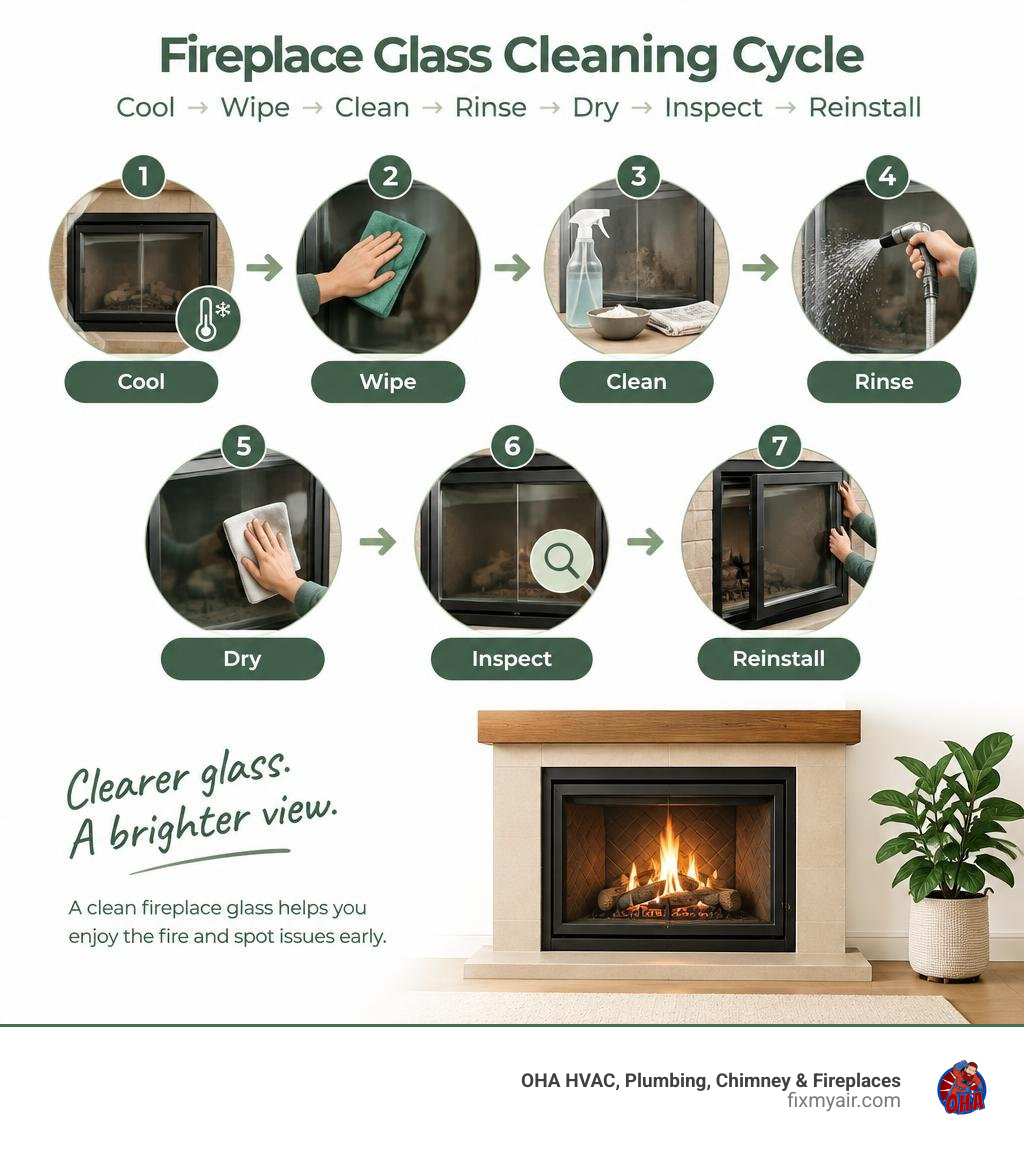
Safety Precautions and Preparation Before Cleaning
Before jumping into the cleaning process, safety must always come first. Fireplace glass doors are engineered from tempered safety glass or ceramic glass designed to withstand extreme thermal stress. However, handling hot glass can lead to severe burns, thermal shock, or sudden glass breakage.
1. Wait for a Complete Cool-Down
Never attempt to clean your glass while the fireplace is active or even slightly warm. Allow at least several hours, or ideally overnight, after your last fire before touching the glass. Adding room-temperature liquids to warm glass can induce thermal shock, leading to dangerous fractures.
2. Protect Yourself and Your Living Space
Prepare your workspace with the following protective gear and materials:
- Protective Gloves: Heavy-duty work gloves or rubber cleaning gloves protect your hands from sharp metal brackets, soot stains, and potential cuts.
- Drop Cloths or Old Towels: Spread a thick drop cloth or a layer of newspapers over your hearth and flooring. Creosote and dark soot residues easily stain rugs, hardwood, and porous stone hearths.
- Safety Glasses: Tiny flecks of carbon and dried cleaner can flake off during wiping. Protect your eyes from unexpected debris.
3. Safely Remove the Door Assembly
Cleaning your glass while it remains attached to the fireplace frame can result in cleaning fluid dripping behind the unit or soaking into the lower heat vents. Whenever possible, remove the door panel completely:
- Consult your manufacturer’s manual for specific hinge release mechanisms.
- Most gas units feature spring-loaded clips or quick-release clamps along the top or bottom edge.
- Wood-burning stove doors frequently lift straight off their pivot pins.
- Place the removed glass face-up on a soft, padded, flat surface such as a folded moving blanket or carpeted workspace.
4. Protect the Surrounding Gasket
The fiberglass rope gasket lining your door forms an airtight seal critical for combustion control and indoor air quality. Avoid soaking this rope gasket with liquid cleaners, as wet gaskets degrade quickly and trap corrosive moisture against the metal channel.
For a deeper seasonal check of seals, igniters, and safety barriers, our team provides professional gas fireplace services for homeowners throughout Northern Virginia.
If you notice recurring haze, soot, or ignition concerns, our guide to gas fireplace service explains what a professional appointment can address.
Essential Tools and Methods for Fireplace Glass Cleaning
Using the right materials protects the integrity of your fireplace glass. Abrasive scrubbers like steel wool, green scouring pads, or wire brushes leave microscopic scratches on tempered surfaces. Over time, these fine scratches weaken the structural integrity of the pane under intense operational heat.

For a broader maintenance routine that protects the rest of the unit as well as the glass, see our fireplace cleaning guide.
When performing routine fireplace cleaning, keep these essential tools nearby:
- Premium Microfiber Towels: Soft, absorbent, and completely non-abrasive for lifting grease, moisture, and fine film.
- Single-Edge Razor Blade: For heavily encrusted wood-stove glass, a fresh razor blade held strictly at a shallow 40-degree angle can gently shave away thick carbon scale without scratching the surface. Always lubricate the glass with water or cleaner first, and never scrape dry glass.
- Cotton Rags and Plain Paper Towels: Useful for intermediate wipedowns and catching messy soot slurry.
| Cleaning Method | Best Used For | Key Advantages | Precautions |
|---|---|---|---|
| Fine Wood Ash & Newspaper | Wood stoves, moderate creosote | Chemical-free, readily available | Only use fine, cool ash; avoid sharp unburned embers |
| Vinegar & Cornstarch Solution | Gas haze, light wood soot | Non-toxic, cuts grease, streak-free shine | Requires several minutes of dwell time for baked soot |
| Foam Glass Cleaners | Rapid maintenance, moderate soot | Clings to vertical glass, lifts soot in seconds | Ensure formula is ammonia-free |
| Conditioning Glass Creams | Heavy baked-on creosote, gas film | Deep cleaning power, leaves protective barrier | Must buff off completely before firing |
Safe DIY Fireplace Glass Cleaning with Household Materials
You do not need an arsenal of harsh chemicals to achieve a crystal-clear finish. Common household pantry items offer remarkable cleaning power when applied correctly.
The Classic Ash and Newspaper Trick
Recycling your own fire’s byproduct is one of the most effective ways to dissolve stubborn soot:
- Ensure your firebox ashes are completely cold. Sift through the ash to locate soft, powdery white and grey wood ash, discarding any hard charcoal pieces or nails.
- Lightly dampen a crumpled sheet of black-and-white newspaper or a soft rag with warm water.
- Dip the damp paper directly into the fine wood ash to form a light paste on the paper’s surface.
- Rub the glass in small, circular motions. The natural potassium carbonate (potash) in wood ash acts as a mild, non-scratching abrasive and natural soap precursor that cuts right through baked-on creosote.
- Wipe the cloudy paste away with a clean, damp microfiber cloth, and finish with a dry towel.
The Vinegar and Cornstarch Booster
For gas fireplaces or mild soot films on wood inserts:
- Mix equal parts distilled white vinegar and warm distilled water in a spray bottle.
- Add one tablespoon of cornstarch. The cornstarch adds just enough fine grit to polish away mineral haze without scouring the glass.
- Shake vigorously to suspend the cornstarch, spray evenly across the glass, and let it sit for two to three minutes.
- Wipe clean with a microfiber cloth, rinsing thoroughly with clean water to prevent any remaining cornstarch from baking into a white powder during your next burn.
Commercial Cleaners for Heavy-Duty Fireplace Glass Cleaning
When DIY methods meet their match against layers of multi-season creosote or stubborn sulfur deposits, specialized commercial cleaners provide targeted lifting action.
- Conditioning Glass Creams: Heavy-duty hearth creams (such as conditioning glass polish) utilize micro-fine polishing agents that lift baked-on stains. Apply a quarter-sized dab to the glass, spread it evenly with a dry cloth, allow it to dry to a light haze, and buff it away with a clean microfiber towel.
- Foam-Action Hearth Cleaners: Foaming glass sprays cling to vertical surfaces without dripping onto hearth stones. High-quality fireplace sprays dissolve carbon bindings within 60 seconds, allowing you to wipe away thick soot using nothing more than a paper towel.
- Acid-Free Formulations: Always verify that commercial products are formulated specifically for fireplace and stove glass. Standard household window sprays containing ammonia or harsh acids can chemically react with combustion gases under extreme heat, causing permanent hazing or dangerous fumes.
Proper Drying, Inspection, and Door Reinstallation
Once your glass looks immaculate, completing the final finishing steps ensures both beauty and operational safety.
- Rinse and Dry Completely: Any residual soap, vinegar, or commercial cream left on the glass will bake into the surface during the next burn cycle, leaving an irreversible cloudy film. Rinse the pane thoroughly with clean water and wipe dry with a lint-free microfiber towel.
- Inspect the Gasket Material: While the door is dismounted, run your fingers along the fiberglass rope gasket. Check for frayed sections, stiffness, missing segments, or loose adhesive. A compromised gasket allows unwanted room air into wood stoves (causing uncontrolled burns) and leaks combustion gases from direct-vent gas units.
- Check Door Latches and Hinges: Inspect the mounting hardware for signs of heat distortion, rust, or loose screws.
- Reinstall with Precision: Lift the door back into place, ensuring hinge pins seat fully into their receivers. For gas fireplaces, ensure all spring-loaded clips snap securely into their designated locked positions. Misaligned glass can crack under thermal expansion if tension is applied unevenly across the frame.
Signs Your Fireplace Requires Professional Service
While routine glass wiping is an easy weekend homeowner task, certain glass symptoms indicate underlying mechanical, draft, or venting malfunctions that DIY cleaning cannot resolve.
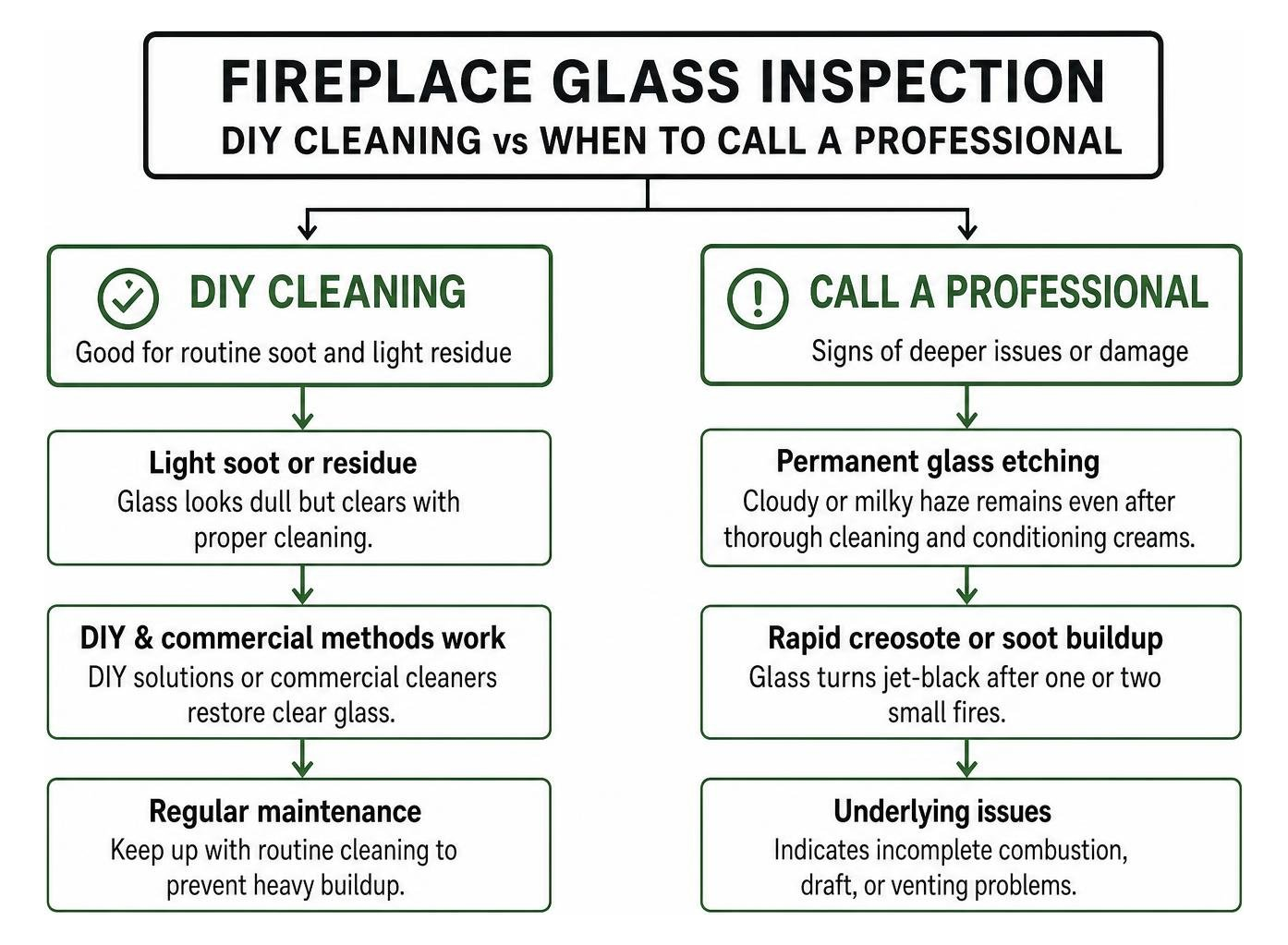
Permanent Glass Etching
If your glass remains cloudy or shows a milky, iridescent haze even after thorough cleaning with specialized conditioning creams, the glass has experienced microscopic chemical etching. Sulfur byproducts and corrosive moisture interact with high heat to pit the glass surface permanently. Once etched, the pane cannot be buffed clear and requires professional replacement.
Rapid Creosote or Black Soot Buildup
If your glass turns jet-black after only one or two small fires, your system may have incomplete combustion or inadequate venting:
- In wood fireplaces, this can point to unseasoned firewood, a blocked flue, or restricted air intake controls.
- In gas fireplaces, soot on the glass can indicate misaligned ceramic logs, a clogged burner port, or an improper air shutter setting. Our article on gas fireplace repair covers common warning signs that need prompt attention.
Burner Malfunctions and Venting Failures
When your chimney or venting system fails to generate proper updraft, smoke and corrosive gases can pool against the glass door. A professional inspection can identify hidden flue obstructions, creosote accumulation, or damaged chimney liners.
For hands-on help with a blocked flue, excessive soot, or draft concerns, schedule chimney sweep and repair services with our experienced team.
Frequently Asked Questions About Fireplace Glass Care
How often should fireplace glass be cleaned?
During peak heating season, clean your fireplace glass every one to two weeks, or after every heavy weekend burn cycle. Removing light soot frequently prevents carbon from baking into hardened creosote under continuous heating cycles. For gas fireplaces, cleaning the glass twice per heating season, once in the fall before starting the unit and once in spring, is generally sufficient to prevent mineral hazing.
Can standard household glass cleaner be used on fireplace glass?
No. Standard household glass cleaners containing ammonia or bleach should never be used on fireplace glass. Under extreme operational temperatures, ammonia residues can react chemically with the glass surface, resulting in permanent rainbow hazing or cloudiness. Furthermore, standard glass cleaners lack the carbon-dissolving agents required to break down fuel-based soot and creosote safely.
What causes a persistent white film on gas fireplace glass?
The white, cloudy film on gas fireplace doors is a byproduct of combustion. Natural gas and propane contain trace amounts of moisture, sulfur, and mineral additives. When these gases burn, water vapor condenses on the cool glass, depositing microscopic mineral residues. If left uncleaned, these minerals bake into the silica structure, leading to permanent chemical etching. Routine cleaning prevents this film from becoming permanent.
Keep Your Hearth Safe and Clear
Maintaining crystal-clear fireplace glass enhances the warmth and ambiance of your home while ensuring your heating system operates safely. By following a gentle, regular cleaning routine, you can enjoy uninterrupted views of your fire while protecting your glass from permanent damage.
When stubborn soot, draft problems, or worn gaskets point to deeper system issues, our experienced team is ready to help. At OHA HVAC, Plumbing, Chimney & Fireplaces, our background-checked technicians provide 24/7 emergency service and reliable craftsmanship backed by more than 5,000 five-star reviews across Northern Virginia. Contact our professional chimney and fireplace technicians to schedule service.
Need Help With HVAC, Plumbing, Chimney, or Fireplace Service?
OHA is available 24/7 across Fredericksburg, Fairfax, and Northern Virginia.