How Often to Clean Pellet Stove Chimney: Tonnage and Usage Guidelines
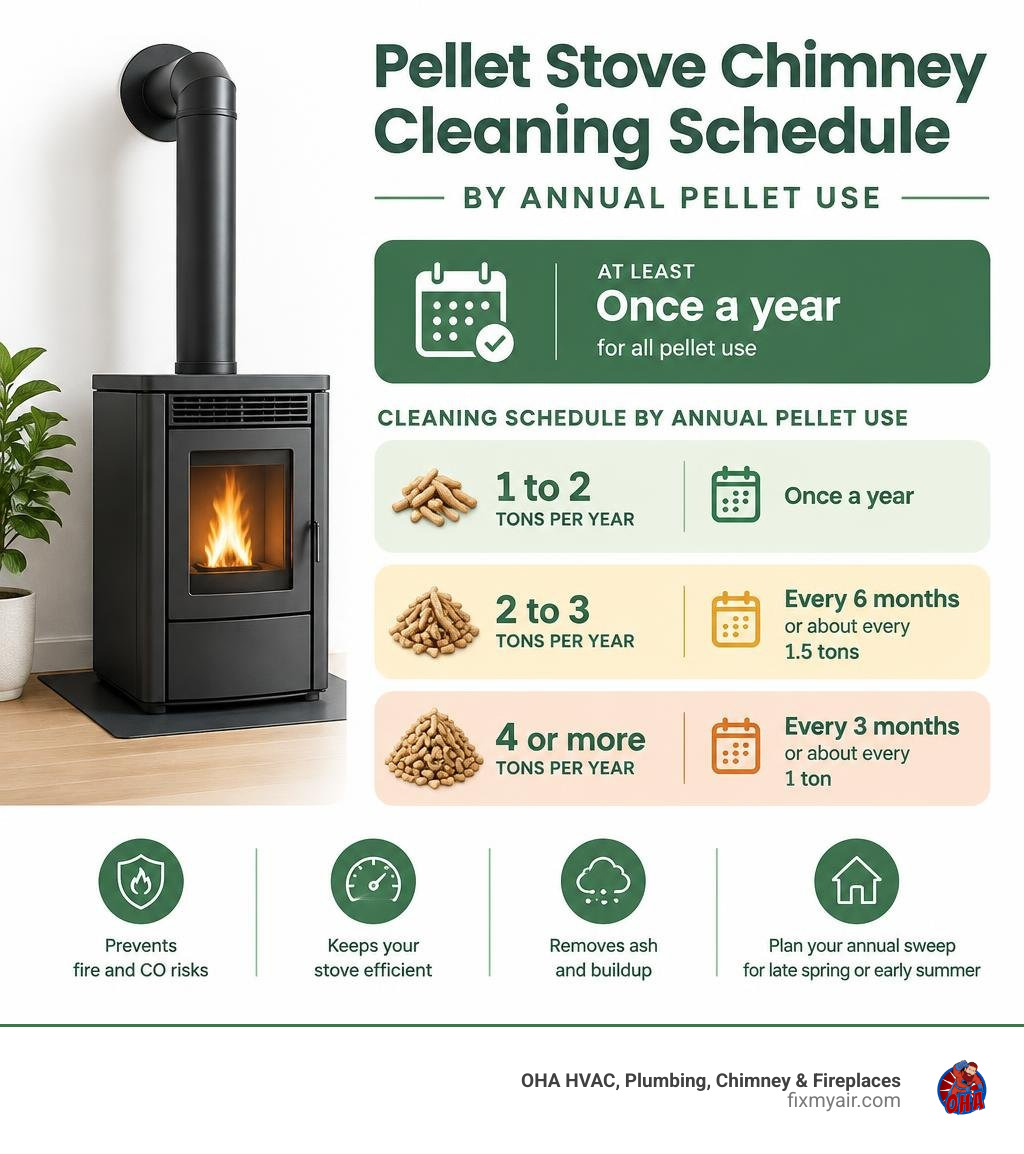
Clean your pellet stove chimney or vent at least once a year, even if you burn premium pellets. A practical rule is to schedule a full cleaning after every 1 to 2 tons of pellets burned, then inspect the clean-out tee and outside termination cap during the heating season.
For heavier use, clean more often:
| Pellet use | Suggested chimney cleaning schedule |
|---|---|
| 1 to 2 tons per year | Once a year |
| 2 to 3 tons per year | Every 6 months or about every 1.5 tons |
| 4 or more tons per year | Every 3 months or about every 1 ton |
Pellet stoves usually create less creosote than wood stoves, but their smaller, blower-driven vent pipes can collect fine fly ash quickly. Buildup can restrict exhaust flow, lower heat output, create smoky odors, and raise fire and carbon monoxide risks.
Plan your annual sweep for late spring or early summer, after heating season ends. That removes ash before summer humidity can turn it into a corrosive residue inside the vent.
Knowing how often to clean pellet stove chimney flues is essential for home safety and maximum heating efficiency. Unlike traditional fireplaces that rely purely on natural thermal drafts, modern pellet appliances use forced-air mechanical systems. Because exhaust pathways are narrow, they are sensitive to accumulated debris.
Routine pellet stove cleaning inside the firebox is only half the job. Emptying the burn pot and clearing the ash drawer are important weekly habits, while the venting pipe needs attention based on actual fuel use and the manufacturer’s maintenance instructions.
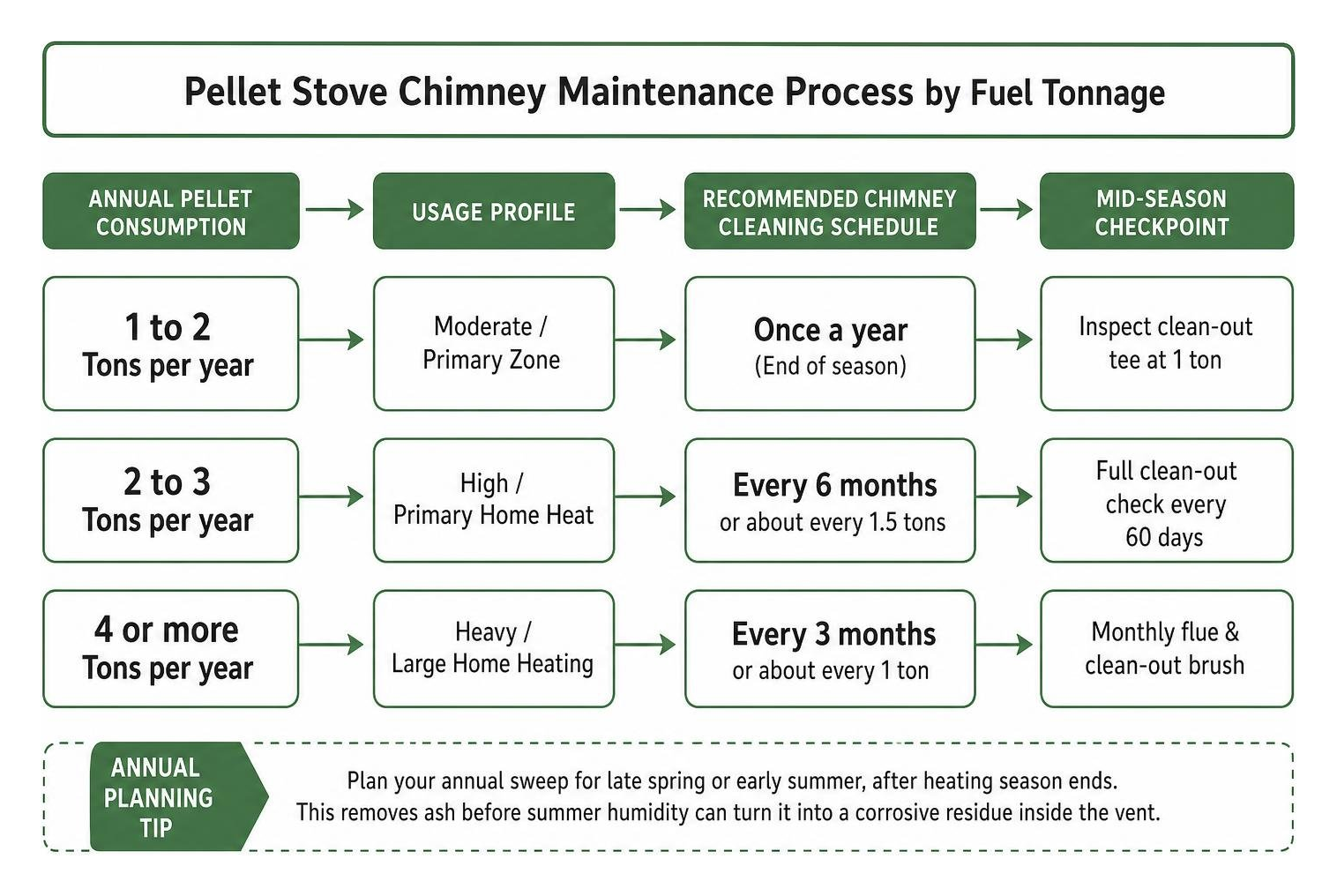
| Annual Pellet Consumption | Usage Profile | Recommended Chimney Cleaning Schedule | Mid-Season Checkpoint |
|---|---|---|---|
| Under 1 Ton (under 50 bags) | Supplemental / Occasional | Annually (End of Season) | Visual check at mid-winter |
| 1 to 2 Tons (50–100 bags) | Moderate / Primary Zone | Every 1 to 2 Tons or Annually | Inspect clean-out tee at 1 ton |
| 2 to 3 Tons (100–150 bags) | High / Primary Home Heat | Every 6 Months (or ~1.5 Tons) | Full clean-out check every 60 days |
| 4+ Tons (200+ bags) | Heavy / Large Home Heating | Every 3 Months (or every 1 Ton) | Monthly flue and clean-out brush |
How Often to Clean Pellet Stove Chimney Based on Tons Burned
The most reliable metric for chimney maintenance is fuel consumption rather than the calendar alone. Burning 50 bags of pellets equals roughly one ton of compressed wood fuel. As that volume burns, it produces fine fly ash that travels past internal baffles and settles directly along horizontal runs, elbows, and clean-out tees.
A standard benchmark across the hearth industry is to perform a thorough flue sweep after every 1 to 2 tons burned. For households operating multiple stoves across different heating zones, track each unit’s pellet tonnage separately. A primary downstairs stove burning three tons over a single winter requires two full sweepings, whereas a secondary bedroom unit consuming half a ton may only need an annual post-season sweep.
How Often to Clean Pellet Stove Chimney Vents During Heavy Winter Use
During sustained cold snaps, pellet stoves often run around the clock. When burning four or more tons over a single winter, scheduling maintenance solely in the spring is not enough. Heavy continuous use causes fly ash and soot to settle in horizontal venting sections, creating backpressure on the combustion blower.
For heavy heating demands, perform a mid-season flue sweep every three months or immediately after burning one ton of fuel. This mid-winter check prevents draft restriction, keeps combustion efficiency high, and helps ensure the exhaust blower does not overheat from pushing air through a narrowed exhaust pipe.
Key Factors Influencing Creosote and Fly Ash Buildup
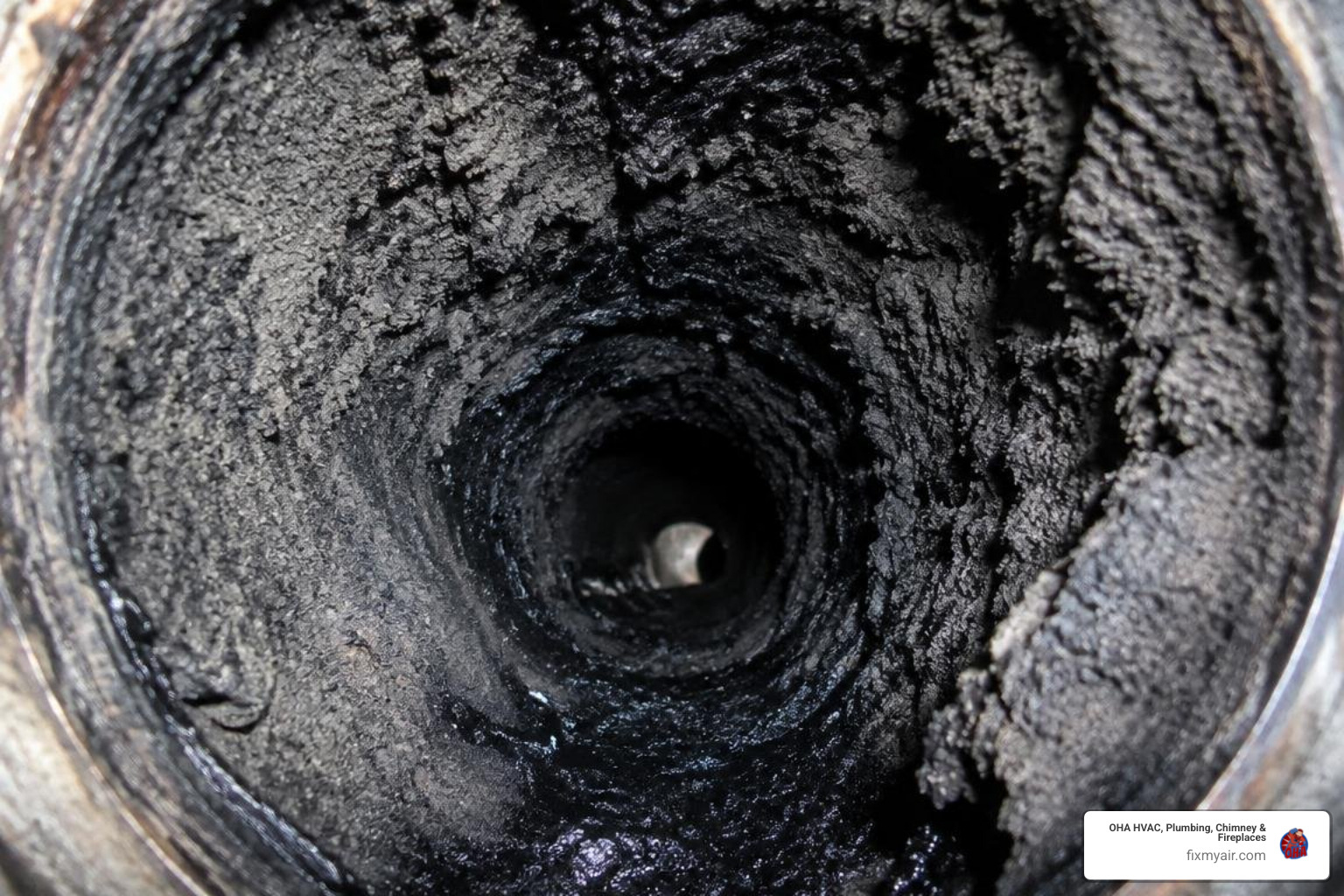
Several variables dictate how quickly soot and ash accumulate in your flue. Burn rate, fuel composition, and pipe configuration all affect the velocity and temperature of exhaust gases.
Pellet Fuel Quality and Ash Content
The grade of pellets you buy plays a direct role in how often you must clean your venting pipe. The Pellet Fuels Institute (PFI) grades pellets based on ash content, moisture levels, and heat output:
- Premium Grade Pellets: Contain less than 1% ash content (often under 0.5% for high-grade softwoods). They burn hotter and cleaner, leaving behind minimal residue and significantly extending intervals between required sweeps.
- Standard / Utility Grade Pellets: Produce between 1% and 3% ash. These lower-tier pellets leave behind higher amounts of unburned fuel residue, heavy fly ash, and mineral clinkers that quickly clog the burn pot and exhaust channels.
Burning low-grade, high-moisture pellets creates a cooler, dirtier burn that accelerates creosote development inside the flue.
Vent Pipe Design and Mechanical Draft
Pellet stoves rely on mechanical combustion blowers that create positive pressure within the exhaust system. This design pushes flue gases out through narrow, sealed 3-inch or 4-inch diameter venting pipes (often called PL-vent pipe).
Because these pipes are small compared to standard 6-inch or 8-inch wood stove flues, any internal buildup significantly reduces the available cross-sectional airflow.
Vent geometry also matters:
- Horizontal Runs: Long horizontal pipe sections allow slow-moving fly ash to settle out of the exhaust stream quickly.
- 90-Degree Elbows: Sharp turns create turbulence, trapping airborne soot. Installing two 45-degree elbows instead of a single 90-degree bend improves airflow.
- Direct-Vent Terminations: Short through-the-wall direct vents are simple to inspect, but exterior termination caps can clog with windblown debris, insect nests, or accumulated fly ash.
All pellet venting configurations must follow strict clearance guidelines and local building codes, including NFPA 211 standards, to prevent heat transfer to combustible wall materials and ensure exhaust gases vent cleanly outdoors.
Warning Signs Your Pellet Venting System Requires Immediate Sweeping
Do not wait for your scheduled service date if your appliance shows signs of an exhaust restriction. A blocked vent interferes with combustion air, starves the fire of oxygen, and can cause hazardous operational issues.
If these symptoms appear, a prompt chimney inspection can help identify vent restrictions, loose joints, or termination-cap issues before they develop into a larger safety problem.
- A “Lazy” Dark Orange Flame: A healthy pellet fire produces a crisp, active, torch-like bright yellow or white flame. A sluggish, dark orange flame that flickers weakly indicates restricted airflow and poor exhaust draft.
- Heavy Soot on the Door Glass: While a light ash dusting on the viewing glass is normal, thick, dark, velvety soot forming within hours of operation indicates improper air-to-fuel balance from exhaust restrictions.
- Smoky Odors Indoors: Because pellet flues operate under positive pressure from the exhaust blower, any blockage or failed joint seal can force flue gases and smoky odors back into your living space.
- Noisy or Straining Exhaust Blower: If the combustion blower fan whines, rattles, or runs unusually loud, it may be struggling against heavy ash buildup in the exhaust housing or flue pipe.
- Reduced Heat Output: When restricted exhaust traps fine ash inside the heat exchanger chambers, thermal transfer drops, reducing warmth even at high feed rates.
- Hopper Burn-Back Risk: Severe vent blockages prevent heat and smoke from escaping out the termination cap. This heat buildup can trip high-limit vacuum switches or cause burn-back into the pellet hopper.
DIY Cleaning vs. Professional Sweeping: Tools, Timing, and Safety
Homeowners can easily handle routine weekly vacuuming and firebox brushing, but full-length flue sweeping requires specialized tools and safety practices. For help with maintenance, repairs, or performance concerns, OHA’s team provides professional pellet stove service for homeowners who want a thorough system evaluation.
The ideal time to clean your chimney is in late spring or early summer, right after the heating season ends. Leaving ash inside the pipe over a humid summer allows fly ash, which contains hygroscopic salts, to pull moisture from the air. This moisture creates an acidic paste that corrodes stainless steel pipe walls and exhaust blower housings. A seasonal chimney sweep and repair visit helps remove buildup and identify venting issues before the next heating season.
Essential Tools for DIY Maintenance
If you clean the venting system yourself, use tools designed specifically for pellet stoves to avoid damaging delicate pipe linings:
- Poly Filament Pellet Brush: Never use stiff metal wire brushes on 3-inch or 4-inch pellet pipes, as they can scratch the corrosion-resistant inner lining. Always choose a flexible poly-bristle brush sized precisely to your pipe diameter.
- Flexible Cleaning Rods or Rotary Systems: Flexible fiberglass rods or drill-driven rotary systems negotiate 45- and 90-degree elbows without puncturing the pipe wall.
- Dedicated Ash Vacuum with HEPA Filtration: Standard household vacuums allow ultra-fine fly ash to pass through standard filters, ruining the vacuum motor and spreading fine dust through your home. Always use an ash vacuum equipped with a fire-resistant metal canister and a HEPA filtration system.
- Personal Protective Equipment (PPE): Wear a properly fitted N95 dust mask and safety glasses to protect yourself from airborne ash and soot particles.
- High-Temperature Red RTV Silicone: Use heat-resistant silicone or manufacturer-approved foil sealing tape to reseal pipe joints and clean-out caps after completing the sweep.
Benefits of Professional Chimney Sweep and Mechanical Inspection
While DIY brushing clears loose ash from the pipe, a professional service covers vital mechanical and electrical components. OHA’s chimney team can inspect the full venting path and mechanical components as part of a complete service visit:
- Motor and Blower Fan Service: Sweeps remove the combustion and convection fans, brush accumulated soot from individual curved blades, and lubricate motor bearings to prevent premature failure.
- Diagnostic Safety Testing: Technicians test vacuum pressure switches, proof-of-fire sensors, and high-limit thermal switches to ensure automatic shutdown systems work properly.
- Flue Sealing and Integrity Checks: Professionals verify that all positive-pressure pipe joints remain gas-tight, helping prevent carbon monoxide from leaking into the home.
- Camera Inspections: Technicians use specialized video equipment to examine the entire flue length for hidden corrosion, disconnected joints, or exterior cap damage.
Frequently Asked Questions About Pellet Stove Maintenance
Can I wait several years between chimney cleanings if I burn premium pellets?
No. While premium pellets create less ash than lower grades, all wood combustion produces fly ash and small amounts of creosote. Waiting several years allows fine ash to settle in horizontal runs and the clean-out tee, restricting air intake and overworking the exhaust motor.
Uncleaned ash also absorbs ambient moisture over summer months, forming acidic compounds that eat through stainless steel flue liners. Annual inspections are also required by most home insurance policies and stove manufacturers to maintain warranty coverage.
How does pellet stove chimney cleaning differ from a traditional wood stove?
Pellet stove flues differ from traditional wood-burning chimneys in three main ways:
- Diameter: Pellet stoves use narrow 3-inch to 4-inch pipes, whereas standard wood stoves use 6-inch to 8-inch chimneys. Buildup restricts airflow much faster in smaller pellet pipes.
- Draft Mechanism: Traditional wood stoves rely on natural draft created by rising heat. Pellet stoves use a motorized exhaust fan that pushes air through sealed, pressurized pipe joints.
- Deposit Type: Wood stoves tend to produce thick, glossy Stage 3 creosote from unburned volatile gases. Pellet stoves burn much hotter and more completely, producing mostly fine, powdery fly ash alongside light soot.
What is the ideal time of year to clean a pellet stove vent?
The best time to clean your pellet stove vent is late spring or early summer, immediately after the winter heating season ends.
Cleaning in the spring removes acidic, sulfur-rich ash before high summer humidity can mix with the residue and corrode internal flue surfaces. It also gives you plenty of time to address any necessary repairs well before the cold weather returns in the fall.
Conclusion
Keeping your pellet stove venting system clean is essential for home safety, energy efficiency, and equipment longevity. By sticking to a usage-based cleaning schedule, sweeping your flue after every 1 to 2 tons of fuel burned and scheduling a comprehensive inspection each year, you can enjoy reliable warmth while reducing the risk of chimney fires, carbon monoxide leaks, and unexpected mechanical breakdowns.
At OHA HVAC, Plumbing, Chimney & Fireplaces, our experienced team helps homeowners maintain safe, dependable pellet stove systems. For off-season flue cleaning, system repairs, or routine maintenance, contact our professional pellet stove technicians to schedule service.
Need Help With HVAC, Plumbing, Chimney, or Fireplace Service?
OHA is available 24/7 across Fredericksburg, Fairfax, and Northern Virginia.