Gas Fireplace Won’t Stay Lit? Causes, Warning Signs, and Next Steps
A gas fireplace that lights and then goes out can be frustrating, especially when you are relying on it for warmth. The problem may happen right after ignition, when the main burner starts, or after the fireplace has been running for a few minutes. Because several safety controls, fuel-supply components, and venting conditions can cause a shutdown, it is best not to guess at the repair.
If your gas fireplace lights but won’t stay lit, turn it off and contact OHA HVAC, Plumbing, Chimney & Fireplaces for professional assistance. Our technicians can evaluate potential ignition, fuel supply, and safety-control issues to determine the appropriate next steps. Avoid disassembling the pilot, gas valve, or burner yourself.
The U.S. Consumer Product Safety Commission recommends a yearly professional inspection of fuel-burning appliances, including fireplaces, along with their chimneys, flues, and vents.
A weak pilot flame, dirty sensor, or blocked vent may be the cause, but a technician needs to test the system to know. If you smell gas, leave the home immediately. Once outside, call 911 or your gas utility’s emergency line. Don’t use switches or try to relight the fire.
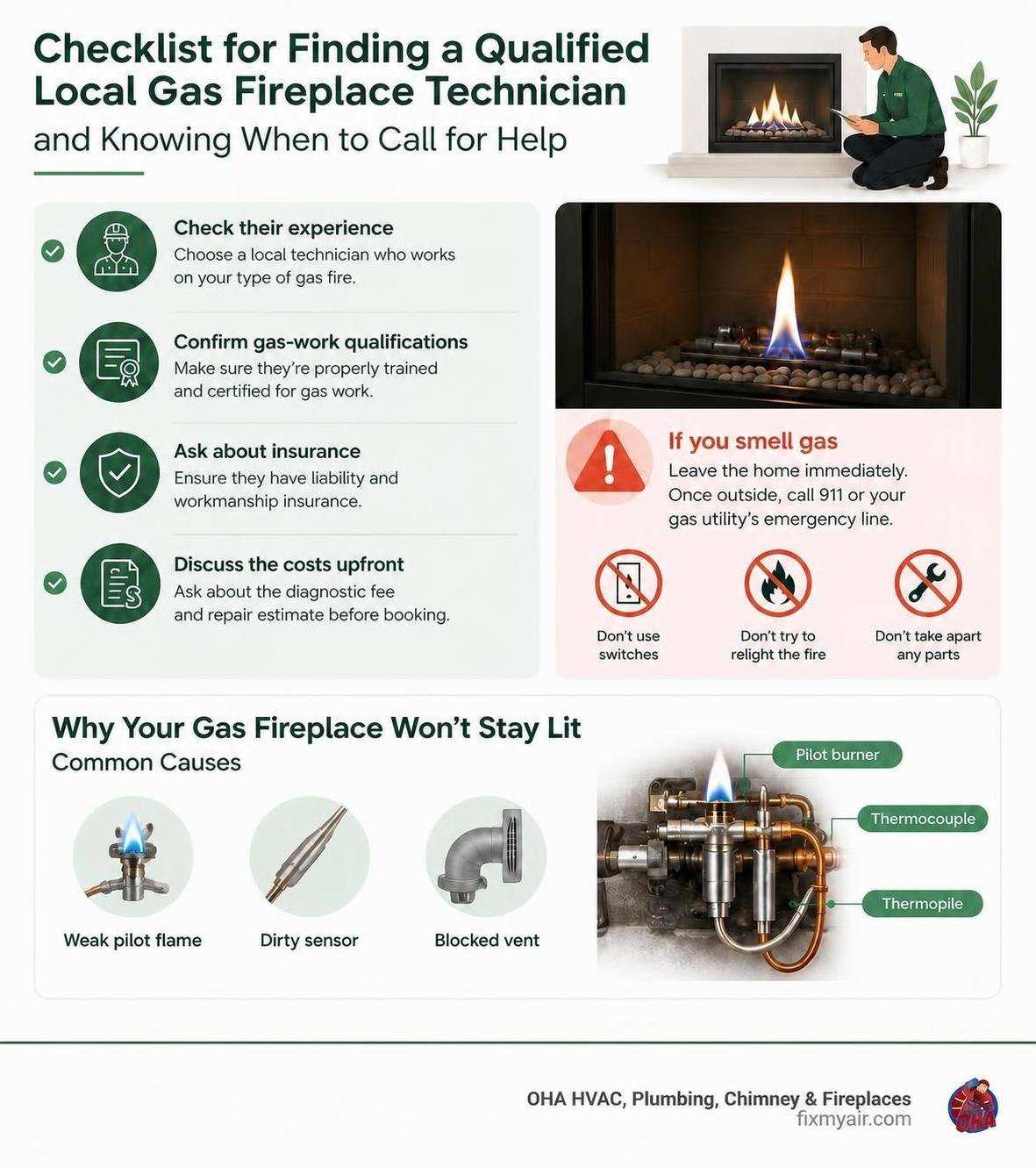
Why Your Gas Fireplace Won’t Stay Lit (Common Causes)
When your gas fireplace shuts down abruptly, it can turn a cozy evening into an exercise in frustration. Gas fireplaces are engineered with sensitive safety mechanisms designed to cut off fuel delivery the moment an unsafe operating condition arises. While it might seem like a simple mechanical hiccup, several electrical and pneumatic factors can cause the flame to extinguish.
Here are the most frequent culprits behind a fireplace that refuses to stay lit:
- Thermocouple Wear and Degradation: The thermocouple is a small metal sensor that sits directly in the pilot flame. When heated, it generates a tiny electrical current (millivolts) holding the internal gas safety valve open. If it wears out, oxidizes, or drifts out of alignment, the safety valve snaps shut.
- Thermopile Voltage Drop: In systems with wall switches or remote controls, a larger sensor called a thermopile generates higher voltage (typically 300 to 750 millivolts). If the thermopile fails to produce sufficient voltage under load, the main burner will cut out as soon as it tries to ignite.
- Pilot Orifice Blockages: Dust, pet dander, lint, and even spider webs can obstruct the tiny pilot burner orifice, starving the pilot flame of oxygen or gas. A weak, dancing pilot cannot properly heat the safety sensors.
- Dirty Burner Ports: If carbon and soot clog the main burner ports, gas cannot flow smoothly across the tray, triggering a flame rollout or an immediate sensor shutdown. Routine exterior cleaning can improve appearance, but internal components should be left to a qualified technician.
- Gas Valve Solenoid Failure: The internal coils in the main gas control valve can degrade over time, dropping connection when the unit reaches operating temperature.
- Gas Supply Pressure Fluctuations: Inconsistent pressure from your supply meter, line regulator, or propane tank can cause the flame to sputter and die.
Troubleshooting Pilot Light and Thermocouple Issues
Before assuming a major component is broken, a qualified technician will examine the flame envelope surrounding the thermocouple. If the flame turns orange, it can signal incomplete combustion or poor airflow.
The pilot flame should burn a crisp, steady blue and envelop the top 3/8 to 1/2 inch of the thermocouple or flame sensor. If carbon buildup or soot coats the probe, it creates a thermal barrier that prevents heat transfer. Technicians measure sensor millivolt output with a digital multimeter:
- Closed-Circuit Testing: Verifying the millivolt reading while the system is under load and comparing it with the manufacturer’s specification for the thermocouple or thermopile.
- Resistance Checks: Testing for faulty wiring, corroded terminal spade connectors, or high-resistance wall switches that cause voltage loss.
- Sensor Alignment: Adjusting the pilot bracket so the flame impinges directly on the sensor tip.
Gas Supply, Pressure, and Venting Faults
Fuel and exhaust issues are equally critical. If the venting path is compromised, safety spill switches will trip, instantly extinguishing the fire to prevent dangerous combustion byproducts from entering your living space.
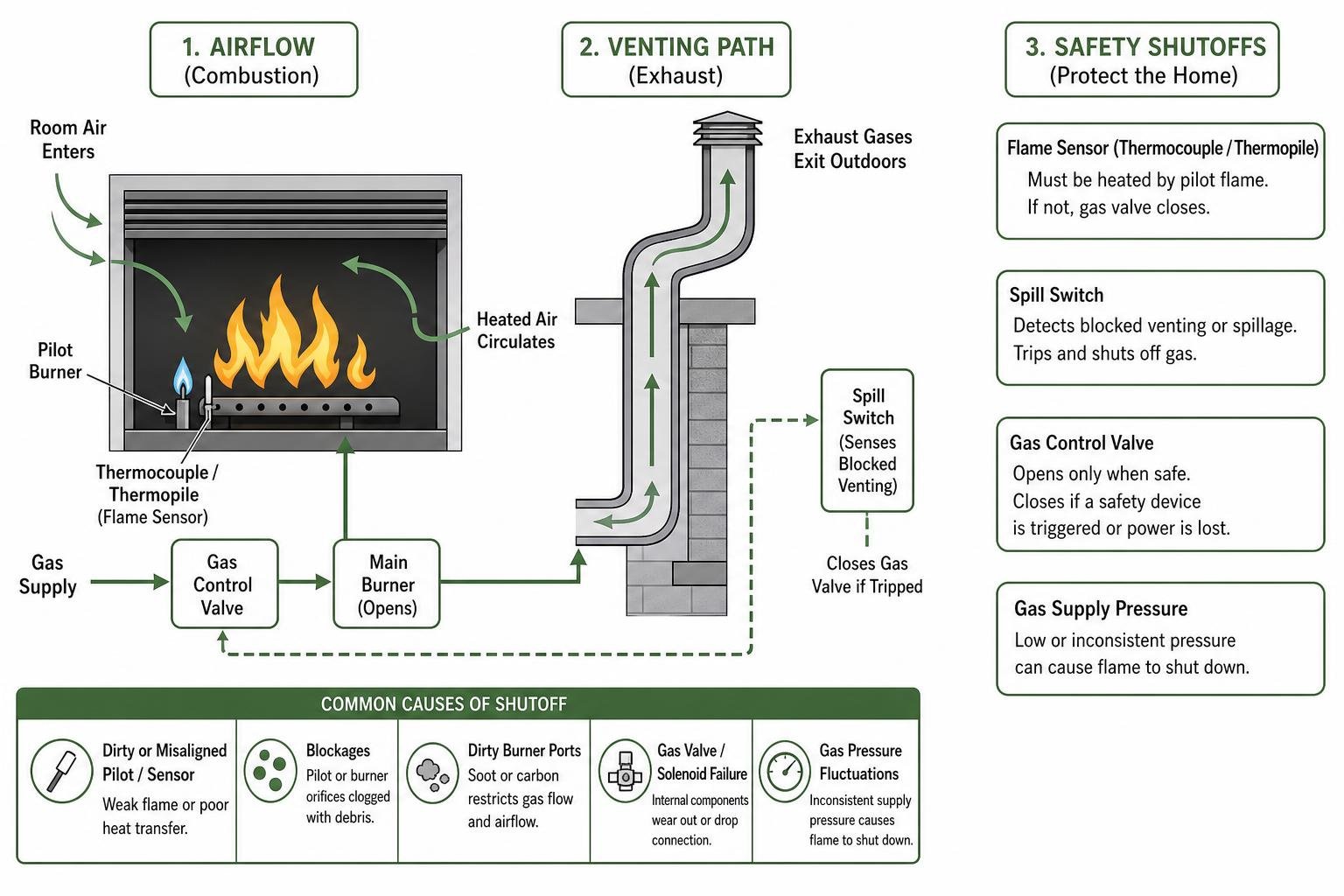
If venting concerns are suspected, OHA’s team performs chimney inspection and repair to evaluate the flue and fireplace system together.
- Line Pressure: Checking standing and working pressure using a digital manometer to rule out frozen external regulators or sticky gas meters.
- Flue Blockages: Inspecting the chimney or direct-vent pipe for nesting debris, leaves, or collapsed liners. A professional inspection helps ensure exhaust gases vent outdoors without backdrafting.
- Downdrafts and Pressure Differentials: Negative air pressure in tightly sealed modern homes can pull exhaust air back down the flue, starving the burner of fresh combustion air.
Why Choose OHA for Professional Gas Fireplace Repairs
Gas fireplace repairs require specialized knowledge of ignition systems, gas controls, combustion, and venting. OHA’s technicians provide professional fireplace services with an emphasis on accurate diagnostics and safe operation. Whether your fireplace experiences intermittent shutdowns, pilot light problems, or inconsistent heating, our team can assess the issue and recommend appropriate repair options based on the appliance’s condition and manufacturer requirements.
| Factor | Qualified Gas Fireplace Technician | General Handyperson |
|---|---|---|
| Relevant experience | Regularly diagnoses and repairs gas fireplaces and their safety controls | May lack fireplace-specific training |
| Diagnostic process | Uses manufacturer guidance and appropriate test equipment to assess ignition, pilot, venting, and control issues | May rely mainly on visual inspection |
| Safety focus | Evaluates safe operation before returning the appliance to service | May not be equipped to assess combustion or venting concerns |
| Insurance and accountability | Can provide company identification, insurance information, and a written scope of work | Coverage and documentation may be limited |
| Repair documentation | Explains findings, recommended repairs, and any follow-up steps | May provide limited detail about the diagnosis |
What to Expect When Scheduling Gas Fireplace Service With OHA
When contacting OHA for gas fireplace service, it helps to have basic information about your fireplace available. Our team can use these details to better understand your concerns and discuss the next steps for scheduling a professional evaluation.
- Fireplace Information: Share the manufacturer, model, and fuel type if known.
- Current Symptoms: Explain whether the pilot light goes out, the main burner fails to remain lit, or the fireplace shuts down after running.
- Service History: Mention previous repairs or recurring performance issues.
- Appointment Expectations: Discuss the diagnostic visit and how recommended repairs will be communicated.
Why Homeowners Turn to OHA for Fireplace Service
Choosing professional fireplace service means finding a team that prioritizes safety, clear communication, and dependable workmanship. OHA is a veteran-founded, family-run company committed to helping homeowners maintain safe, reliable heating systems.
Our team emphasizes professional service, upfront pricing, and clear explanations of recommended repairs. With background-checked technicians and a strong history of customer feedback, OHA strives to make the repair experience straightforward and reassuring.
What to Expect During a Professional Gas Fireplace Service
A complete gas fireplace service is far more comprehensive than simply vacuuming dust out of the cabinet. A qualified technician follows a systematic, safety-first protocol to restore efficiency and verify clean combustion.
For intermittent shutdowns, a useful service record notes the appliance model, fuel type, vent configuration, and the exact symptoms observed during operation. Homeowners weighing the right timing can review whether a gas fireplace needs an annual inspection before scheduling.
What to Note Before the Appointment
A useful appointment starts with clear information from the homeowner. Sharing these details helps the technician arrive prepared and reduces the chance of repeating basic troubleshooting:
- Make and Model: The appliance nameplate or model number helps confirm compatible parts and service procedures.
- Exact Symptom: Note whether the pilot goes out, the main burner fails after lighting, or the unit shuts down after running for a period.
- Control Setup: Identify whether the fireplace uses a wall switch, remote, thermostat, or manual control.
- Recent Changes: Mention power outages, propane deliveries, renovations, or changes to ventilation near the fireplace.
- Service History: Share prior repair records and the last known date of professional service, if available.
Cleaning is most useful when it is tied to an identified operating issue, such as debris affecting burner ports or soot affecting the glass. For seasonal planning, see whether professional gas fireplace cleaning is worth it before winter.
Repair vs. Replacement: Costs and Decision Guide
Deciding whether to repair an existing fireplace or invest in a new unit depends on the age of the system, the availability of manufacturer-approved replacement parts, and the condition of the firebox, controls, and venting system. For older or obsolete units, comparing fireplace installation options can help clarify whether replacement is the better choice.
When addressing a specific, repairable fault, scheduling a gas fireplace repair may be the practical option. If the firebox is rusted, replacement parts are unavailable, or the venting system needs extensive work, replacement can provide a more dependable long-term solution.
How to Compare Gas Fireplace Repair and Replacement Estimates
A useful estimate separates the diagnostic findings, recommended parts, labor, and any follow-up work so homeowners can compare options on the same basis. The final scope can vary with the fireplace model, access to components, vent configuration, and the availability of manufacturer-approved parts.
- Diagnostic findings: Ask which component or condition is causing the shutdown and how the diagnosis was reached.
- Repair scope: Confirm which parts, adjustments, and safety checks are included in the recommendation.
- Parts availability: For older fireplaces, ask whether compatible manufacturer-approved parts are available and what alternatives exist if they are not.
- Venting and installation work: Determine whether the repair or replacement requires changes to the vent system, electrical connections, surrounds, or finishes.
- Warranty information: Ask what coverage applies to installed parts and workmanship.
When to Upgrade Your Gas Fireplace System
Replacement decisions should account for more than the initial estimate. Confirm whether the existing vent system is compatible, whether the new unit will require electrical work or finish repairs, and how the fireplace’s heat output fits the room. Modern units may offer sealed combustion, adjustable heat settings, and improved controls, but the best option depends on the installation and the household’s heating goals. Exploring gas fireplace sales, installation, and repairs can help homeowners compare suitable options before committing to a replacement.
Frequently Asked Questions About Gas Fireplace Repairs
How often should a gas fire be serviced?
Follow the manufacturer’s recommended service interval, and book sooner when ignition becomes unreliable, the pilot is unstable, or the glass begins to soot. The right interval for your unit depends on the appliance model, fuel type, usage, and installation conditions.
What information should I have ready before booking a repair?
Have the fireplace make and model, fuel type, description of the shutdown pattern, control type, and any recent service records available. If you notice a gas odor or hear a hissing sound, leave the home first and call 911 or the gas utility from a safe location rather than trying to gather details.
What should I ask for in a gas fireplace repair estimate?
Ask the technician to separate the diagnostic findings, recommended parts, labor, and any follow-up work. The estimate should explain which fault is being addressed, whether manufacturer-approved parts are available, and whether the proposed repair restores safe operation for the installed fireplace.
Conclusion
A gas fireplace that will not stay lit needs a clear diagnosis before any repair decision is made. A qualified technician can identify the affected component, explain the practical repair options, and confirm whether the fireplace can be returned to safe operation.
At OHA HVAC, Plumbing, Chimney & Fireplaces, our veteran-founded, family-run team is dedicated to keeping your home safe and warm. Our professional technicians deliver upfront pricing, 24/7 emergency response, and a 4.9-star average across more than 5,000 Google reviews. When you need expert help with your hearth, contact our professional gas fireplace technicians today.
Need Help With HVAC, Plumbing, Chimney, or Fireplace Service?
OHA is available 24/7 across Fredericksburg, Fairfax, and Northern Virginia.