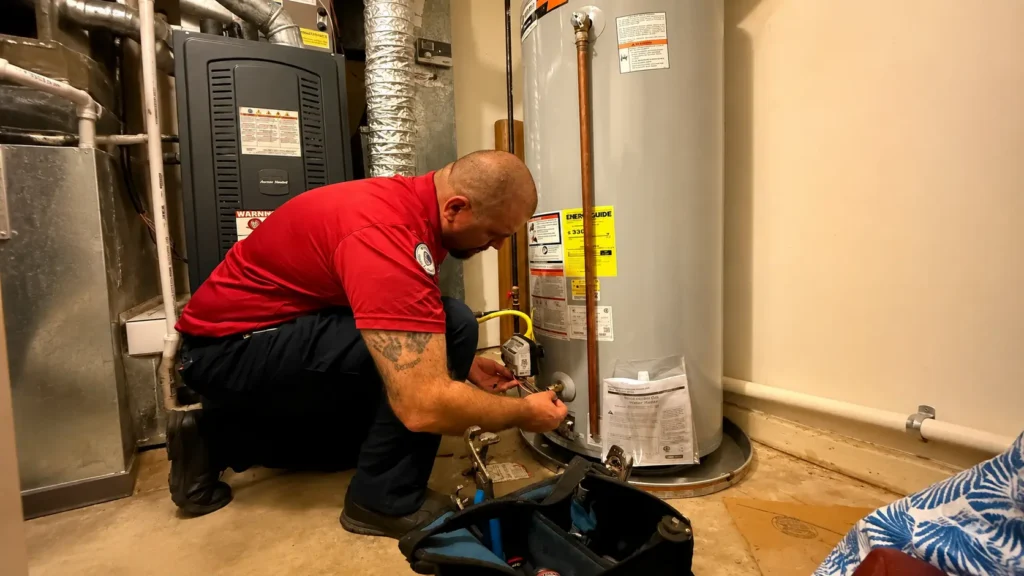
What homeowners should know about groundwater levels, well pressure, neighboring water use, and changes in well-water quality.
Private wells supply water to many homes in Fredericksburg and the surrounding counties. Unlike a municipal water system, a private well depends on groundwater and on the equipment that brings that water into the home.
Robert Richard’s original field guidance focused on a pattern OHA homeowners commonly ask about: why well pressure, flow, or water quality may change after prolonged dry weather, heavy rain, or increased water use in the surrounding area.
Common warning signs include:
- Lower or inconsistent water pressure
- Faucets sputtering or releasing air
- Water flow that weakens during use
- A well pump running longer than normal
- Cloudy, discolored, or unusual-smelling water
- A sudden or intermittent loss of water
These symptoms do not automatically mean the well is dry or the pump has failed. A complete diagnosis may need to consider the well, pump, pressure tank, pressure switch, electrical controls, filters, piping, and water quality.
How Rainfall Affects Groundwater and Private Wells
A private well draws water from groundwater stored below the land surface in soil, rock fractures, and water-bearing formations called aquifers. Rainfall can help replenish this supply when water soaks into the ground and moves downward into the groundwater system.
The U.S. Geological Survey explains that precipitation eventually contributes to aquifer recharge, but recharge rates differ from one aquifer to another.
How much rainfall reaches the groundwater depends on:
- The amount, intensity, and duration of the rainfall
- Soil composition and local geology
- Vegetation and paved or developed surfaces
- The depth and construction of the well
- Existing groundwater conditions
- How much water is being withdrawn locally
A heavy storm can therefore produce substantial surface runoff without immediately raising the water level available to a deeper well. In some settings, a sustained period of rainfall matters more than one short storm.
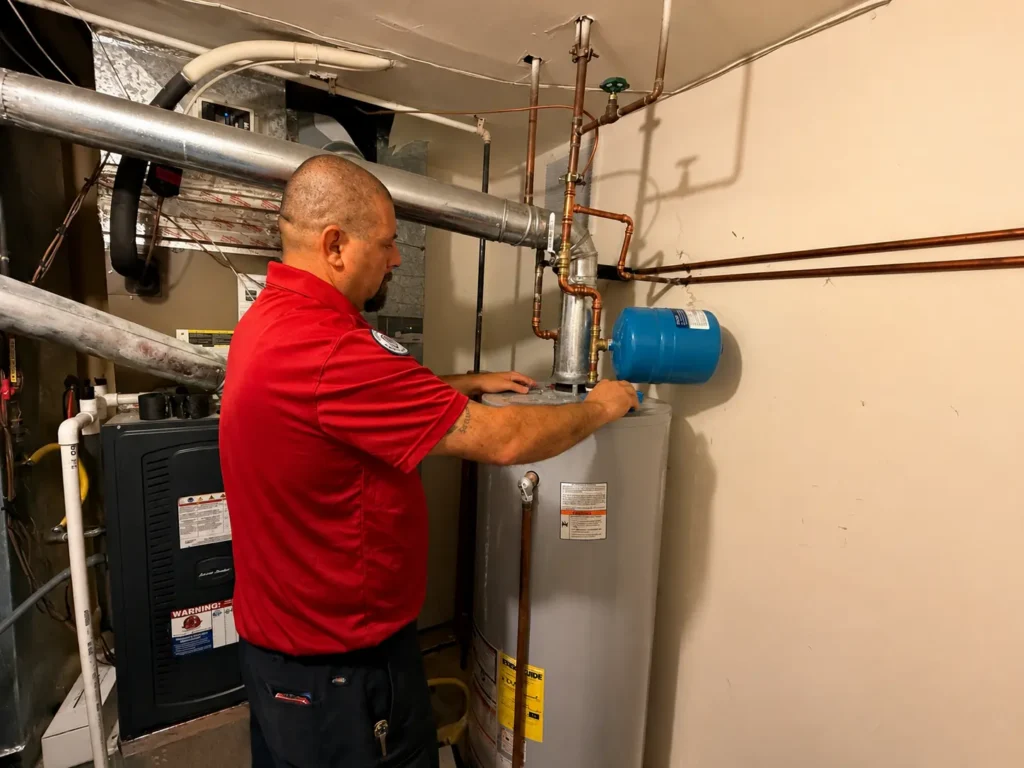
What Extended Dry Weather Can Do to a Well
During drought or a prolonged period of low rainfall, groundwater recharge may decline while household and community water use rises. Lawns, gardens, livestock, pools, laundry, and other seasonal demands can place additional strain on a low-yield or shallow well.
The USGS notes that drought, seasonal rainfall variation, and pumping can change groundwater levels. If water is withdrawn faster than the surrounding aquifer can recharge, the water level available to the well can fall.
Possible signs of well stress during dry conditions include:
- Pressure falling during showers, laundry, or simultaneous fixture use
- Water flow weakening after several minutes
- Faucets sputtering
- The pump running for unusually long periods
- Water stopping temporarily and returning later
However, low pressure alone does not prove that drought is the cause. A worn pump, damaged pressure tank, faulty pressure switch, clogged sediment filter, leaking pipe, or electrical problem can create similar symptoms.
Why Neighbouring Wells May Affect Your Water Supply
However, low pressure alone does not prove that drought is the cause. A worn pump, damaged pressure tank, faulty pressure switch, clogged sediment filter, leaking pipe, or electrical problem can create similar symptoms.
Many rural and semi-rural homes in Spotsylvania, Stafford, King George, Caroline, Orange, and Fauquier counties rely on private wells. Nearby properties may draw from the same aquifer or from connected groundwater formations.
When a well pump operates, the groundwater level near that well can temporarily decline. This localized lowering is commonly called drawdown. The USGS explains that pumping from nearby wells can also lower the water level in a well.
The effect on an individual home depends on:
- Distance between wells
- Well depth and construction
- Pumping rates
- Aquifer capacity and local geology
- Seasonal groundwater conditions
- Overall neighborhood demand
A neighboring well does not automatically cause another property’s water problem. But during dry conditions or periods of high demand, combined pumping can make an already limited groundwater supply more noticeable.
Can Heavy Rain Affect Well-Water Quality?
Heavy rain does not automatically contaminate a properly constructed and maintained well. Risk increases when surface water can enter through or around a damaged cap, cracked casing, poor seal, improper drainage, or a flooded wellhead.
Homeowners should pay attention to:
- Cloudy or muddy water
- Unexpected sediment
- A sudden change in taste
- A new or unusual odor
- Brown, yellow, or reddish discoloration
- Floodwater or standing water around the wellhead
The Virginia Department of Health advises private-well owners to use testing to evaluate water safety and nuisance impurities. Appearance, taste, and odor alone cannot confirm whether water is safe.
After flooding or well submersion
A flooded or submerged well should be treated more seriously than a well exposed only to ordinary rain. The Virginia Department of Health’s storm guidance states that a submerged well should be considered contaminated until it has been safely inspected, disinfected, flushed, and tested as appropriate.
Do not assume that clear-looking water is safe after floodwater reaches the well.
Water-Quality Changes During Dry Weather
Robert’s original guidance also notes that homeowners sometimes report stronger sulfur odor, iron staining, mineral buildup, or hard-water symptoms during dry periods.
Dry weather may make an existing issue more noticeable, but drought should not automatically be identified as the direct cause. These symptoms may relate to naturally occurring minerals, iron- or sulfur-related bacteria, sediment, water-heater conditions, plumbing corrosion, changing groundwater chemistry, or existing treatment equipment.
Testing and diagnosis should come before selecting treatment equipment. OHA provides water-filtration and water-treatment services for hard water, sediment, odors, discoloration, and other qualifying water concerns.
Seasonal Well Problems in the Fredericksburg Area
Based on Robert’s field experience, private-well calls in Central Virginia often follow seasonal patterns. These are practical observations rather than fixed rules for every property.
| What homeowners may notice | Season |
|---|---|
| Rainfall may support groundwater recharge, while heavy rain can reveal drainage, well-cap, runoff, or contamination vulnerabilities. | Spring |
| Higher household demand combined with hot, dry weather may expose low yield, slow recovery, or pressure problems. | Summer |
| Problems may continue when summer drought persists. Unresolved equipment or treatment issues should be addressed before freezing weather. | Fall |
| Demand may stabilize, but freezing temperatures can affect exposed pipes, pressure lines, well-house components, and inadequately protected equipment. | Winter |
Seven Signs Your Well System Needs Professional Attention
1. Sudden loss of water
Possible causes include a failed pump, electrical problem, damaged pipe, pressure-switch failure, low-water condition, or another system fault.
Low pressure throughout the home may involve the pump, pressure tank, controls, filters, plumbing, or available well yield.
2. Persistent low pressure
Low pressure throughout the home may involve the pump, pressure tank, controls, filters, plumbing, or available well yield.
3. Air or sputtering at multiple faucets
This can indicate a low-water condition, air entering the system, a damaged pipe, or a pump-related problem.
4. Rapid pump cycling
A pump that starts and stops repeatedly may have a pressure-tank, pressure-switch, air-charge, or system-control problem.
5. A pump that runs continuously
Continuous operation may indicate a leak, failing pump, pressure problem, or difficulty drawing enough water from the well.
6. Cloudy, muddy, or discolored water
Sediment or discoloration can result from well disturbance, pump placement, casing problems, treatment equipment, plumbing corrosion, or changing water conditions.
7. Water changes after a storm or flood
A new change in taste, odor, color, or clarity after severe weather should be treated as a water-quality concern until the cause is identified.
What OHA Checks During a Well-System Service Call
A responsible diagnosis should look beyond the pump itself. Depending on the system and symptoms, an OHA plumbing inspection may evaluate:
- Pump operation and run time
- Water-pressure behavior
- Pressure-tank condition
- Pressure-switch and control operation
- Visible electrical and plumbing connections
- Leaks or restrictions in the household system
- Filter condition
- Sediment or air in the water
- Whether further well or water testing is appropriate
The goal is to determine whether the problem involves the pump, pressure system, household plumbing, water quality, available well yield, or a combination of factors.
Well Pump Service Areas
Robert’s original article identifies Fredericksburg, Spotsylvania County, Stafford County, King George County, Caroline County, and Orange County. OHA’s current plumbing page also identifies Fauquier County for rural well-system work.
The combined locations addressed by this article are:
- Fredericksburg
- Spotsylvania County
- Stafford County
- King George County
- Caroline County
- Orange County
- Fauquier County
Homeowners can review OHA’s broader service areas. Because well-system dispatch depends on the property and location, availability should be confirmed for the specific address when scheduling.
Need Help With Low Pressure or a Well Pump Problem?
If your home has inconsistent pressure, sputtering faucets, unusual pump operation, loss of water, sediment, discoloration, or a change after heavy rain, OHA can inspect the system and explain the appropriate next step.
Frequently Asked Questions
Can one week without rain cause my well to run dry?
It depends on the well depth, aquifer, prior groundwater conditions, household demand, and local geology. A short dry period may not affect a deep, productive well, while a shallow or low-yield well may be more sensitive.
Will heavy rain immediately refill my well?
Not always. Rainwater must infiltrate the ground and reach the groundwater system. Some becomes runoff or is absorbed by vegetation, and recharge time varies by geology and well depth.
Can drought cause low well-water pressure?
Drought can contribute to declining groundwater levels and reduced well yield. Low pressure can also result from a failing pump, pressure-tank problem, restricted filter, leak, or faulty control.
Can nearby wells reduce the water available to my well?
Nearby wells may draw from the same aquifer or connected formations. During high demand or dry conditions, combined pumping can increase drawdown, but the actual effect depends on spacing, geology, depth, pumping rates, and aquifer capacity.
Why is my well water cloudy after heavy rain?
Cloudiness may result from sediment, surface-water intrusion, well disturbance, casing problems, or another water-quality issue. If the change followed flooding or severe rain, the well should be inspected and appropriate testing considered.
Does sulfur-smelling water mean the well is running dry?
No. Rotten-egg odor can have several causes, including naturally occurring sulfur compounds, bacteria, water-heater conditions, or treatment-system issues. Diagnosis should come before treatment.
How do I know whether the pump or pressure tank is failing?
Symptoms such as low pressure, rapid cycling, continuous operation, or intermittent water can involve either component or another system issue. The pump, tank, switch, controls, filters, and related plumbing should be evaluated before replacement is recommended.
Does OHA provide well-system service outside Fredericksburg?
OHA serves selected communities across Fredericksburg, Spotsylvania, Stafford, King George, Caroline, Orange, and Fauquier. Call (540) 899-6045 to confirm well-service availability for the property address.

Robert Richards
Robert has more than 25 years of plumbing experience serving homeowners and the community. He is a former instructor for Virginia’s Plumbing Apprenticeship Program and oversees OHA’s plumbing service standards. Virginia Master Plumber License #2710051679
Need Help With HVAC, Plumbing, Chimney, or Fireplace Service?
OHA is available 24/7 across Fredericksburg, Fairfax, and Northern Virginia.