How an Air Scrubber for Furnace Systems Works vs. Traditional Filters
Yes, adding an air scrubber to your furnace before heating season can be worthwhile for many Northern Virginia homes. It can help address indoor odors and particles that become more noticeable when windows stay shut and the furnace runs. A traditional furnace filter is a passive system. It sits in the return-air drop or filter cabinet and captures particles as the furnace blower pulls air through the system. High-efficiency media filters can catch smaller particles, but they only clean air that passes through the filter. If dust or pollutants remain on a coffee table, doorknobs, or sofa cushions, a passive filter cannot address them directly. High-density filters can also increase static pressure when they become clogged, which can reduce airflow and strain furnace components.
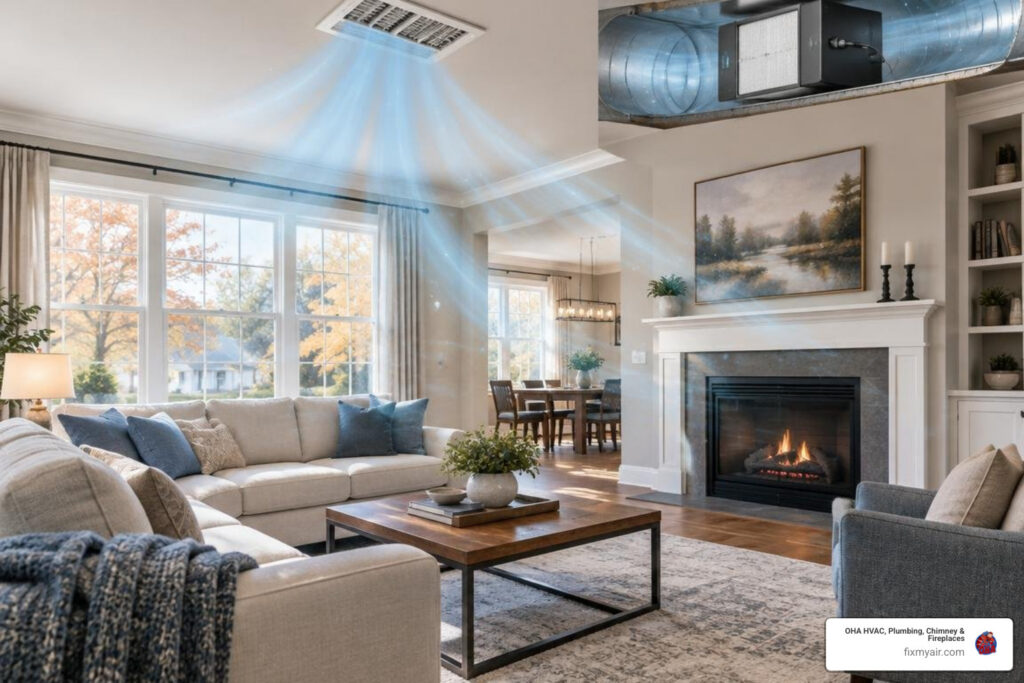
By contrast, an in-duct air scrubber is an active system. Rather than waiting for dust and airborne particles to travel back to the furnace mechanical closet, an air scrubber distributes treatment through the supply vents. Depending on the model, it may use technologies designed to reduce odors and certain airborne contaminants throughout the living space.
| Feature | Standard Furnace Filter (MERV 8–11) | Portable Standalone HEPA Purifier | In-Duct Furnace Air Scrubber |
|---|---|---|---|
| Purification Type | Passive, traps particles at the unit | Passive, cleans single-room air | Active, treats air throughout the home |
| Whole-Home Reach | Yes, through HVAC airflow | No, limited to one room | Yes, through the HVAC system |
| Particle and Pathogen Control | Captures particles that reach the filter | Captures fine particles in one room | Varies by product and installation |
| VOC and Odor Reduction | Limited | Limited when equipped with carbon media | May help reduce certain odors and VOCs, depending on the product |
| Static Pressure Impact | Moderate to high when dirty | None on the furnace | Typically low when installed correctly |
| Maintenance Cycle | Replace every 30 to 90 days | Replace filters every 6 to 12 months | Follow the manufacturer’s cell or lamp replacement schedule |
Keeping airflow balanced and equipment clean is an important part of indoor air quality. Our HVAC services can help homeowners address maintenance needs that affect furnace performance and comfort.
For a whole-home solution that fits the duct layout and equipment in your home, air scrubber installation services provide guidance on selecting and installing the right system.
Routine care also helps protect the blower, coil, and filter cabinet that support indoor air quality. A seasonal HVAC maintenance service guide explains why scheduled service can help keep heating equipment operating reliably.
When airflow, odors, or uneven heating point to a system problem, our HVAC repair guide outlines common signs that professional troubleshooting may be needed.
Core Technologies Used in an Air Scrubber for Furnace Ductwork
To understand how an air scrubber for furnace systems treats indoor air, it helps to look at the technology inside the ductwork. Rather than relying only on a mechanical barrier, some air scrubbers combine germicidal ultraviolet, or UV-C, light with catalytic processes often described as advanced photohydrolysis or photocatalytic oxidation (PCO).
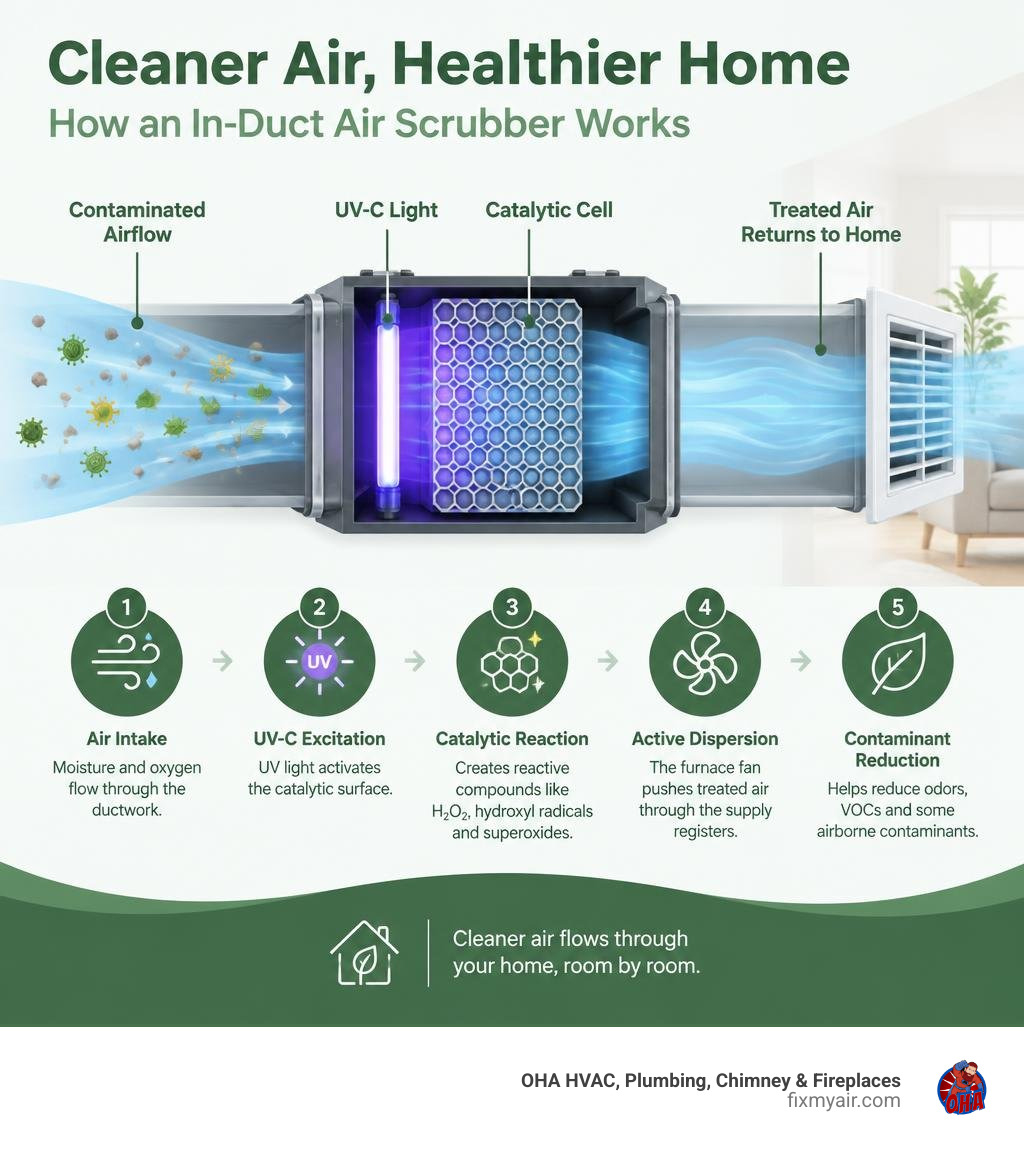
Here is a general overview of how this process can operate:
- Ambient Air Intake: As the furnace blower operates, air containing moisture ($H2O$) and oxygen ($O2$) flows past the air scrubber installed in the duct plenum.
- UV-C Excitation: Inside the device, a UV light shines across a honeycomb-shaped matrix coated with a catalytic material.
- Catalytic Reaction: When the UV wavelengths interact with the moist catalytic surface, the system may create reactive compounds such as hydrogen peroxide ions ($H2O2$), hydroxyl radicals, and superoxides.
- Active Dispersion: The furnace fan pushes treated air through the supply registers and into the living areas.
- Contaminant Reduction: Depending on the product, these compounds may help reduce odors, volatile organic compounds (VOCs), and some airborne contaminants.
Safety matters when installing an electronic air cleaner in an occupied home. Some air-cleaning technologies can generate ozone as a byproduct. When comparing residential units, review manufacturer documentation and look for relevant third-party certifications. California Air Resources Board (CARB) certification requires applicable air cleaners to meet an ozone emissions limit of 50 parts per billion, while UL 2998 Zero Ozone Emissions validation uses a more stringent threshold of 5 parts per billion. A qualified HVAC technician can also help confirm that a proposed unit is appropriate for the home and its occupants.
Pathogen Reduction and Surface Decontamination Capabilities
Active duct purification is designed to supplement filtration by treating air as it moves through the HVAC system. Traditional purifiers require contaminants to reach an intake grille before filtration can occur, while whole-home systems work through the duct network.
Laboratory testing of some catalytic air-treatment technologies reports reductions in specific contaminants under controlled conditions. Actual results vary by the model, the size and layout of the home, airflow, runtime, maintenance, and the contaminants present.
- Viruses and Bacteria: Product-specific testing may report reductions in selected airborne or surface contaminants under laboratory conditions.
- Mold and Fungi: A properly maintained HVAC system can help limit conditions that allow mold growth, while certain air-treatment products may help reduce airborne spores.
- Volatile Organic Compounds (VOCs): Some systems are designed to reduce odors and VOCs from sources such as paint, furnishings, and household cleaners.
- Household Odors: Cooking, pet, tobacco, and wood-smoke odors may be reduced when the selected product is properly sized and maintained.
Evaluating Top Whole-Home Furnace Air Scrubber Options
Selecting the right purification system requires evaluating duct geometry, conditioned square footage, furnace blower CFM (cubic feet per minute), and electrical compatibility. Whole-home air scrubbers are typically integrated into the supply or return plenum of a residential heating and cooling system.
When comparing whole-home solutions, consider these performance and design factors:
- Coverage Area: Choose a model rated for the home’s layout, square footage, and ceiling height. Larger homes or multi-zone layouts may require more than one solution or a different indoor-air-quality approach.
- Airflow and Resistance: In-duct units should be compatible with the system’s airflow and should not create an excessive pressure drop.
- Power Requirements: Verify the device’s electrical requirements and whether it needs a dedicated transformer or connection to the furnace control board.
Key Benefits of Installing an Air Scrubber for Furnace Units Before Winter
During colder months, homes are often closed up for longer periods, which can make dust, odors, and stale air more noticeable. Installing a compatible whole-home scrubber before the heating season may provide practical comfort and maintenance benefits:
- Allergy and Asthma Support: A properly selected system may help reduce airborne particles that can aggravate respiratory sensitivities.
- First-Burn Odor Reduction: When a furnace has been idle through summer, dust on heating components can create a temporary odor when the system starts. Air treatment and routine maintenance can help address lingering smells.
- Protection for HVAC Components: Consistent filter changes and clean equipment help limit buildup on blower components and other parts that affect airflow.
- Whole-Home Coverage: An in-duct system works with the HVAC airflow rather than limiting treatment to a single room.
- Surface Cleanliness: Reducing airborne dust and contaminants can support a cleaner indoor environment between regular household cleaning.
Installation, Electrical, and Routine Maintenance Requirements
Installing a furnace air scrubber is a task for an experienced HVAC technician because it requires accurate ductwork modifications and safe electrical connections.
The physical and electrical integration generally follows a standardized procedure:
- Plenum Location Selection: The unit may be mounted in the supply ductwork downstream from the furnace and evaporator coil, or in the return drop, based on the manufacturer’s instructions and the system design.
- Sheet Metal Fabrication: The technician cuts the manufacturer-specified opening into the metal ductwork.
- Chassis Securing and Gasketing: The housing is secured and sealed to help prevent air leaks.
- Electrical Integration: The device is wired according to its requirements, often through the furnace control board’s electronic air cleaner terminals or an approved transformer.
Maintenance requirements vary by product. Some units use an active cell or UV-C lamp that needs periodic replacement, while others require a different service schedule. Look for a visible status indicator and follow the manufacturer’s maintenance instructions. A professional HVAC team can also confirm that the unit continues to operate safely with the furnace and blower system.
Frequently Asked Questions About Furnace Air Scrubbers
Is an air scrubber safe to run in occupied homes without producing ozone?
It can be, provided you choose a certified ozone-free model and have it installed according to the manufacturer’s instructions. Look for documentation related to UL 2998 and California Air Resources Board (CARB) certification. These standards address ozone emissions and can help homeowners compare products. A qualified HVAC technician can help you select a system that fits your equipment and household needs.
How does an air scrubber differ from a standard HVAC UV light?
A standard HVAC UV light is usually installed near the indoor evaporator coil to help limit microbial growth on damp coil surfaces and drain pans. Because air moves quickly past the bulb, it is primarily intended to protect equipment rather than serve as a whole-home air-treatment solution.
An air scrubber uses technology intended to treat air as it travels through the duct system. In short, a standard UV light focuses on the air handler, while an air scrubber is designed to support indoor air treatment across the home.
Does a furnace air scrubber operate when the heat is turned off?
It can operate whenever the furnace blower is running, subject to the unit’s wiring and control setup. Thermostats with an “ON” or “CIRCULATE” fan setting can run the blower even when heating or cooling is not actively calling. Ask your HVAC technician whether continuous or intermittent fan operation is suitable for your system and indoor-air-quality goals.
Conclusion: Is a Furnace Air Scrubber Worth It for Heating Season?
Before heating season begins, an air scrubber can be a useful addition for homeowners who want to address indoor odors, airborne particles, and overall comfort. Standard furnace filters still play an essential role in catching dust, while a properly selected in-duct air scrubber can complement routine filtration and maintenance.
At OHA HVAC, Plumbing, Chimney & Fireplaces, our team helps Northern Virginia homeowners evaluate indoor-air-quality upgrades that fit their equipment and comfort goals. Our background-checked technicians provide clear recommendations and professional installation support.
For help choosing the right option for your home, contact our professional air scrubber technicians.
Need Help With HVAC, Plumbing, Chimney, or Fireplace Service?
OHA is available 24/7 across Fredericksburg, Fairfax, and Northern Virginia.