
Fix a Leaking Fixture Before Winter
A small drip can become a larger winter plumbing concern faster than most homeowners expect. Before cold weather puts extra strain on your plumbing, note where the moisture is appearing and whether the fixture is dripping, running, leaking around a handle, or showing reduced flow. These warning signs can point to worn seals, mineral buildup, or a failing internal component in a faucet, toilet, or showerhead.
Homeowners can safely check for visible water, listen for a toilet that refills on its own, and make sure the fixture’s local shutoff valve is accessible. If the leak continues, the fixture is damaged or corroded, or water is appearing near a wall or cabinet, professional plumbing fixture repair can identify the cause and help prevent further water damage before winter.
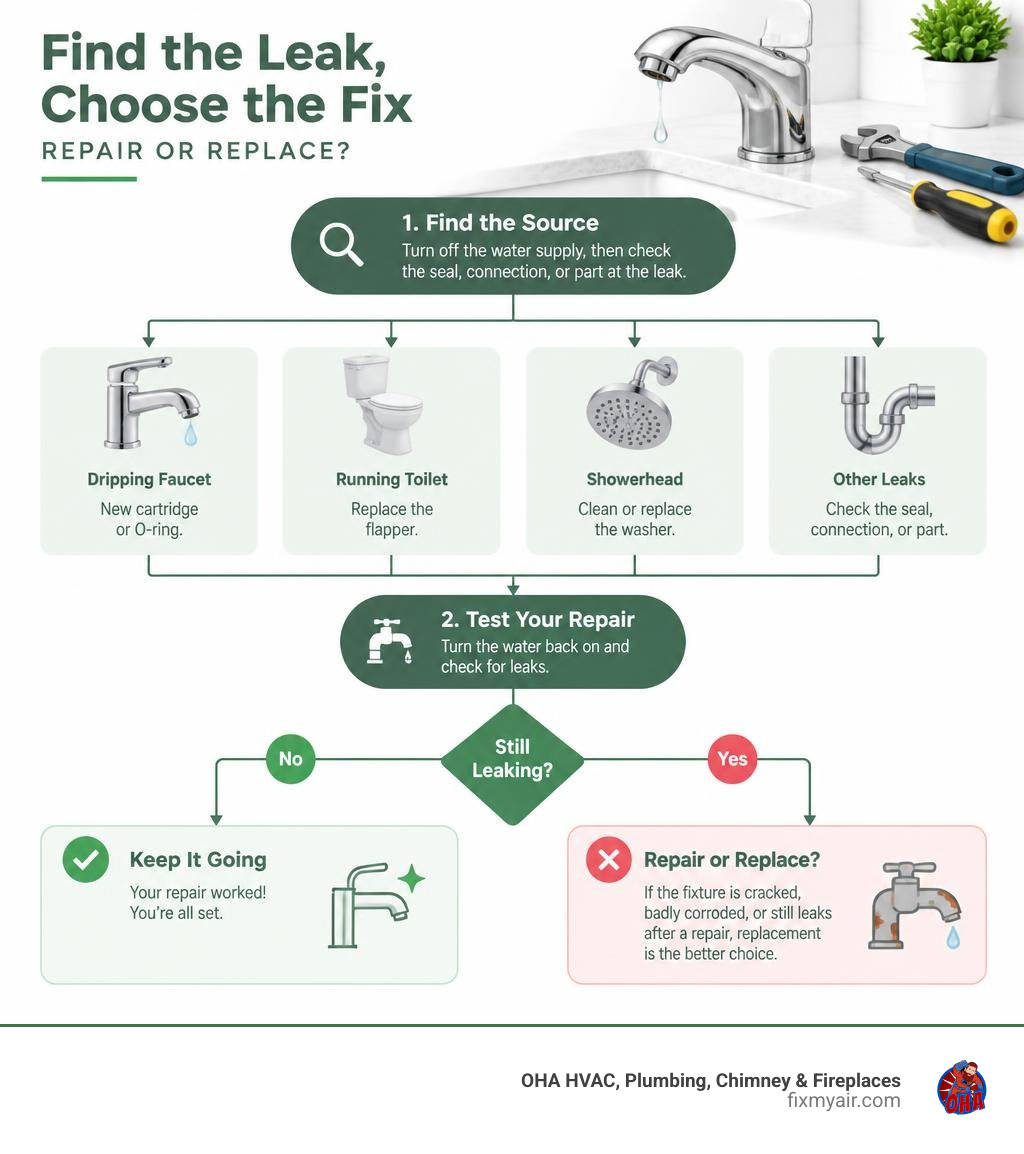
If the fixture is cracked, badly corroded, or still leaks after a repair, replacement may be the better choice. Don’t wait for winter to deal with a leak that could damage your home.
Evaluating Household Leaks: Plumbing Fixture Repair or Replacement

A dripping faucet or hissing toilet tank can seem minor, but a recurring leak deserves attention before winter weather adds stress to pipes and fittings. Temperature changes, fluctuating water pressure, mineral buildup, and aging seals can turn a small fixture problem into water damage or a more involved repair.
The decision between plumbing fixture repair and replacement usually depends on the fixture’s age, condition, and the source of the leak. A licensed plumber can identify whether a worn internal component is the likely cause or whether corrosion, cracks, stripped threads, or damage inside a wall call for a longer-term solution.
- Age and wear: Cartridges, fill valves, flappers, washers, and other moving parts often wear out before the fixture body. A professional inspection can determine whether replacing a component is likely to be reliable.
- Corrosion and mineral buildup: Heavy buildup or corrosion can affect threads, valve seats, and internal connections. These conditions may make a simple repair less dependable.
- Water waste and repeat leaks: A persistent drip or running toilet can waste water and signal a failing component. Prompt diagnosis helps limit waste and prevent additional damage.
For concerns involving aging lines, hidden leaks, or recurring fixture problems, professional residential plumbing repair can help confirm that the surrounding plumbing system is protected before freezing weather arrives.
| Evaluation Factor | Repair Scenario | Replacement Scenario |
|---|---|---|
| Typical Scope | The issue appears limited to a serviceable internal component. | The fixture body or critical connection is damaged or severely worn. |
| Professional Assessment | Confirms the leak source and checks whether the repair is likely to last. | Helps identify compatibility, installation needs, and related plumbing concerns. |
| Expected Outcome | Restores normal operation when the fixture is otherwise in good condition. | Provides a longer-term option for damaged, outdated, or unreliable fixtures. |
| Best Used When | A plumber identifies a worn washer, O-ring, flapper, cartridge, or valve component. | The body is cracked, threads are stripped, corrosion is severe, or repairs have not resolved the leak. |
How to Tell Whether a Faucet, Toilet, or Showerhead Needs Plumbing Fixture Repair
Homeowners can often spot the signs of a fixture problem without taking the fixture apart. Note when the leak occurs, whether it changes with water pressure or temperature, and whether moisture is appearing around the base, shutoff valve, or wall. If there is active leaking, shut off the fixture’s local water supply when it is safe to do so and arrange professional help.
1. Leaking Faucets
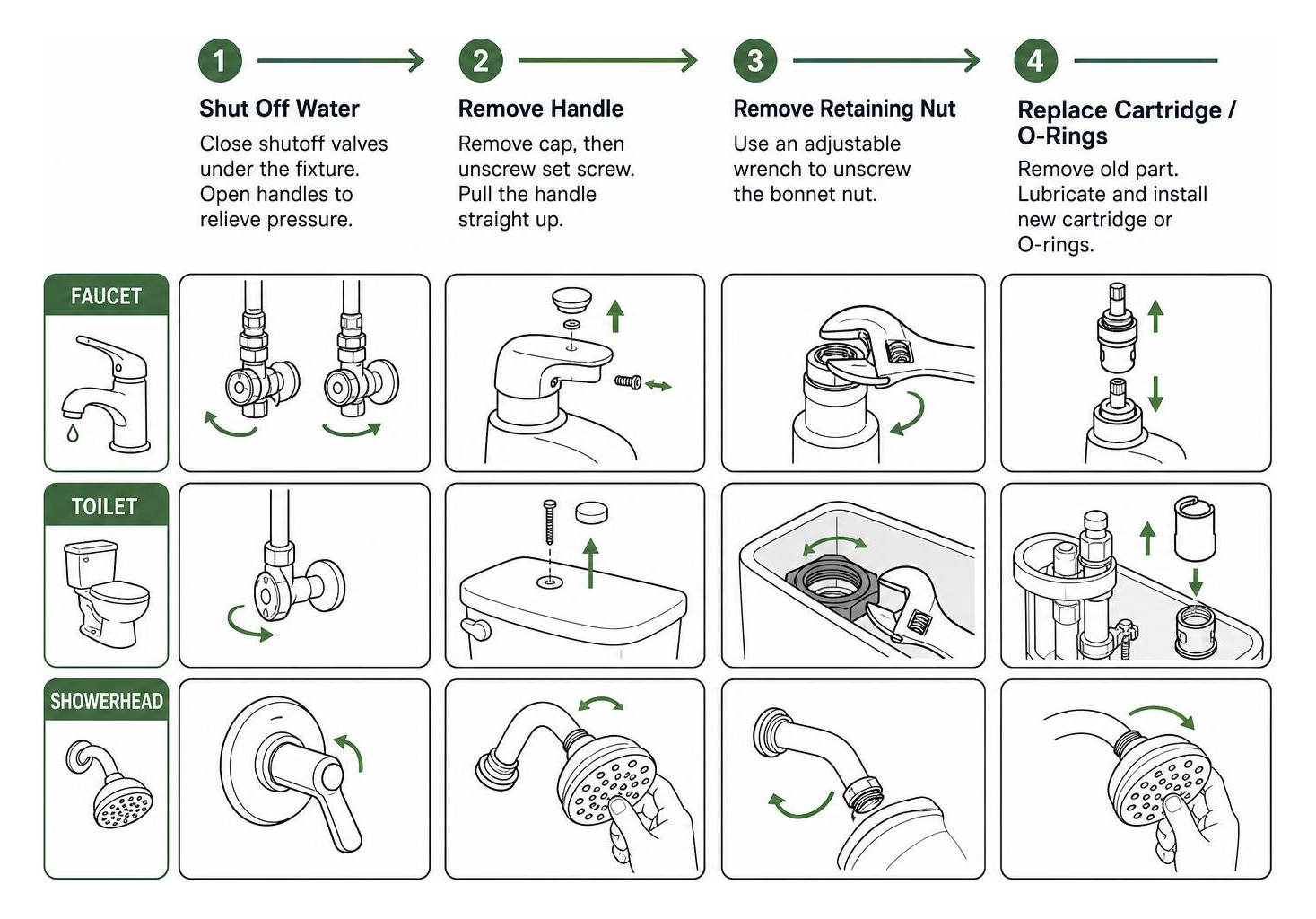
A faucet that drips from the spout, leaks around the handle, or makes noise when turned on may have a worn cartridge, stem, seal, or aerator. Mineral buildup can also interfere with normal water flow. Avoid forcing stuck handles or fittings, as this can damage the fixture or supply connection. A plumber can determine whether the faucet can be repaired with a replacement component or whether replacement is the more dependable option.
2. Running Toilets
A running toilet may be caused by a worn flapper, an improperly adjusted fill valve, or an incorrect water level in the tank. Homeowners can listen for intermittent refilling, look for water moving into the bowl after flushing, and check for visible damage to accessible components. If the toilet continues running, leaks at the base, or has repeated flushing problems, a professional can identify the failing part and check for issues that affect the tank, bowl, or supply connection.
3. Leaking or Low-Flow Showerheads
A showerhead may drip because of a worn washer, mineral buildup, or a connection that no longer seals properly. Low flow can also result from debris in the fixture or broader pressure concerns. If gentle cleaning does not improve the flow, or water is escaping from the shower arm or wall area, a professional providing plumbing services can diagnose the source without risking damage to concealed piping.
If you notice stubborn connections, water staining, or leaking supply lines inside a wall, our plumbing services are available around the clock to assist.
Safe Homeowner Checks Before Calling for Plumbing Fixture Repair
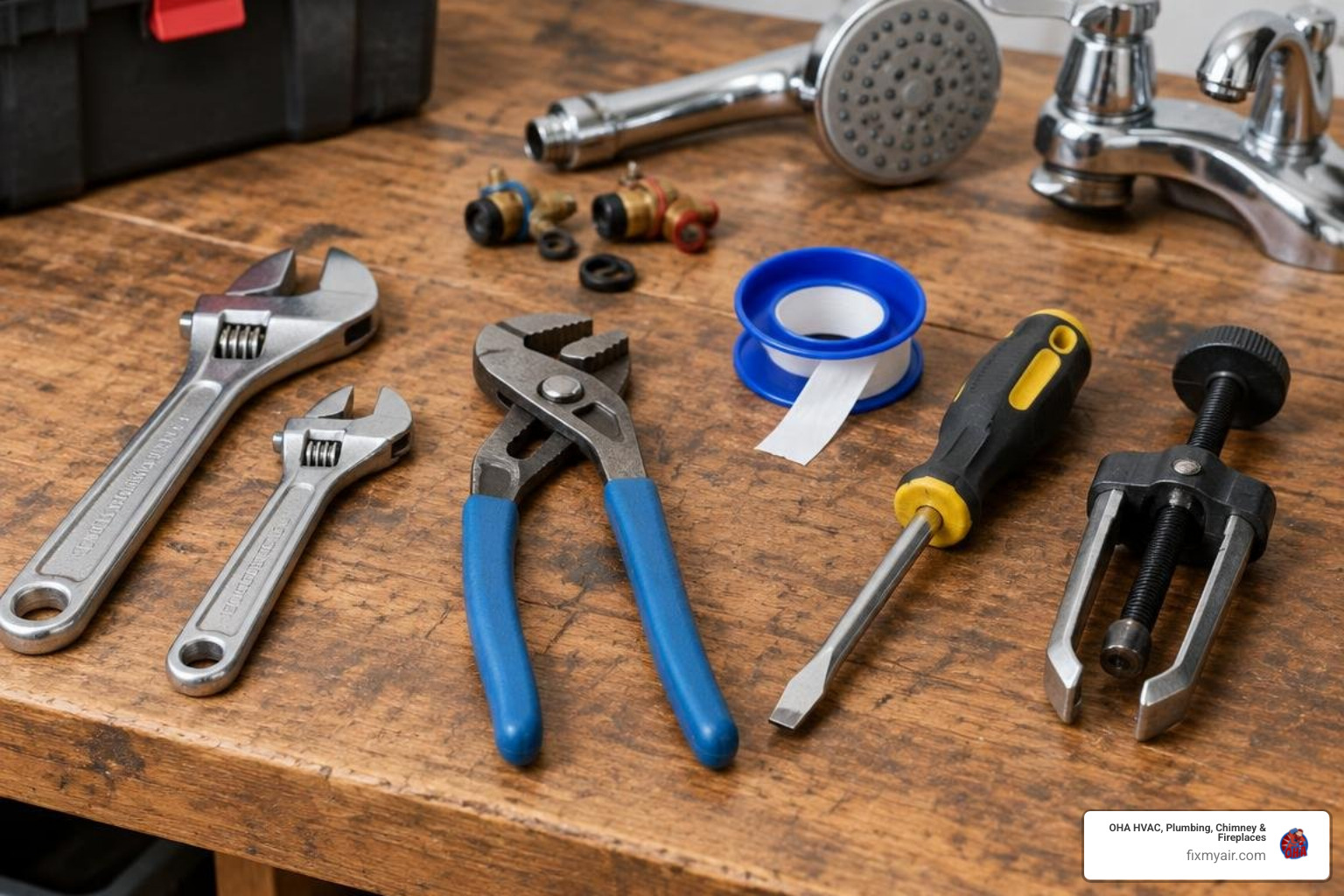
Before scheduling service, homeowners can take a few simple, low-risk steps to document the problem and help protect the home:
- Identify the fixture and leak location: Note whether water is coming from the spout, handle, tank, supply line, base, or nearby wall.
- Check for warning signs: Look for corrosion, water stains, pooling water, reduced flow, unusual sounds, or a leak that returns after the fixture is turned off.
- Know where the shutoff valve is: If water is actively leaking, turn off the fixture’s local supply when it can be done safely. Do not force seized valves or disassemble pressurized connections.
A professional plumber has the equipment and experience to diagnose the underlying cause, complete repairs safely, and recommend replacement only when it offers the most reliable long-term result.
Understanding Plumbing Fixture Wear and When to Call a Plumber
Plumbing fixtures do not operate in a vacuum. Every faucet, toilet, and shower is part of an engineered water distribution and drainage system. When designing or repairing residential networks, engineers use Fixture Units (WSFU for supply, DFU for drainage) to estimate peak simultaneous demand and size supply lines, vent stacks, and sewer connections accurately.
Neglecting fixture maintenance creates systemic problems. A running toilet or dripping faucet keeps constant dynamic pressure against downstream seals and causes continuous cycling in supply equipment. Pairing regular fixture checks with seasonal tasks like water heater maintenance in Stafford VA before winter protects your whole plumbing ecosystem from thermal stress and pressure spikes.
Signs a Plumbing Fixture Needs Professional Attention
A fixture that keeps dripping, running, or losing water pressure may have a worn internal part, mineral buildup, corrosion, or a problem in the nearby plumbing connection. While homeowners can note when the issue occurs and look for visible moisture, a qualified plumber can identify the source without risking damage to the fixture or concealed piping.
- Recurring leaks: A faucet, toilet, or showerhead that leaks again after a simple adjustment may have a worn component or connection that needs professional attention.
- Water stains or moisture near walls: Damp cabinetry, staining, or moisture around a fixture can point to a leak beyond the visible fixture.
- Changes in flow or pressure: Reduced flow at one fixture can result from buildup or a fixture issue, while changes at several fixtures may indicate a broader plumbing concern.
- Corrosion or damaged connections: Corroded fittings, cracked fixture bodies, and stuck shutoff valves can make a repair less dependable and may call for replacement or professional service.
How Everyday Use Affects Plumbing Fixture Wear
In plumbing systems, repeated use and constant water pressure can gradually wear down moving components. Rubber seals may stiffen, valve seats can lose their tight fit, and mineral buildup can interfere with normal operation, making a small leak more likely to worsen if it is left unaddressed.
In a home plumbing system, a small leak can become more serious when a worn seal, valve, or connection is left under continuous water pressure. Repeated use, mineral buildup, and seasonal temperature changes can gradually weaken rubber components and corrode metal parts. Addressing a drip, running toilet, or loose connection early helps limit water waste and reduces the chance of a larger repair later.
Proactive maintenance helps plumbing fixtures last longer and reduces the risk of preventable leaks. Inspecting seals, valves, and connections regularly allows homeowners to address early wear before it leads to water waste, fixture damage, or a more involved repair.
When to Call a Licensed Plumber for Fixture Troubles
While replacing a toilet flapper or swapping a faucet aerator makes for a satisfying DIY afternoon, certain situations demand the expertise and tools of a licensed professional.
Contact a licensed professional if you encounter:
- Water Leaks Behind Walls or Under Subfloors: Moisture appearing along baseboards, soggy drywall near a shower valve, or musty odors point to internal pipe leaks that require non-invasive diagnostic tools.
- Low Water Pressure Across Multiple Fixtures: If pressure drops simultaneously across several sinks and showers, the issue likely stems from a failed pressure reducing valve (PRV), severe main line mineral scaling, or a hidden underground leak.
- Persistent Drain Backups: If using a sink causes water to gurgle or rise in a nearby shower or toilet, you are dealing with a mainline sewer obstruction rather than an isolated fixture issue.
- Frozen or Unresponsive Isolation Valves: Old gate valves and corroded quarter-turn angle stops can snap off at the stem when forced, risking an immediate high-pressure indoor flood.
- Winter Pipe Burst Hazards: If you suspect sub-freezing temperatures have compromised a fixture supply line inside an exterior wall, avoid thawing it with open flames.
For urgent failures that threaten your property, our team is equipped to handle plumbing emergencies quickly and safely.
Frequently Asked Questions About Plumbing Fixture Repairs
How do I know if my running toilet needs a simple flapper or a full valve kit?
Perform a simple dye test: place 4 to 5 drops of dark food coloring into the toilet tank and wait 20 minutes without flushing. If colored water seeps into the bowl, the flapper or flush valve seal is leaking and needs replacement. If the bowl remains clear but water continuously spills over the top of the vertical overflow tube, the fill valve is failing to shut off and requires a new diaphragm seal or complete valve replacement.
What seasonal maintenance prevents plumbing fixtures from failing during winter?
Before freezing temperatures arrive, disconnect all garden hoses from outdoor sillcocks, close the indoor shutoff valves for exterior spigots, and drain the remaining water from the line. Indoors, clean mineral deposits from faucet aerators, insulate exposed supply pipes in crawlspaces or basements, and open vanity cabinet doors during extreme cold snaps to allow warm air to circulate around plumbing lines.
Conclusion
Preparing your home’s plumbing fixtures for winter is one of the most effective ways to prevent costly water damage, conserve utilities, and ensure your home runs smoothly all season long. Taking the time to replace worn faucet cartridges, refresh degraded toilet valves, and isolate outdoor water lines before freezing weather arrives pays dividends in peace of mind.
At OHA HVAC, Plumbing, Chimney & Fireplaces, we treat your home like our own. As a veteran-founded, family-run business, our technicians provide upfront pricing and dependable 24/7 service. With a 4.9-star average across more than 5,000 Google reviews, you can contact our professional plumbing technicians to keep your plumbing system operating at peak performance all year long.
Need Help With HVAC, Plumbing, Chimney, or Fireplace Service?
OHA is available 24/7 across Fredericksburg, Fairfax, and Northern Virginia.