Quick Troubleshooting Steps When Your Heater Won’t Warm the House
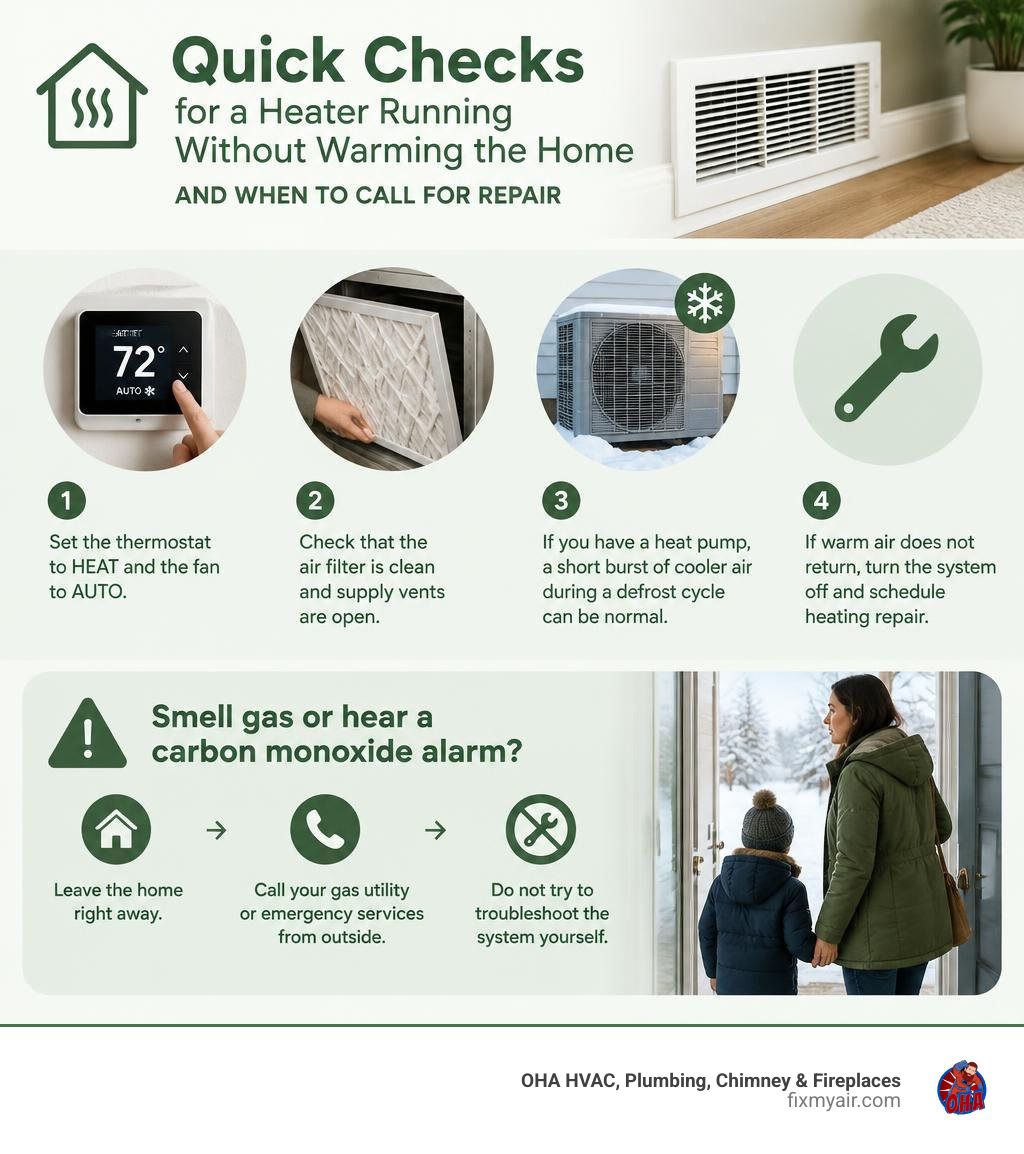
If your heater runs but the house stays cold, set the thermostat to HEAT and the fan to AUTO. Check that the air filter is clean and supply vents are open. If you have a heat pump, a short burst of cooler air during a defrost cycle can be normal. If warm air does not return, turn the system off and schedule heating repair.
Smell gas or hear a carbon monoxide alarm? Leave the home right away. Call your gas utility or emergency services from outside. Do not try to troubleshoot the system yourself.
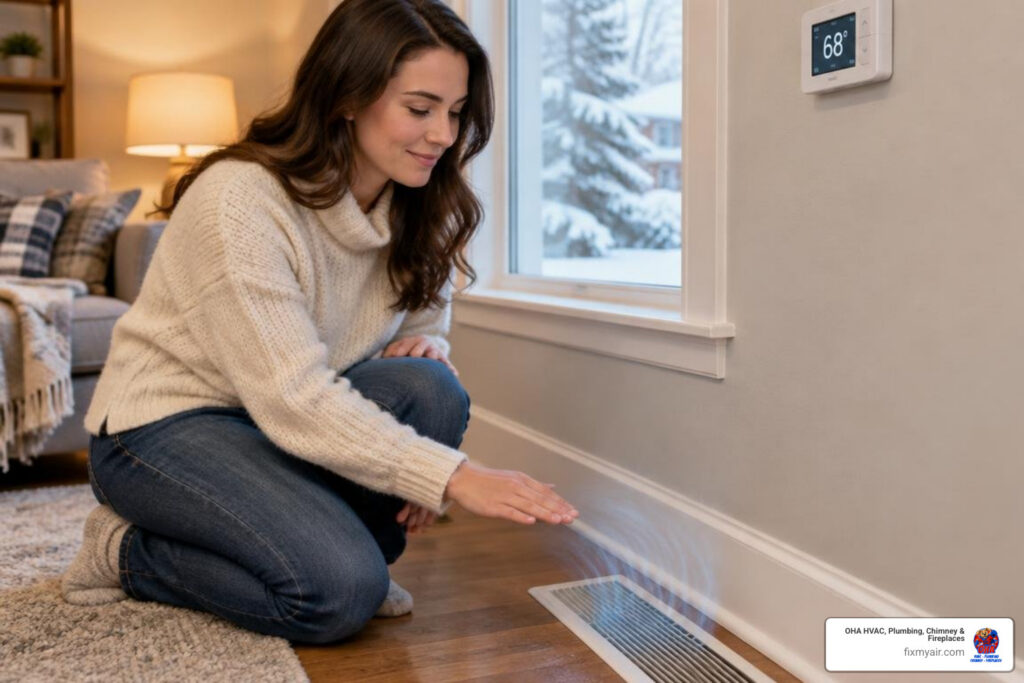
Nothing breaks winter comfort quite like walking over to a supply vent, feeling a steady breeze, and realizing the air is lukewarm or flat-out freezing. When the blower motor runs continuously without producing heat, the equipment is burning electricity while your indoor temperature drops.
Before assuming the worst, several basic mechanical and electrical bottlenecks can trick a heating unit into moving unheated air. A miscalibrated digital thermostat, a restricted return grille, or a gas supply shutoff can all create the illusion of total equipment failure. Addressing these basics safely can save time and eliminate simple user-error problems.
Checks Before Scheduling Heating Repair
Before picking up the phone to book professional service, review these basic, safe-to-check items. They take only a few minutes and can help you better understand what may be affecting your system:
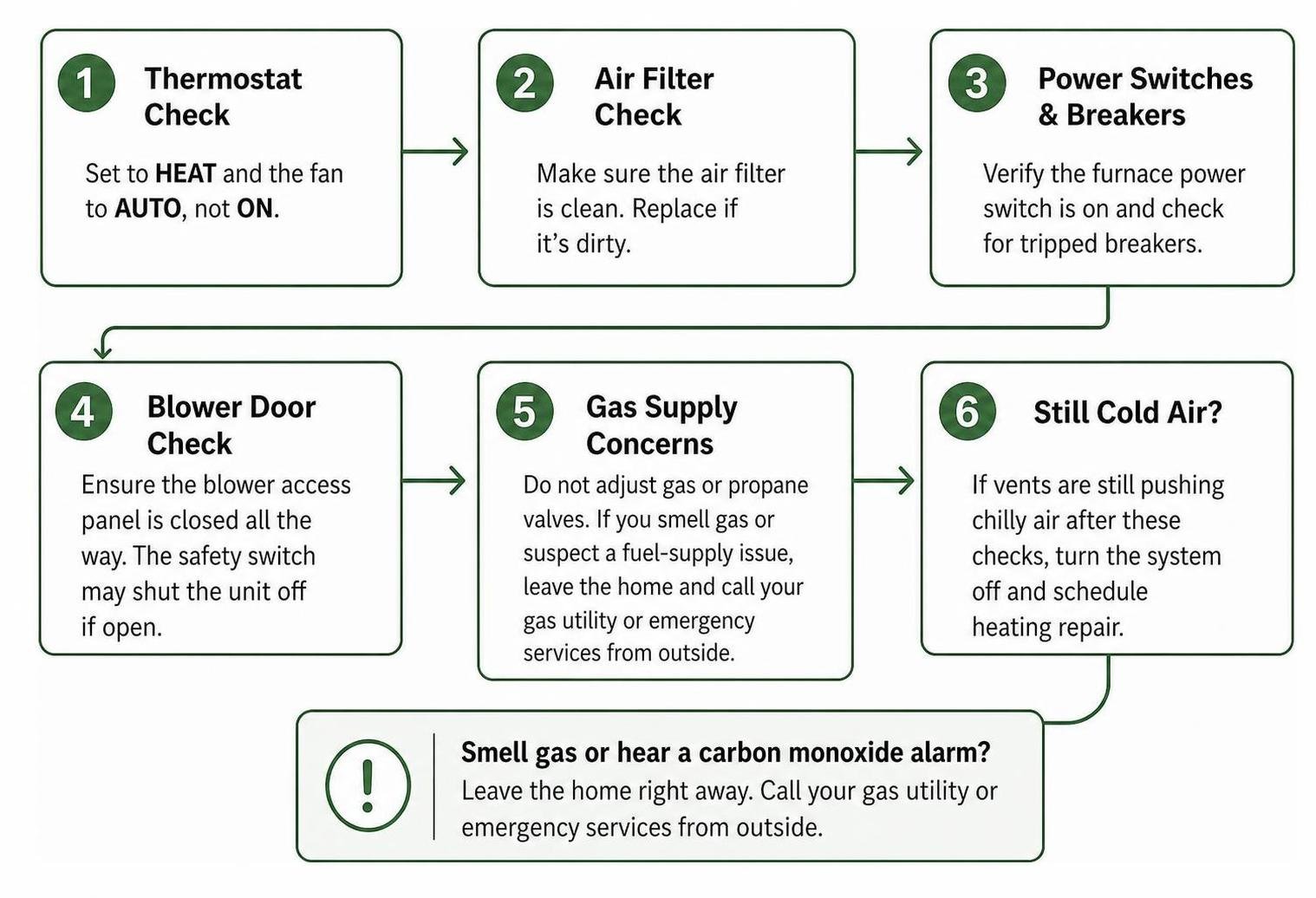
- Thermostat Fan Setting: Verify your thermostat is set to HEAT and the fan switch is on AUTO, not ON. When set to ON, the blower fan runs continuously 24/7, circulating room-temperature air through the ducts even when the heating elements or burners are completely off.
- Air Filter Condition: A dust-choked air filter chokes off airflow. When air cannot move across the heat exchanger or electric coils, internal temperatures spike rapidly. This triggers a safety device called a high-limit switch, which shuts off the burners while leaving the blower running to cool the unit down. Swap out dirty 1-inch filters or rinse reusable media.
- Power Switches and Breakers: Check the furnace power switch (frequently located on the side of the unit or an adjacent wall, looking just like a standard light switch). Ensure nobody switched it off accidentally. Head to your electrical panel and check for tripped breakers linked to the heating equipment or outdoor heat pump condenser.
- Blower Door Safety Switch: If you recently inspected or changed your filter, ensure the furnace blower access panel is seated flush against the cabinet. Modern units feature an interlock safety switch that cuts all ignition power if the door is slightly askew.
- Gas Supply Concerns: Do not adjust a gas or propane shutoff valve yourself. If you suspect a fuel-supply issue, smell gas, or hear a carbon monoxide alarm, leave the home and contact your gas utility or emergency services from outside.
If you have walked through these preliminary steps and your vents are still pushing chilly air, you can reference our HVAC repair overview to better understand underlying system mechanics before calling a qualified technician.
Critical Safety Precautions for Heating Malfunctions
When a heating system malfunctions, human safety comes before home comfort. Heating appliances generate substantial thermal energy and rely on combustible fuels, high-voltage electricity, or pressurized refrigerants.
According to data compiled by the National Fire Protection Association, fire departments responded to an estimated average of 37,365 fires involving heating equipment per year from 2020 to 2024. These incidents accounted for 11% of all reported home structure fires, resulting in an estimated annual 417 civilian deaths, 1,260 injuries, and $1.2 billion in direct property damages. Nearly half (46%) of these heating equipment fires occurred during the peak winter corridor from December through February.
To keep your household safe during a heating failure, follow these strict safety protocols:
- Gas Odors: If you smell rotten eggs or sulfur, do not flip light switches, light matches, or operate appliances. Evacuate everyone from the home immediately and dial your local gas utility or 911 from a safe distance outdoors.
- Burner Flame Color: On gas furnaces, inspect the burner flames through the sight glass. A healthy flame burns crisp and blue. A yellow, dancing, or flickering burner flame indicates incomplete combustion, which produces hazardous carbon monoxide (CO) gas and requires immediate system shutdown.
- Carbon Monoxide & Smoke Alarms: Never ignore a sounding CO or smoke detector. Test your detectors monthly and replace backup batteries annually. If an alarm sounds, evacuate and seek fresh air immediately.
- Space Heater Placement: If using portable space heaters while waiting for service, exercise extreme caution. Space heaters and heating stoves account for 47% of home heating equipment fires, yet cause 73% of heating fire deaths and 70% of associated civilian injuries. Keep all portable heaters at least three feet away from bedding, curtains, furniture, and paper products. Plug them directly into wall outlets rather than extension cords, and always turn them off when leaving the room or going to sleep.
Common System Types and Why They Blow Cold Air
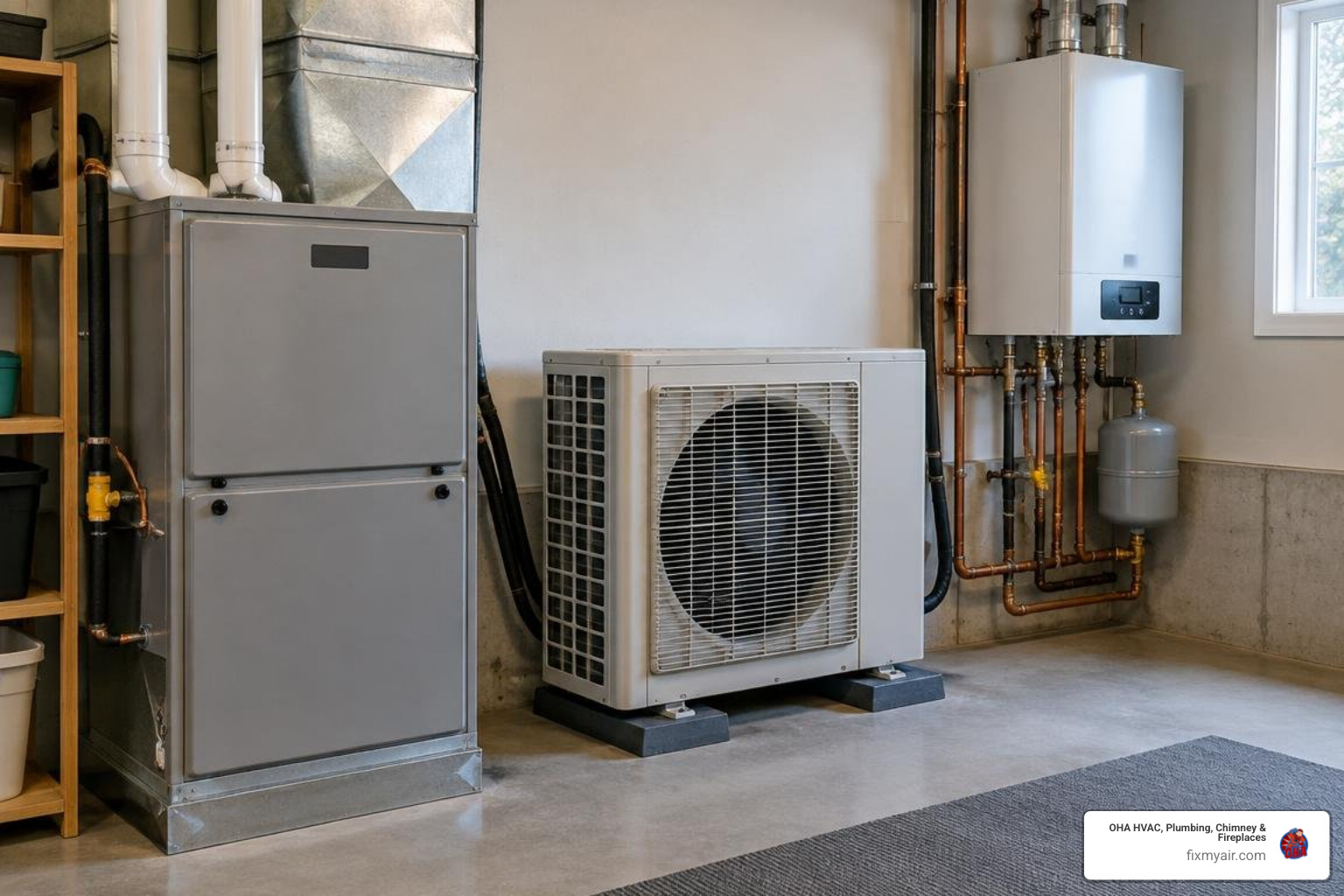
Heating configurations vary significantly from property to property. Understanding how your specific heating infrastructure generates and distributes thermal energy helps identify why warm air has stopped flowing. Most residences rely on central heating systems (which produce heat at a single point and circulate it through ducts or hydronic piping) or distributed systems (such as ductless mini-splits or wall heaters).
The efficiency of fuel-burning heating systems is measured by their Annual Fuel Utilization Efficiency (AFUE) rating, representing the percentage of fuel converted directly into usable heat versus energy lost up the flue. Modern high-efficiency condensing furnaces boast AFUE ratings above 90%, whereas older standard systems hover around 70% to 80%. Knowing your system category sheds light on component failures.
| Heating System Type | Primary Heating Method | Common Cause of Cold Air / Low Heat | Typical Operational Clue |
|---|---|---|---|
| Gas/Oil Furnace | Forced-air combustion | Dirty flame sensor, failed igniter, high-limit trip | Blower blows cold air continuously; burner shuts off within seconds |
| Heat Pump | Refrigerant heat transfer | Defrost cycle, stuck reversing valve, failed aux heat | Outdoor unit iced over; air feels cool (below 90°F) during extreme cold |
| Hydronic Boiler | Water/steam circulation | Low system pressure, failed circulator pump, air locks | Cold radiators or baseboard zones despite boiler firing |
Explore our comprehensive breakdown of modern heating and cooling systems to learn how different mechanical designs impact home energy efficiency.
Furnace Breakdown: Igniters, Sensors, and Airflow
A gas furnace relies on a precise sequence of operations to generate warmth. When any safety sensor or mechanical component fails along that sequence, the control board halts ignition while running the blower to clear residual heat or prevent dangerous gas accumulation.
- Dirty Flame Sensor: This is one of the most frequent furnace issues. The flame sensor is a thin metal rod that sits directly in the burner flame to confirm ignition. Over time, microscopic carbon and oxidation build up on the metal. If the sensor cannot detect the flame’s electrical microamp signal within a few seconds of lighting, the control board shuts off the gas valve as a safety measure. The system then cycles cold air.
- Failed Hot Surface Igniter (HSI): Modern furnaces use an electronic igniter made of silicon nitride or silicon carbide rather than a continuous standing pilot light. These igniters glow white-hot to ignite incoming gas. When an igniter cracks or burns out, the gas valve never opens, leaving the blower to circulate unheated indoor air.
- Tripped High-Limit Switch: If dirty filters, closed supply dampers, or blocked return grilles restrict air movement, temperatures inside the heat exchanger cabinet quickly exceed safe operating thresholds. The high-limit switch trips, shutting off the burners to protect the exchanger from thermal stress while forcing the blower fan to run non-stop.
- Blower Motor or Capacitor Failure: Weak run capacitors or worn motor bearings prevent the blower wheel from spinning at proper RPMs, resulting in weak or sluggish airflow at your room registers.
- Cracked Heat Exchanger: Severe overheating or metal fatigue can cause the primary or secondary heat exchanger to crack. This is a critical safety issue that risks leaking carbon monoxide into your ductwork. Modern furnaces feature pressure switches that lock out the system if abnormal draft pressures are detected.
Heat Pump Issues: Defrost Cycles and Inverter Diagnostics
Heat pumps do not create heat by burning fuel; instead, they extract ambient thermal energy from outdoor air using refrigerant and pump it indoors. Because heat pumps supply air around 90°F to 100°F (compared to a gas furnace’s 120°F to 140°F output), the air can naturally feel cooler to human skin even when operating normally. However, distinct mechanical failures will cause genuine cooling issues:
- Normal Defrost Cycle vs. Defrost Control Failure: During cold weather, frost naturally accumulates on the outdoor coil. The heat pump periodically reverses into cooling mode for 5 to 15 minutes to melt this frost, temporarily activating supplemental electric auxiliary heat strips to temper indoor air. If the defrost control board, ambient sensor, or auxiliary heat strips fail, the system will blast cold outdoor air directly into your living spaces during defrost cycles.
- Reversing Valve Malfunctions: The reversing valve shifts refrigerant flow between heating and cooling modes. If the internal slide sticks or the electrical solenoid loses power, the heat pump may remain locked in air conditioning mode even when your thermostat calls for heat.
- Refrigerant Leaks: Low refrigerant levels drop the system’s operating pressures, crippling its ability to absorb outdoor heat and frequently causing the indoor or outdoor coils to turn into solid blocks of ice.
- Cold Climate Limitations: Standard heat pumps lose thermal efficiency and heating capacity when outdoor ambient temperatures plunge below 40°F (4°C). Modern inverter-driven units feature variable-speed compressors that maintain output at much lower temperatures, but older units rely heavily on electric backup heat when severe freezes strike.
Boiler Service Needs: Pressure and Circulator Pumps
Hydronic boilers heat water and circulate it through baseboard convectors, cast-iron radiators, or radiant in-floor loops. Because boilers operate as closed loops without forced-air ducting, no-heat calls point to hydronic-specific faults.
- Low System Water Pressure: Boilers require steady water pressure (typically 12 to 15 PSI for a standard residential two-story home when cold) to lift heated water to upper-floor radiators. If the automatic water feeder fails or pressure drops, upper zones will stay cold.
- Failed Circulator Pumps: The circulator pump pushes heated water throughout the piping zones. If the pump motor burns out or the internal impeller jams, heated water remains trapped inside the boiler tank, leaving radiators stone-cold.
- Air-Locked Radiators: Pockets of air can accumulate at high points in baseboards and radiators, creating air locks that completely block the flow of hot water. A qualified heating technician can safely assess and correct trapped-air issues.
- Expansion Tank Issues: Water expands as it heats. A failed expansion tank diaphragm leads to rapid pressure spikes, causing the pressure relief valve to discharge water and leaving the system short on operating pressure.
If you are experiencing hydronic issues or suspect leaks in your system, read our guide on boiler repair in Chantilly, VA for early warning signs and maintenance recommendations.
Professional Heating Repair Costs and the Repair vs. Replace Decision
When basic troubleshooting does not resolve the issue, homeowners face a financial choice: invest in repairs or replace the aging heating equipment altogether.
A clear assessment of equipment age, repair frequency, and operating efficiency helps determine the most economical path forward.
| Consideration Factor | Recommend Heating Repair | Recommend System Replacement |
|---|---|---|
| System Age | Under 10–12 years old | Over 15 years old (exceeding expected service life) |
| Repair Cost Threshold | Less than 50% of replacement cost | Exceeds 50% of the cost of a new system installation |
| Energy Efficiency (AFUE) | System already maintains high efficiency (90%+ AFUE) | Outdated unit (sub-80% AFUE) resulting in elevated utility bills |
| System Reliability | First repair needed in several heating seasons | Frequent, recurring seasonal breakdowns |
| Safety Concerns | Minor sensor, igniter, or electrical part fault | Compromised heat exchanger or obsolete, unavailable parts |
A helpful industry benchmark is the 50 percent rule: if the estimated cost of repairing the unit exceeds 50% of the cost of installing a brand-new heating system, replacement delivers better long-term value.
For a deeper analysis of equipment longevity and financial planning, review our HVAC repair vs replace guide. If your heating equipment is linked to an equally aged central air conditioner, you may also want to evaluate whether to replace your AC and furnace at the same time to optimize matched-system energy efficiency and lower total labor costs.
Heating Repair Estimates and What Affects Them
Heating service costs vary based on equipment type, fuel source, part availability, and whether repairs occur during standard business hours or require emergency after-hours dispatch.
- Diagnostic Visit: A professional evaluation identifies the source of the heating problem and clarifies which repairs, if any, are needed. Ask whether the diagnostic visit is applied toward approved repair work.
- Minor Component Repairs: Common repairs may involve parts such as flame sensors, hot surface igniters, electrical contactors, or safety switches. The final estimate depends on the equipment model, part availability, and the condition of related components.
- Major Component Repairs: Blower motors, inducer motors, control boards, and gas valves generally require more extensive diagnosis and labor. A technician can explain the repair scope and whether the system is otherwise operating reliably.
- Critical Component Failure: A damaged heat exchanger or failed heat pump compressor can affect both safety and long-term reliability. For older equipment, a professional can help compare a major repair with replacement options.
- System Replacement: Installation needs vary by system size, efficiency goals, ductwork condition, and required electrical or venting updates. A written estimate helps homeowners understand the recommended scope before making a decision.
Financial Assistance and Low-Income Emergency Programs
A sudden winter heating breakdown can strain any household budget. Fortunately, several federal, state, and local assistance programs help qualifying low-income families, elderly residents, and disabled individuals restore emergency heating:
- Virginia Energy Assistance Program: Eligible households may be able to receive help with heating-related emergencies, such as restoring service, obtaining fuel, or addressing a qualifying heating-equipment problem. Program availability and eligibility requirements can change by season.
- Local Community Action Agencies: Community Action Agencies serving Northern Virginia may connect eligible residents with emergency energy assistance, weatherization resources, or other local support programs when funding is available.
- How to Get Current Information: Contact Virginia’s Energy Assistance Program or a local Community Action Agency to confirm current eligibility requirements, application windows, and whether assistance is available for the specific heating emergency.
How Climate and Regular Maintenance Prevent Heating Failures
The demand on your home heating system is tied directly to local climate conditions and seasonal weather fluctuations. In heating and meteorology, this workload is measured in Heating Degree Days (HDD). A heating degree day is calculated for each 24-hour period where the outdoor mean temperature drops below a baseline of 65°F (18°C).
For example, if the average outdoor temperature over a day is 25°F, that day generates 40 Heating Degree Days because 65 minus 25 equals 40. The higher the seasonal HDD total, the more hours your heating equipment must run to maintain indoor comfort. In cold northern and mid-Atlantic climates, annual HDDs easily surpass 3,500 to 4,500 degree days, with sharp spikes occurring between December and February.
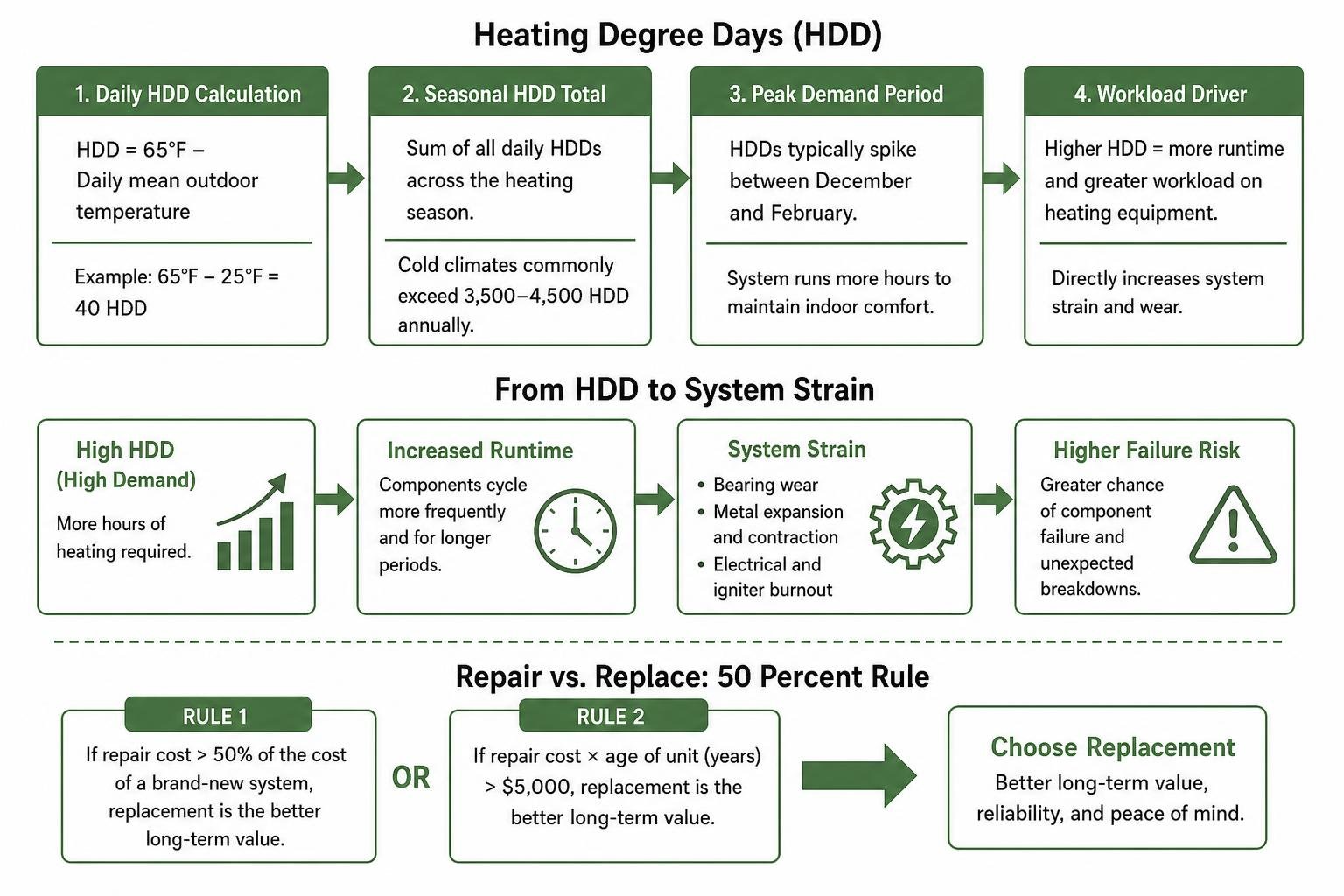
This sustained workload places continuous mechanical, thermal, and electrical strain on heating hardware. High-demand winter months accelerate bearing wear, expand and contract metal heat exchangers, and burn through electrical igniters.
The most effective strategy to prevent unexpected emergency breakdowns during high-HDD periods is scheduling preventive seasonal maintenance before freezing temperatures arrive. A professional tune-up can include:
- Measuring blower motor amperage draw to detect early electrical winding failure
- Inspecting heat exchangers for hairline fractures using combustion analysis and specialized cameras
- Testing and calibrating gas valve manifold pressure
- Cleaning flame sensors and inspecting electrical connections for corrosion
- Verifying carbon monoxide output and flue draft integrity
- Calibrating thermostats and testing smart temperature zoning schedules
To protect your system before the coldest months arrive, book a HVAC maintenance service to ensure reliable operation, extend equipment lifespan, and keep utility costs low.
Frequently Asked Questions About Heating Repair
Why is my furnace blowing cold air even though it is running?
The most common cause is a thermostat fan setting switched to ON instead of AUTO, which forces the blower to circulate room-temperature air continuously between heating cycles. Other common culprits include a dirty air filter triggering the high-limit safety switch, a coated flame sensor failing to detect burner ignition, or a faulty hot surface igniter preventing the gas burners from lighting.
How do heating degree days impact the likelihood of a heater breakdown?
Heating Degree Days (HDD) measure how cold outdoor temperatures are relative to the 65°F baseline. High HDD values indicate prolonged freezing temperatures that force heating systems to run longer and cycle more frequently. This sustained thermal and mechanical strain often causes marginal electrical components, worn blower motors, and cracked igniters to fail during severe cold snaps.
What is the 50 percent rule for heating systems?
The 50 percent rule is a practical decision framework for deciding whether to repair or replace heating equipment. If a necessary repair costs 50% or more of the price of installing a brand-new unit, or if the system is over 12 to 15 years old and experiencing frequent breakdowns, investing in a high-efficiency replacement delivers better long-term reliability and energy savings than sinking money into temporary repairs.
Conclusion
A heating system that runs continuously without warming your living spaces requires prompt attention. Basic homeowner checks, such as verifying thermostat modes, changing clogged filters, and checking circuit breakers, can help identify simple airflow and ignition concerns. However, if your furnace, heat pump, or boiler continues to blow cold air, scheduling a professional heating diagnosis is essential for restoring home comfort and protecting your family from cold weather and potential combustion hazards.
When you need rapid, dependable heating service, turn to the team at OHA HVAC, Plumbing, Chimney & Fireplaces. As a veteran-founded, family-run home services provider, we deliver honest diagnostic evaluations, upfront pricing, and 24/7 emergency heating support. With a 4.9-star average across more than 5,000 Google reviews, we help restore safe, dependable warmth to your home. Contact our professional heating repair technicians to schedule service.
Need Help With HVAC, Plumbing, Chimney, or Fireplace Service?
OHA is available 24/7 across Fredericksburg, Fairfax, and Northern Virginia.