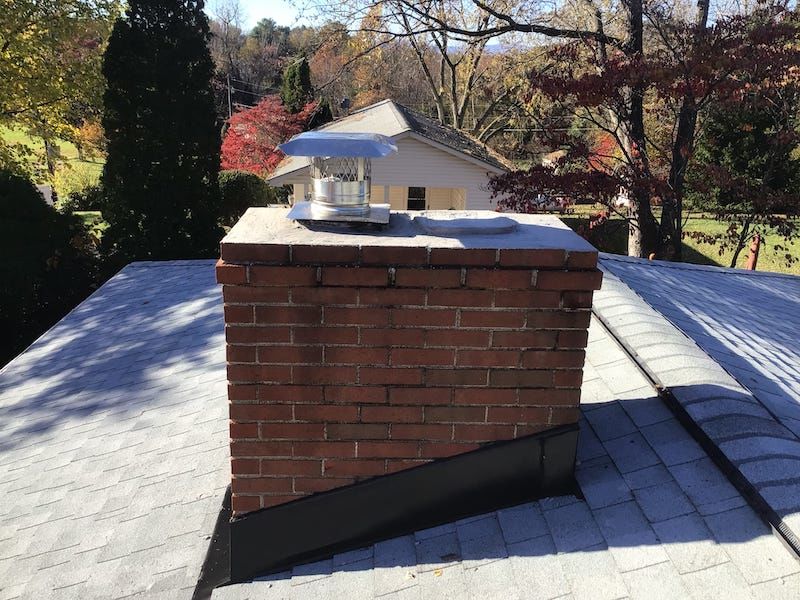
Critical Signs Your Chimney Has Structural or Flue Damage
Chimneys face severe weather year-round, but winter creates the harshest conditions. When moisture penetrates brickwork and freezes, it triggers spalling, a destructive process where brick faces crack, chip, or pop off completely. Ignoring these visual cues can turn a simple patch into a massive structural rebuild.
Watch for these primary indicators of chimney deterioration:
- Spalling Brick and Masonry: Flaking, crumbling, or missing chunks of brick on your roof or ground indicate deep water penetration.
- Deteriorating Mortar Joints: Gaps, powdery sand, or recessed joints between bricks weaken the chimney’s load-bearing ability.
- Chimney Crown Cracking: The concrete slab at the top of your chimney deflects water. When it cracks, water drains straight down into the masonry and flue.
- Rusted Firebox and Damper: Moisture entering the flue creates rust on metal components like the throat damper and firebox walls, restricting proper draft.
- Efflorescence: White, powdery salt stains left on exterior brickwork show that moisture is traveling through the masonry and evaporating outward.
- Flue Tile Deterioration: Shards of clay tile accumulating in your firebox or cleanout door mean your flue liner is splitting under thermal stress.
Catching these signs early through a dedicated chimney inspection prevents structural failure and protects your living spaces from smoke and water leaks.
Signs You Need Professional Chimney Repair Before Freezing Temperatures
Certain chimney defects require immediate attention before you ever strike a match. When the temperature drops below freezing, existing cracks expand rapidly, creating hazardous pathways for heat and toxic gases.
- Smoke Backdrafting: If smoke enters your living room instead of venting upward, an internal obstruction, structural collapse, or broken liner is disrupting the natural draft.
- Interior Water Stains: Brown, damp spots on drywall or ceilings adjacent to the chimney stack indicate compromised roof flashing or cracked chimney masonry.
- Sulfur and Soot Odors: Lingering, acrid odors coming from the hearth point to moisture mixing with creosote deposits inside a deteriorating flue.
- Carbon Monoxide Risks: A compromised flue liner allows invisible, odorless carbon monoxide to seep through porous brick into bedrooms and living spaces.
- Cracked Flue Liner Walls: Split clay tiles cannot safely contain hot flue gases, creating a serious house fire risk.
Addressing these issues with comprehensive chimney servicing ensures your heating system operates cleanly and safely through the coldest months.
How Professionals Assess and Address Damage: Step-by-Step Chimney Repair
Fixing a damaged chimney requires an orderly process, moving from diagnostic imaging to targeted masonry and liner repairs.
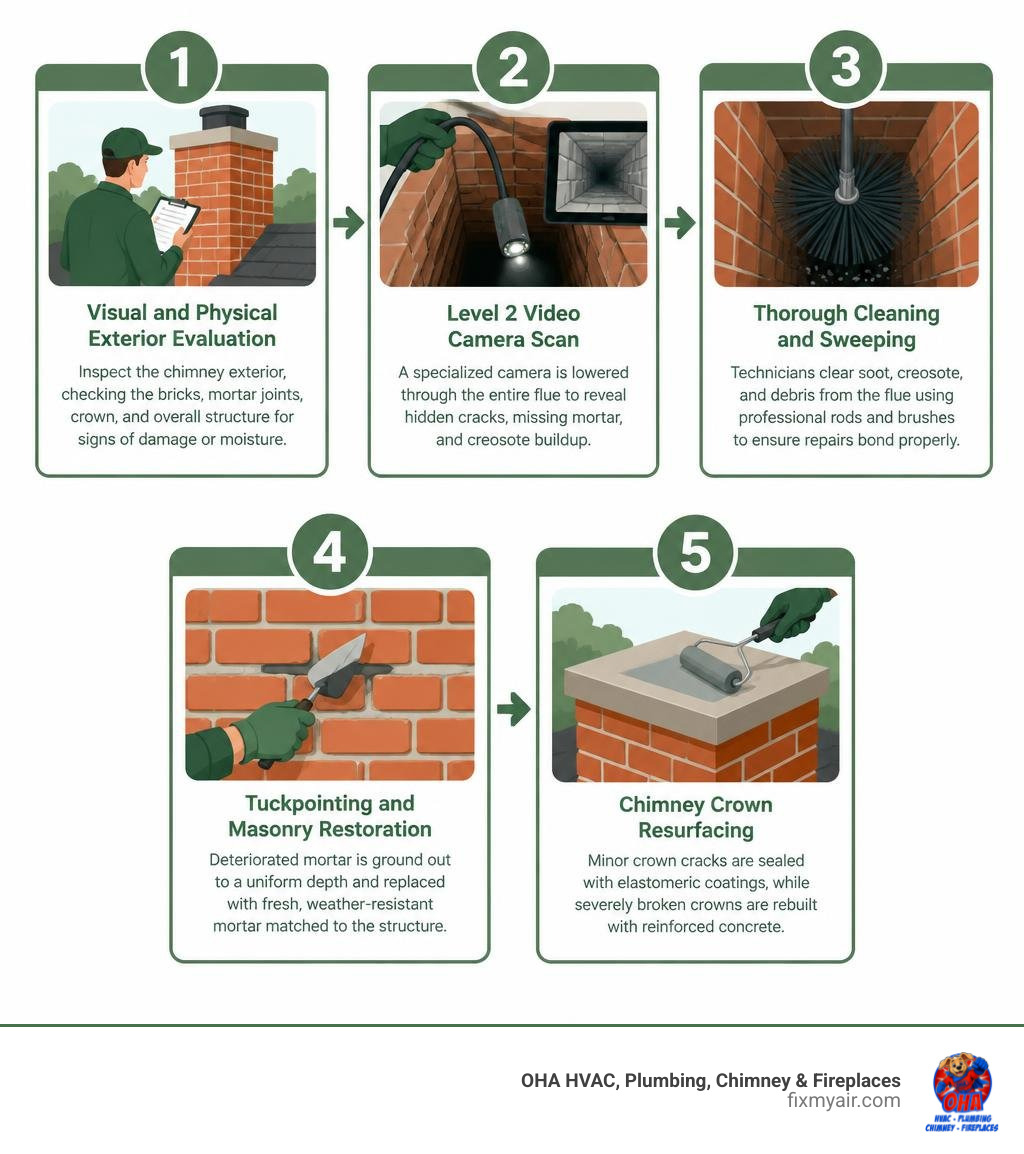
- Visual and Physical Exterior Evaluation: A technician examines the chimney exterior, inspecting the bricks, mortar joints, crown, and roof flashing for structural movement or moisture entry.
- Level 2 Video Camera Scan: A specialized camera is lowered through the entire flue to reveal hidden hairline cracks, missing mortar, and creosote buildup.
- Thorough Cleaning and Sweeping: Technicians clear soot, creosote, and debris from the flue using professional rods and brushes to ensure repair materials bond cleanly.
- Tuckpointing and Masonry Restoration: Deteriorated mortar is ground out to a uniform depth and replaced with fresh, weather-resistant mortar matched to the existing structure.
- Chimney Crown Resurfacing: Minor crown cracks are sealed with elastomeric coatings, while severely broken crowns are rebuilt with reinforced concrete featuring a drip edge.
Maintaining this sequence alongside professional chimney sweeping helps ensure structural and venting components meet strict safety codes.
DIY Assessment vs. Hiring a Certified Chimney Technician
While homeowners can safely spot basic exterior warning signs from the ground using binoculars, hands-on chimney repair is not a weekend DIY project. Walking on steep roofs poses serious fall hazards, and surface-level fixes often mask dangerous hidden structural failures.
Certified technicians hold credentials from organizations like the Chimney Safety Institute of America (CSIA) and follow standards like NFPA 211 (Standard for Chimneys, Fireplaces, Vents, and Solid Fuel-Burning Appliances). They utilize specialized digital video cameras to evaluate the chimney interior from top to bottom. Without this equipment, hidden breaches that vent poisonous combustion gases into your attic or framing remain invisible. Enlisting expert chimney services helps ensure repairs are structurally sound, code-compliant, and built to withstand freezing temperatures.
Key Factors Influencing the Cost of Chimney Repair
Chimney repair costs vary based on several structural and logistical factors:
- Crack Depth and Structural Damage: Surface tuckpointing is relatively inexpensive, whereas structural rebuilding of a leaning or collapsed stack requires extensive labor and scaffolding.
- Chimney Accessibility: Multi-story homes, steep roof pitches, and difficult-to-reach stacks require specialized staging equipment, increasing labor time.
- Flue Dimensions and Configuration: Taller chimneys and irregular flue dimensions require more materials, whether applying sealant coatings or installing custom stainless steel liners.
- Material Selection: High-grade refractory sealants, custom stainless steel chase covers, and historic brick matching cost more than standard masonry supplies.
- Historic Preservation Needs: Older homes may require specialized lime-based mortars and hand-selected antique bricks to maintain historical authenticity.
- Local Permit and Code Requirements: Major structural overhauls or appliance retrofits often require municipal building permits and post-repair inspections.
Choosing the Right Fix: Flue Relining, Joint Resurfacing, and Masonry Rebuilds
The correct repair strategy depends on whether the damage is isolated to surface mortar, confined to flue tile joints, or widespread across the entire structure.
| Repair Method | Best Suited For | Key Advantages | Expected Longevity |
|---|---|---|---|
| Flue Tile Joint Repair | Cracked mortar joints between clay flue tiles | Minimally invasive; restores joint integrity without removing tiles | Varies with condition and use |
| Flue Resurfacing | Flues with minor spalling, hairline fractures, and surface defects | Creates a seamless, heat-resistant sleeve that withstands over 2,000°F | Varies with condition and use |
| Stainless Steel Relining | Severely damaged, unlined, or shifted masonry flues | Lifetime durability; ideal for fuel conversions (wood, gas, oil) | Varies with condition and use |
| Tuckpointing & Repointing | Decaying exterior mortar with intact brickwork | Stops water intrusion; restores structural strength economically | Varies with condition and use |
| Partial or Full Rebuild | Leaning stacks, severe spalling, or compromised integrity | Completely replaces unstable masonry; restores structural stability | Varies with condition and use |
When clay flue tiles show joint deterioration but remain structurally sound, a qualified chimney professional can evaluate flue liner restoration options such as joint repair, resurfacing, or relining. The appropriate solution depends on the location and extent of the damage, the chimney’s overall condition, and whether the flue can continue to safely contain heat and combustion gases. A professional assessment helps determine whether targeted restoration is practical or whether a more extensive liner repair is appropriate.
For damaged metal or factory-built systems, components like chase covers and factory flue sections must be replaced with manufacturer-matched parts. Exploring complete chimney sweep and repair solutions ensures your specific chimney type gets the right permanent fix.
Environmental Codes, Safety Risks, and Wildlife Protections
Chimney maintenance must also account for environmental safety, building codes, and wildlife protections. An open, un-capped chimney invites water, debris, and animals into your home.
One common visitor is the chimney swift. Formerly known as the American Swift, these birds adapted to nesting almost exclusively in chimneys as old-growth forests disappeared. Chimney swifts cannot perch or stand on branches; their feet are built specifically to cling to vertical surfaces like rough brick chimney walls. They collect twigs on the fly, snapping them from tree branches and gluing half-cup nests to flue walls using their saliva.
These birds provide immense environmental value: a single swift consumes roughly one-third of its body weight in flying insects every day. After hatching, fledglings cling to the chimney walls for about a month while their parents feed them, before making their fall migration all the way to Peru.
Under the federal Migratory Bird Treaty Act of 1918, it is illegal to remove, disturb, or destroy chimney swifts, their eggs, or active nests. If swifts occupy your chimney, repairs must wait until the fledglings leave the nest in late summer. The U.S. Fish and Wildlife Service provides additional guidance on chimney swift conservation for homeowners planning repairs.
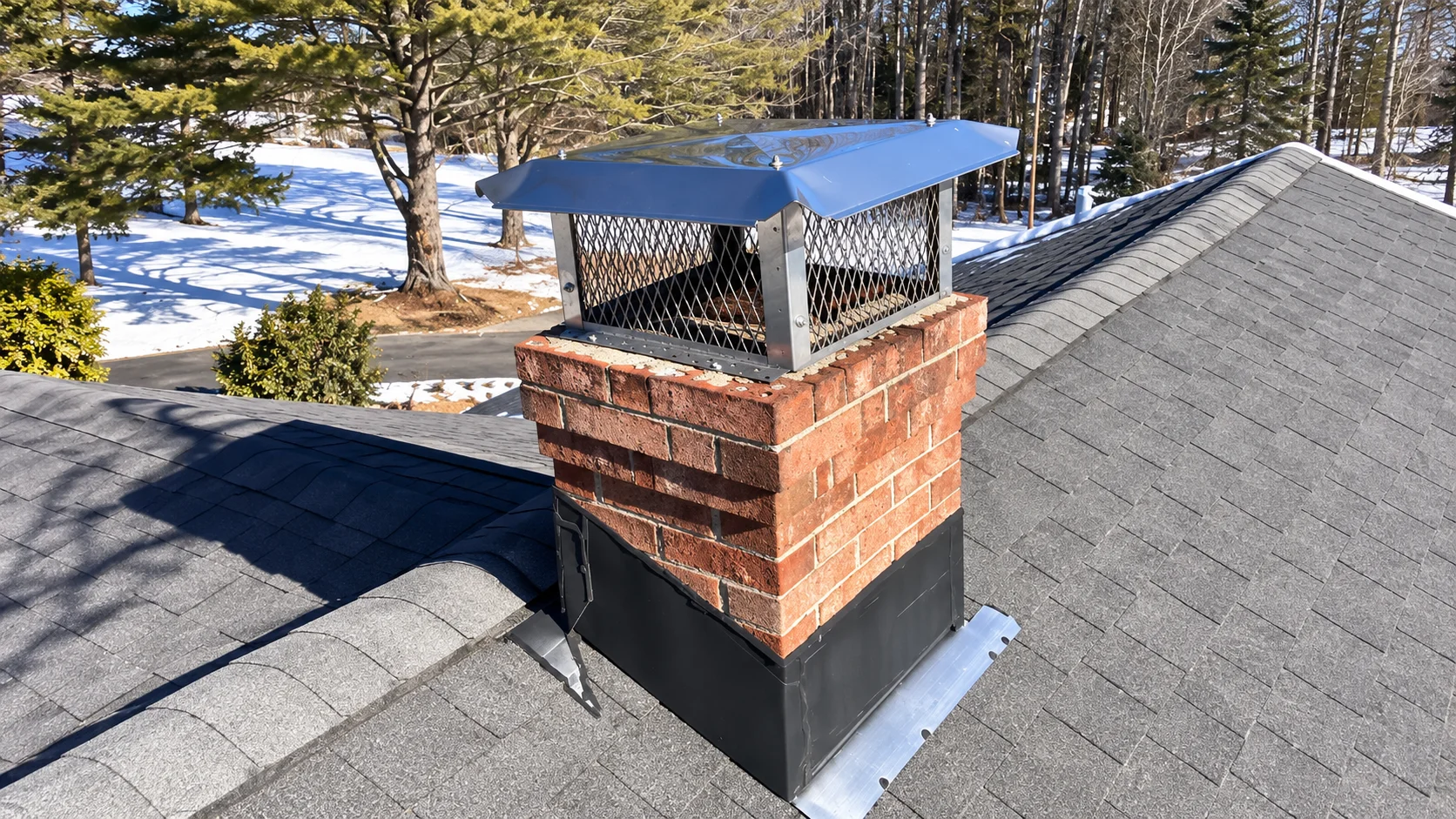
To prevent future nesting and protect against embers escaping onto your roof, install a high-quality stainless steel chimney cap featuring spark arrestor mesh. A secure cap also prevents water intrusion, draft issues, and debris accumulation. Coordinating these upgrades alongside scheduling timely chimney sweeping keeps your system safe and in good working order.
Frequently Asked Questions About Chimney Cracks and Upkeep
Can I light a fire if my chimney has small exterior cracks?
No. Even small exterior cracks often indicate deeper interior stress or water penetration. When a fire burns, flue temperatures rise rapidly. If heat transfers through cracked masonry to adjacent wood framing, it creates a severe house fire risk. Always have cracks evaluated by a certified technician before lighting your fireplace.
What Are the Options for Repairing a Damaged Chimney Flue?
A qualified chimney professional can assess whether cracked or deteriorating clay flue tiles may be suitable for joint repair, resurfacing, or relining without removing the entire chimney interior. A full relining involves installing a new liner, typically rigid or flexible stainless steel, down the length of the flue. Targeted restoration may be appropriate when clay tiles remain structurally sound but have failing joints, while relining may be needed for collapsed, severely broken, or unlined chimneys.
How often should a chimney be inspected to prevent winter structural failure?
Under NFPA 211 safety guidelines, chimneys, fireplaces, and vents should be inspected at least once a year. Scheduling an inspection in late summer or early fall allows technicians to identify freeze-thaw damage, clear obstructions, and complete necessary repairs before freezing temperatures arrive. Follow trusted chimney sweep guidelines to ensure your system stays in top working order.
Conclusion
Pre-winter chimney maintenance is essential for keeping your home warm, structurally safe, and energy-efficient. Freezing winter temperatures turn small masonry cracks and decaying flue joints into costly structural hazards. Catching water intrusion early preserves your brickwork and protects your family from smoke, soot, and carbon monoxide leaks.
At OHA HVAC, Plumbing, Chimney & Fireplaces, our background-checked technicians deliver upfront pricing and 24/7 emergency support. As a veteran-founded, family-run company, we take pride in our work and are proud to maintain a 4.9-star average across more than 5,000 Google reviews. Don’t wait for winter freezes to cause hidden flue damage: schedule professional chimney sweep and repair today to ensure your fireplace is safe and ready for the season.
Need Help With HVAC, Plumbing, Chimney, or Fireplace Service?
OHA is available 24/7 across Fredericksburg, Fairfax, and Northern Virginia.